























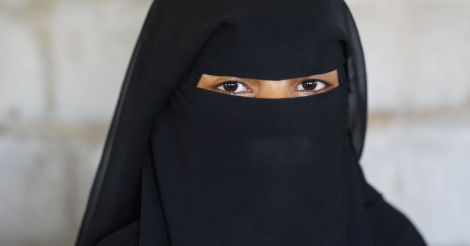
A five-judge constitution bench headed by chief justice of India J.S. Khehar heard the case from May 11 to 19 this year. The Muslim women, who had filed the petitions, have challenged the practice of triple talaq in which the husband pronounces talaq thrice in one go, sometimes even by phone or a text message, to get a divorce.
Read the full copy of the judgment.
What the SC said:
• It is for the government to legislate says SC
• Will not interfere in matters of personal law


• Triple talaq is not unconstitutional but it violates human rights
The terms of contention
Certain words and phrases were often discussed and deliberated by the judges. They were:
Hadith or Hadeeth: One of various reports describing the words, actions, or habits of the Islamic prophet Muhammad.
The court deliberated at length on giving an equal footing to Quran and the Hadith. Justices Kurian Joseph and U.U. Lalith wanted to know if Quran was the sole authority or the court should also look at the Hadith.
Talaq E Bidat: This is the practice of instant talaq. The chief justice on the fourth day of the hearing said this form of instant talaq did not find mention in the Quran.
Khula: This means the judicial form of divorce. Lawyer Indira Jaising, arguing for the petitioners, said men had the extra-judicial option of divorce but women could only stick to Khula.
Hanafi and Pakistan: the chief justice asked even though Sunnis were the largest Muslim sect in India, which sub-sect was largest among them? Data was provided to the court to validate that Hanafi, founded by Imam Abu Hanifa, was the largest sub-sect, followed by Hanbali, Maliki, and Shafi. The CJI observed that triple talaq was fairly common among Hanafi school followers. Pakistan had a fairly large number of Hanafi followers but had banned triple talaq.
Salman Khurshid was the amicus curiae. Lawyer Indira Jaising argued for the petitioners against the practice. There petitioners were: Khuran Sunnath Society, Bharatiya Muslim Mahila Andolan (BMMA), Shayara Bano, Aafreen Rehman, Gulshan Parveen, Ishrat Jahan and Atiya Sabri. It will also include five separate writ petitions filed by Muslim women.
The All India Muslim Personal Law Board (AIMPLB), represented by Kapil Sibal, was the defendant.
Read more: Latest India news | Physical police verification for passports to be done away with in a year
