

Indian Film Festival of Sydney to screen original climax of ‘Sholay’
Mail This Article


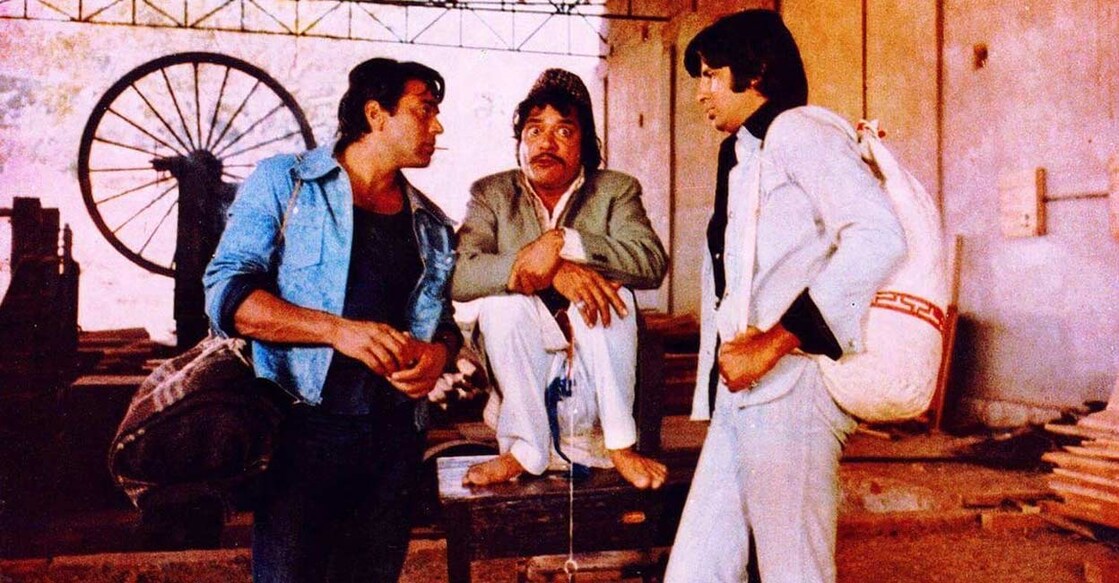
The restored version of the classic Indian film ‘Sholay’ featuring Amitabh Bachchan, Amjad Khan and Sanjeev Kumar will be screened at the Indian Film Festival of Sydney (IFFS) with a different climax. Festival director Mitu Bhowmick revealed that they plan to showcase the original ending of the iconic film offering a rare glimpse into how the classic concluded before edits.
Not many know that director Ramesh Sippy had envisioned a different climax, where the villain Gabbar Singh would be killed by Thakur.
However, he later altered the climax due to pressure from distributors. In 1975, the Central Board of Film Certification (CBFC) raised objections, stating that a former police officer could not take the law into his own hands and commit murder. With the country under Emergency, the board’s decision was final. Despite producer G.P. Sippy’s influence, the filmmakers had no choice but to comply. The CBFC not only demanded a new ending but also cuts to several violent sequences.
Frustrated by the decision, Sippy even considered removing his name from the film. However, with the release date approaching, he reluctantly agreed to reshoot the climax, giving audiences the ending that became iconic. Over the course of two days, the cast returned to shoot the revised climax, in which Gabbar Singh is defeated and taken into police custody. Sanjeev Kumar, who was attending a film festival overseas at the time, flew back to complete his scenes.
In the present version, Gabbar goes to jail after Thakur spares his life. The original ending was indeed filmed and is now set to be released, fifty years after the movie first premiered in 1975. The IFFS has revealed that the newly restored ‘Sholay’ will be its centerpiece this October. The festival will showcase the film’s original ending, where Thakur kills Gabbar, during the event scheduled from October 9 to 11.
In a statement, Festival Director Mitu Bhowmick Lange shared, “Presenting the restored Sholay in Sydney is a moment of immense pride for us. This isn’t just the revival of a classic, it’s the revival of a piece of our collective cultural history. The fact that audiences will now experience the film with the original ending makes it even more significant, as it honours Ramesh Sippy’s first vision in its entirety. To showcase this landmark restoration at IFFS, in the company of stories both timeless and new, truly embodies our festival’s spirit of celebrating Indian cinema in all its dimensions.”
 Add as a preferred source on Google