

Life of a widow is never easy; those who were close hurt the most, says actor Indulekha
Mail This Article


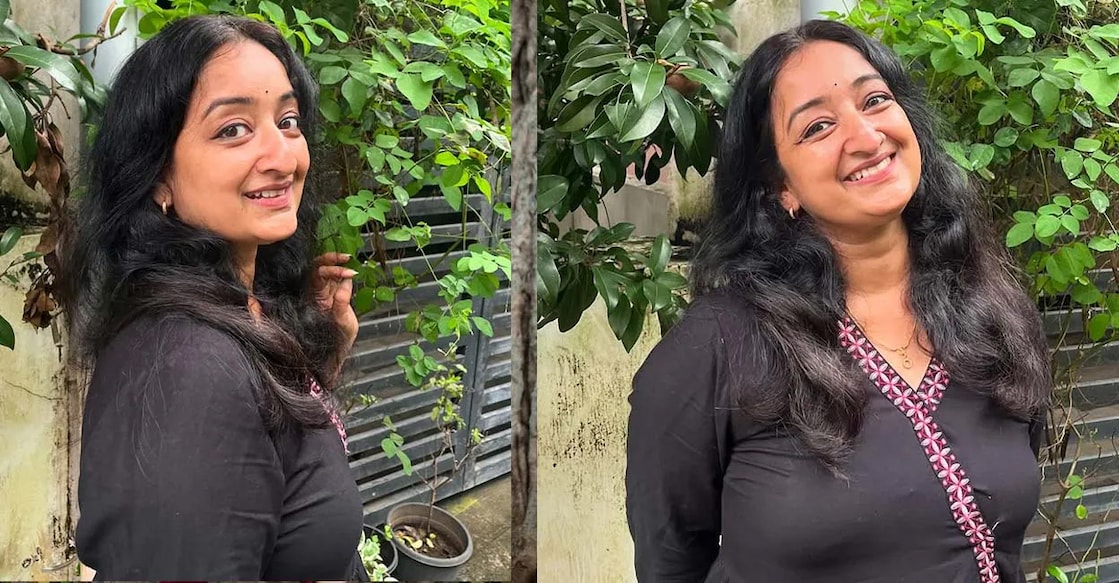
Those close to Indulekha describe her as someone who faces every challenge with a bright smile — a woman who moves forward instead of dwelling on pain. She has always stood on her own, aware that life’s battles must be fought independently. In an era that celebrates women’s self-reliance, her journey remains a shining example.
Indulekha began learning dance at three, performed on stage at four, and entered films as a child artist at 13. Over three decades later, she has performed on more than 2,000 stages and mastered Bharatanatyam, Mohiniyattam, Kuchipudi, and Kathakali.
A gifted translator, she has translated screenplays and books into Malayalam. Before dedicating herself fully to the arts, she worked for six years as a bank official, managing the pressures of her job, serial shoots, and motherhood with quiet strength.
It was on the set of a serial that she met television director Shankaran Potty. Their friendship grew into love and marriage, but her world was shattered when Shankaran passed away from liver disease. Refusing to let grief consume her, Indulekha chose resilience. She channelled her energy into acting, dancing, and translation — her means of survival and solace.
Today, her biggest dream is to see her daughter, Unnimaya, achieve great success. Indulekha continues to work passionately, balancing career and education. Despite her demanding schedule, she never stopped learning — after completing an M.Com and MBA, she is now pursuing an M.A. in Bharatanatyam. Her story is one of strength, discipline, and unwavering determination — a testament to the power of perseverance.
Now, in Indu’s words:
Are you scared of society?
I am afraid of society to a certain extent. One cannot move forward by challenging everything and everyone. But that doesn’t mean one should live solely according to society’s expectations. There are people who insist that a widow should not work and should remain confined to her home. Complying with such beliefs would push the family into starvation. A child is part of both the husband and the wife. We must work hard to secure the child’s future.
Isn’t there a problem in the way society looks at a widow?
Certainly, people create stories based on their own whims. At first, I felt hurt when I heard them. Often, I cried alone in a corner. Then it struck me, I am not the kind of person they describe. So why should I feel hurt? That realisation gave me strength.
Many conservative people find it difficult to accept a widow who raises her child and lives independently. Surprisingly, the most painful moments came from those close to me. Strangers seem to understand us better. I have mostly portrayed helpless and devotional characters. Perhaps that’s why people tend to show me love and respect when I step out.

Did you always dream of becoming an actor?
I loved acting too, that’s true. But I actually wanted to become a doctor. However, our family’s financial situation didn’t allow it. My daughter also expressed the same desire, and I initially thought she would change her mind as she grew up. But she remained firm in her ambition. From that point on, I tried to give her my full support. She is also my greatest pillar of strength. We are more like friends. She began learning dance at the age of four, and now we practise together.
Is acting a safe profession for someone like Indu, who leads a disciplined life?
I don’t agree with the view that exploitation exists only in the film industry. Exploitation happens across all sectors in different ways. Due to the glamour and visibility of the movie industry, even minor issues are sensationalised and receive widespread coverage. My life experiences have taught me to move forward while being careful not to be exploited.
Rather than complaining about negative experiences, we should focus on growing and reaching a stage where there are no such experiences. There’s a common perception that staying in this industry requires various compromises. That’s not true. No one is forcing us. We have the right to make our own choices. We can choose only the projects we’re comfortable with. It’s up to us to decide the path we take. I have never sought out opportunities. I simply take up the projects that come to me.
How did you come to acting?
I was born in Andhra Pradesh, as my family was living there at the time due to my father’s job in the Railways. Since all our relatives were in Kerala, we wished to return. So, we moved to Thrissur when I was one and a half years old. When I was in seventh standard, a serial director approached my dance master, looking for children to act in a serial.
At that moment, I happened to be standing right in front of him. He asked if I was interested. I said, “Maybe,” and the master then sought permission from my parents. After they gave their consent, I stood in front of the camera for the first time. I began as a child artist in the movie ‘Peter Scot’. As I grew older, I acted in ‘Aakaashaganga’, ‘Pandippada’, ‘Pathram’, ‘Vaazhunnor’, and ‘Hello’.
When I was called for the movie ‘Hello’, my daughter was just three months old. I was unsure whether to accept the offer. I decided to take it up after being told that it was only a one-day shoot and, since there was just one scene, it would probably be wrapped up in an hour. I took my daughter along with me. After every shot, I rushed to her side. Though it was a small role, it was noticed.
Your love and marriage were quite interesting, weren’t they?
I started acting in serials during college, which is how I met director Shankaran Potty. He seemed close to me, but I didn’t take it seriously until his sincerity became clear when he proposed. I told him it depended on my parents, yet he patiently waited, and after three years, we secretly registered our marriage. I told my family I was going for a dance class, got married, and returned home as usual. We revealed it only after a few months.
Our married life was filled with friendship and laughter. He didn’t like being called ‘chetta’ and insisted I call him ‘Eda’—which shocked others, so we switched to ‘etta’ in public. I couldn’t even make tea back then, but he, being a great cook, taught me everything.
He directed the film 'Fire' and later began another project, but while travelling to Puttaparthi for blessings, he met with an accident that left him with multiple fractures. Though doctors said he’d be bedridden for a year, he started walking within a month. Unfortunately, false rumours and betrayal by colleagues pushed him into depression, worsening his drinking habit. Despite treatment, he developed liver cirrhosis.
I was acting in 'Devi Mahathmyam' then and managed both work and his care. Some criticised me for continuing to act, but I had to support our family. In his final days, he quit alcohol completely and urged his friends to do the same.
He prepared me to stay strong even after he was gone. Fifteen days after his death, I returned to work. Our daughter was only seven, and I had to keep going. My biggest tribute to him is raising her well and helping her achieve the success he always wished for.
Is Indu bold enough to overcome challenges with a smile?
I’m not someone who doesn’t care about anything, nor am I exceptionally bold. If you ask me whether I’m capable of overcoming all challenges, I’m not sure of that either. But when we’re thrown into certain circumstances, we’re forced to find strength, often without even realising it. I firmly believe that every woman is capable of doing that.
 Add as a preferred source on Google