

Vilayath Buddha: Sandalwood scented with ego & pride

Mail This Article


There is something almost mythic about sandalwood in Indian cinema. Mention it, and the mind reflexively flickers to Pushpa and its swagger. Jayan Nambiar’s Vilayath Buddha, adapted from G R Indugopan’s novel, arrives in the shadow of that cultural memory. But this film chooses a different path. It is not one paved with firecrackers and punchlines. However, there is contested pride, emotional bristle, and the weary silence of Marayoor’s hills.
Here, sandalwood is not merely contraband. It is inheritance, identity, and, definitely, a living promise of conflict.
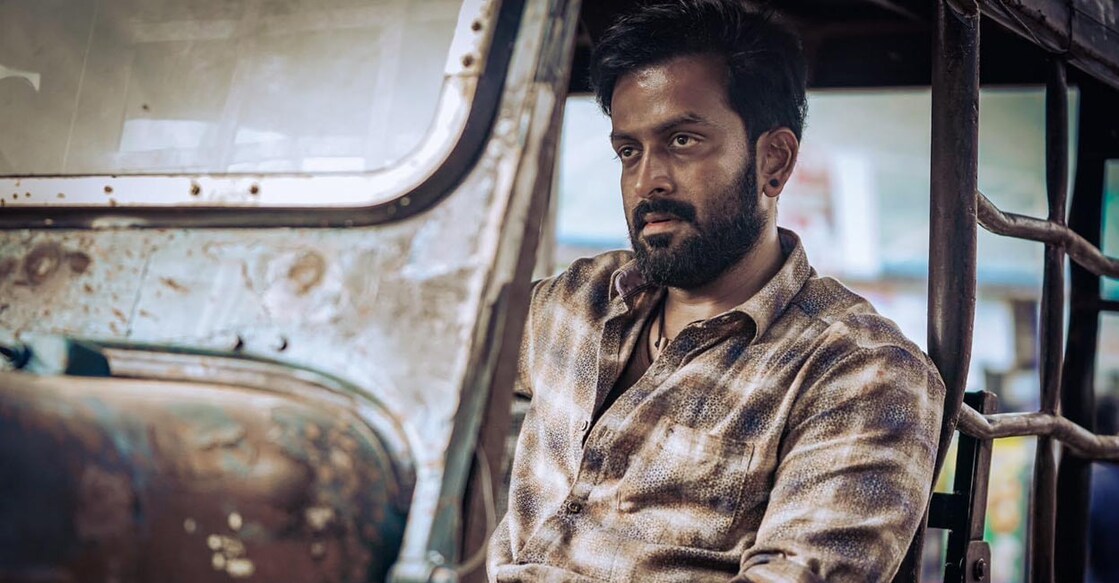
At the centre of the narrative stands Double Mohanan (Prithviraj Sukumaran). He is a man shaped less by theatrics than by simmering defiance. Opposing him is Bhaskara Menon or “Velithooval” Bhaskaran played with dry humour and wounded authority by Shammi Thilakan. Menon, a retired schoolteacher now contesting panchayat elections, is not just a supporting character. He becomes the story’s moral mirror and its doorway into Mohanan’s world.
The friction between these men is rooted in ego, legacy, and something more primal. This is unmistakably reminiscent of Sachy’s “Ayyappanum Koshiyum.” Yet Vilayath Buddha does not collapse into a mere rivalry drama. Its rhythm is slower and its gaze more patient. It allows insecurity and desire to brew, much like the dark and dense jaggery Marayoor is famous for.
If the film occasionally strains under its runtime, Jayan Nambiar compensates with careful pacing and unexpected narrative detours. The world feels lived-in. He has not created a cinematic jungle, but a community where grudges pass down like inherited land.
Prithviraj, an actor who thrives when arrogance meets restraint, is formidable in this terrain. After “Ayyappanum Koshiyum,” this role feels less like repetition and more like refinement. It is the return to a character whose fury comes from wounded self-worth rather than cinematic villainy.
Priyamvadha, in a breakout role, refuses to be just a narrative accessory. Her presence as a lover is bold, unapologetic, and refreshingly free of the self-conscious fragility female characters are often granted in male-centric dramas. She takes the screen with clarity and intent.
The title Vilayath Buddha carries more than surface intrigue. Writer G R Indugopan had told a prominent media house that “Vilayath Buddha" is a term given to "A-class sandalwood trees," out of which Buddha idols are made. So, the title signals both the value and sanctity of the sandalwood and the contradictory elevation of illicit timber into something revered.
Jakes Bejoy’s music oscillates between atmospheric restraint and commercial urgency. It sometimes elevates the film and at times reminds us of market compulsions. Arvind S Kashyap’s cinematography, meanwhile, gives the forest a voice.
There are imperfections like a bit of structural looseness, a thawing of tension, and a character arc or two that deserved sharper definition. Yet, “Vilayath Buddha” leaves an impression. And that could be its quiet triumph. In a landscape where masculinity is often loud and consequence-free, this film asks a deeper question. What happens when the ‘something’ you fight for becomes the ‘something’ that defines you?
 Add as a preferred source on Google