

How to spot fake cashews in the market
Mail This Article


Cashews have a way of sneaking into our food and celebrations in countless forms. They slip into a pan of ghee-roasted rice, lend body to creamy gravies, and turn up in sweets during festivals. A few tossed on top of payasam or halwa are enough to make the dish feel special. For many households, cashews are not just another nut but a small luxury, a symbol of taste and richness.
They also carry a reputation for health. Packed with good fats, protein, and minerals, cashews are often called a smart snack when eaten in the right quantity. Some people like to soak them before use, saying it makes them softer and easier to digest. Others keep a jar handy to pop a few straight as a pick-me-up. However they are eaten, cashews remain a favourite across India.
That popularity comes at a price. Cashews are among the more expensive nuts in the market, and this has opened the door to tricks and adulteration. Shiny, polished kernels and artificially coloured nuts often find their way into shops, looking attractive enough to mislead buyers. Unless you know what to look for, it is easy to end up paying good money for poor stock.

Telltale signs of adulteration
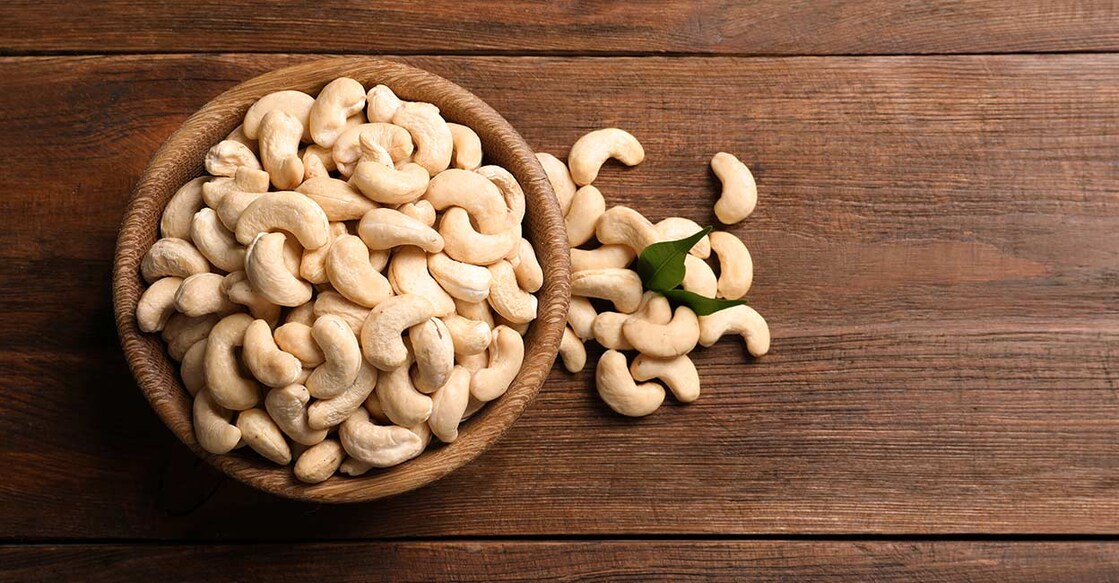
Colour check: Natural cashews are pale white or light cream in colour. Adulterated ones often have a deep yellow shade from artificial colouring.
Shape and size: Good cashews are usually about an inch long and evenly thick. They look uniform, not shrivelled or unusually shiny.
Texture while chewing: Genuine cashews are crisp and buttery. They do not stick to the teeth, while fake or treated ones tend to feel rubbery or clingy.
Shelf life: Quality cashews stay fresh longer without turning rancid. If they go off too quickly, chances are you bought poor stock.
Flavoured cashews, especially those coated with masala or chocolate, can make it harder to spot these differences. In such cases, it is always safer to buy from trusted brands or local sellers with a reputation for quality.
Common adulterants and tricks
- Mixing with cheaper nuts
Peanuts or other low-cost seeds are sometimes mixed in to bulk up the batch. This is more common in unbranded or local markets. - Cashew-shaped snacks or biscuits
There have been viral claims and videos showing cashew-shaped biscuits or fried snacks made from wheat, tapioca or other flours. these are not the same as real cashew kernels but can be sold as “kaju” in low-trust markets. fact-checks show such products exist, though many viral clips confuse snack production with deliberate food fraud. - Starch, flours and extenders
Tapioca, potato starch, rice or wheat flours, and similar powders can be used to increase weight or make imitation pieces. analytical studies that test for starch/sugar additions highlight this risk. - Colouring and bleaching
Artificial dyes or bleaching to make kernels look uniformly pale, fresh or “polished” is reported in consumer warnings. coloured or unnaturally yellow kernels are a red flag. - Oils, glazing and polishing agents
Sellers sometimes polish nuts with oil or sugar syrup to give a shiny, premium look. that gloss can hide poor quality. - Mixing with residues or shell material
Contamination with parts of the shell, husk, or other plant material can occur during poor processing or deliberate cutting of corners. scientific detection methods frequently look for such adulteration.
How common is this?
Mixing with other nuts and polishing are relatively common in low-quality or unregulated supply chains. outright fake cashews made entirely from flour do appear in markets and on social media, but many viral claims are exaggerated or are actually about snacks shaped like cashews rather than widespread large-scale fraud. lab and industry studies focus more on substitution with other nuts and additives.
 Add as a preferred source on Google