

The case for Kochi and Colombo to be sister cities

Mail This Article


In an increasingly polarised world where demagogues demand walls and barriers to keep common people apart in a state of hostility and fear, one needs to look back at a dark time in human history when the very noble concept of sister cities or twin-towning gained traction.
In 1942, Alfred Grindlay, mayor of the English city of Coventry, which was bombed by Nazi Germany two years earlier, sent a telegram to the people of Stalingrad, then under a massive siege from the Germans. This telegram, which expressed a sense of solidarity, paved the way for a sister-city or twin-town arrangement.
Post-Second World War, the concept gained traction around the world, leading to a more formal agreement establishing commercial and cultural ties. Sister Cities, being politically and geographically distant, don’t necessarily have to be alike but if it is a question of sharing expertise and knowledge, then a degree of similarity is a great bonus.
When it comes to similarity of climatic, cultural and human development factors, certain cities in South Asia tick all the boxes when it comes to India. Kolkata has a sister city agreement with Dhaka and Varanasi with Kathmandu, but shockingly, there are no such arrangements between any cities in India and Sri Lanka!
Last month, I was fortunate enough to spend an evening with the noted cartoonist and intellectual Bonny Thomas in Kochi, a city that I have grown to love over the last few years, thanks to repeated visits. Listening to Bonny talk with pride about the history of his hometown, I realised that there is actually a city that shares so much with Kochi in terms of culture, weather, geographical conditions, food and of course, history- That is Colombo!
Arab traders called on the vicinity of both places before the advent of Islam. The cities faced the same assaults from the same colonial invaders whose cultures, food and words were absorbed into local life. Even before the Portuguese and Dutch eras there was a great deal of movement between the cities, and those who moved from Colombo to Kochi or vice-versa blended in effortlessly.
One can easily get lost in a non-central part of either city and notice only subtle differences between them.
Right up until the end of the 20th century, even the lifestyles of the average person in both cities were similar. Kerala and Sri Lanka began to benefit from the Gulf oil boom at the same time, and Kochi and Colombo, right up to the 90s were places, where a vast majority of people lived in independent houses.
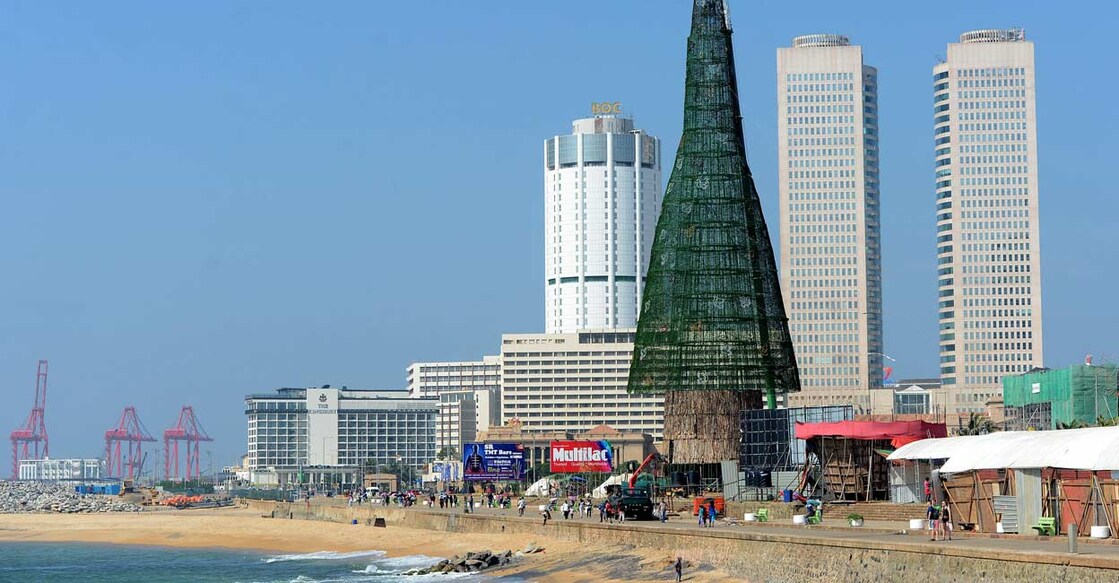
The flat phenomenon took root much earlier in Kochi than the Sri Lankan city but fading bungalows are giving way to skyscrapers in both cities. Of course, the large towers of Colombo dwarf those of Kerala’s most densely populated metropolitan area.
If Kochi and Colombo become sister cities, there’s a lot of expertise that can be shared both ways.
One of the most impressive aspects of Colombo is its municipal governance. The city is clean and orderly and has walkable footpaths for the most part. (Yes, I am very familiar with the Pettah area in the heart of Colombo and know it is more chaotic than the rest of the city).
While there has been a lot of improvement in the cleanliness of Kochi, some of it powered by a system where people can video record instances of littering, the Kerala city can learn from Sri Lanka’s largest urban area.

Colombo definitely lags behind Kochi when it comes to public transport. The already-effective and cheap water-transport system in the Kerala city was supplanted by the water metro and of course, there’s an efficient rapid rail transport system, the Kochi Metro. The common folk of Colombo rely on crowded buses, many of which are driven by those who feel they are on a Formula One track. There are also trains that link the city to towns in the south that are ridiculously crowded for a country with such a small population. I am well aware of a light rail project that was proposed by the Japanese for Colombo and scrapped by a previous regime.
Colombo can definitely benefit from studying how Kochi deals with mass transit and look for ways to implement better systems. Of course, the Sri Lankan city is not a collection of islands, but within its geographical conditions, better transport solutions can be implemented.
There are areas that both cities need to work on, such as preservation of heritage. It helps that many historical structures in Kochi and Colombo were built in the same style, with the same materials and by the same people.
As sister cities, Colombo and Kochi could also intensify the exchange of culture. There’s no doubt that authentic Sri Lankan food would be welcomed in Kerala and those Malayali dishes that are not so easily available on the island would happily find takers. The scope for cultural cooperation goes beyond food and could extend to cinema, theatre and performing arts.
At the moment, Kochi only has sister city agreements with the American towns of Norfolk and Menlo Park and Russia’s Pyatigorsk. Colombo has similar arrangements with St. Petersburg, Russia, Shanghai and Male.
It’s time to link these two South Asian cities that have all the requisites to be sisters! A concerted effort through a sister-city agreement would enrich both Kochi and Colombo and bring the two countries closer together.
 Add as a preferred source on Google