

When a Cochin Jew volunteered to be India’s first representative in Israel

Mail This Article


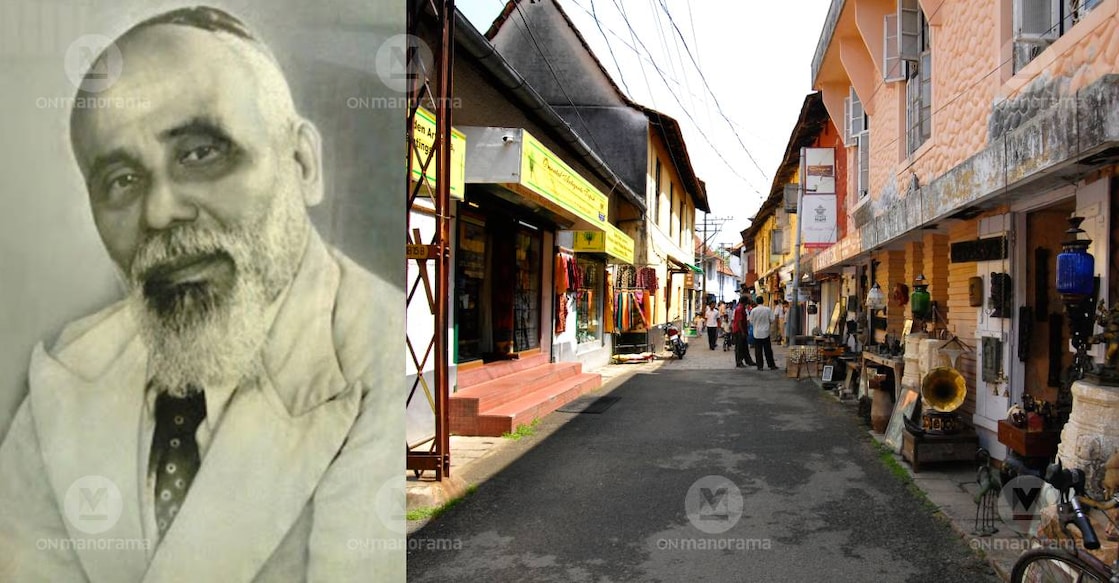
In July 1950, when India was still pondering whether to recognise the newly created state of Israel, President Rajendra Prasad received a memorandum from an advocate and politician named Abraham Barak Salem.
The president would have no doubt been familiar with Salem, who had entered politics at the age of 25 in 1907. In his letter, the advocate said he had been in politics for 41 years.
“I had the rare privilege of being known to Bapuji and was introduced to him while he was camping at Gamdevi, Bombay, in 1925, by our lamented sister Sarojini Naidu,” Salem wrote in the memorandum to Prasad. “I was President of the Congress Committee of Mattancherry and perhaps I am the only Jew who sat at the Lahore Congress of 1929 to vote for the independence of India.”
In the memorandum, Salem spoke of his support for the Zionist movement and said he was a close student of ancient Hebrew literature. At the same time, it would not be accurate to equate him with hardcore Zionists by any standards. The advocate was often referred to as the “Jewish Gandhi” and fought against the discrimination faced by the Malabari Jews at the hands of the Paradesi Jews. He even used the Gandhian method of satyagraha to fight against this discrimination.
“I have no complex of any kind and though an Orthodox Jew, I have a Brahmin son-in-law at Hubli and a Christian one at Aleppey (Travancore),” Salem wrote in the memorandum.
The advocate saw Israel as a future haven for peace and human progress. “The interesting studies of man’s activities in the Middle East have been of absorbing interest to me, as all questions of colour problem, standard of life for the common man, intensive production for the sustenance of man, and the striking of harmony between forces of religion, science and rationalism, are all subjects of experiments in Israel today,” Salem wrote. “They are equally of interest and importance to our India also. The results of the experience to the benefit of mankind will spread themselves in the world, just as in the past, the Bible has become translated into almost all languages of the world.”
Salem said Israel would play “a very important role towards establishing methods in modern human life, for attainment of contentment and peace in the present-day disturbed world.”
As misguided as his views seem in the context of how the situation in Israel has evolved over the last eight decades, it is not difficult to understand why Salem was a staunch advocate for the establishment of the Jewish state after the horrors of the Holocaust.
He called on President Prasad to provide “diplomatic and political protection” to Indian Jews so that they “could pass the Suez Canal as Indian nationals till they merge into Israel.”
Considering himself a patriotic Indian, Salem did not want to emigrate to Israel. Instead, he requested the Indian government to recognise the Jewish state and that he be made the Indian representative in the country.
“As one who loves the world, India, and Israel, I desire to be the link between India and Israel as India’s representative to work for bringing the infusion of desirable ideas to either countries wherein Aryan and Semitic ideas may be synthesised,” Salem wrote.
The advocate had actually written to Jawaharlal Nehru in December 1949, making a similar request, but did not hear back from the prime minister. He also discussed this proposal in person with C. Rajagopalachari, who was then the governor-general of India.
After receiving the memorandum from Salem, the president’s secretary sent it to India’s foreign secretary KPS Menon, who, like Nehru, chose not to act on it. India recognised the state of Israel two months later, but only established full diplomatic relations with the Jewish state in 1992.
By the mid-1950s, most of the Jews in Cochin had emigrated to Israel. Salem chose to stay in India, where he lived out the rest of his life, passing away at 85 in 1967.
Salem concluded his 1950 memorandum to Rajendra Prasad by expressing his deep admiration for the Indian president: “Lastly, as one who has tasted the bitterness and sweetness and pleasures of life for 60 years and who has met Viceroys and Governors at Banquets etc, I consider this day as a day of pride and privilege in my life in seeing in your good self, real learning and humility glorified in the struggle for freedom and independence through the path of non-violence and truth.”
