

Union Budget 2025: Kerala startup ecosystem sees investment opportunities, shares incentive worries

Mail This Article


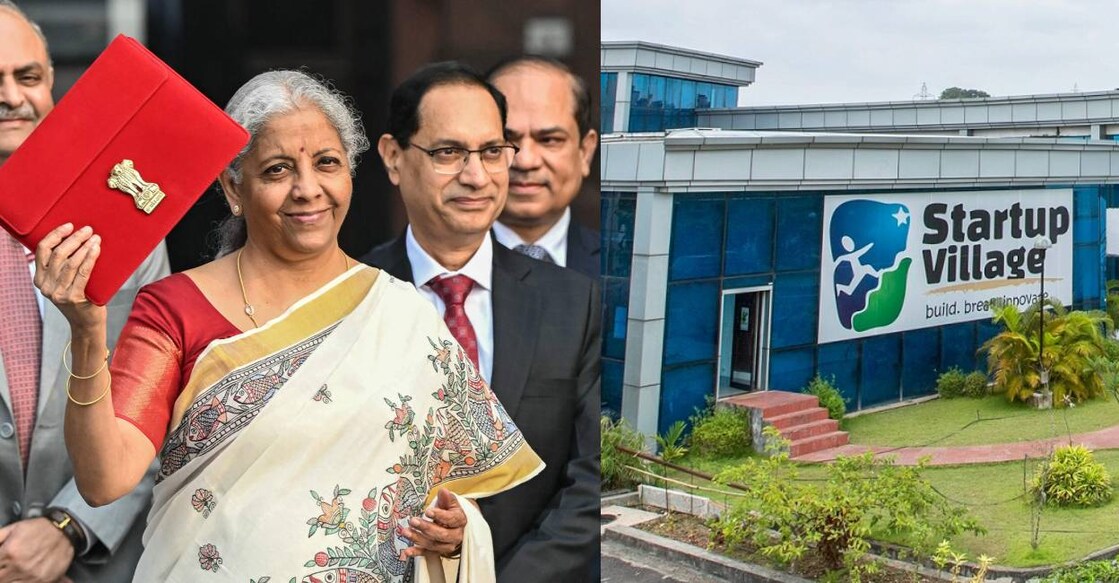
Union Finance Minister Nirmala Sitharaman’s eighth consecutive Budget, presented on Saturday, has evoked mixed feelings within the Kerala startup ecosystem. The major budgetary announcements relating to startups include the setting up of a new ‘Fund of Funds’ with a fresh contribution of Rs 10,000 crore and exploring the scope of a ‘deep tech fund of funds’. The announcement of a Rs 500-crore Centre of Excellence in AI for education has also infused optimism in the system.
While stakeholders in the Kerala startup ecosystem, which topped the Global Startup Ecosystem Report (GSER) list in 2024 above Telangana, Tamil Nadu, and Karnataka, have welcomed the key announcements and credit enhancement measures, concerns over incentives boosting investment remain.
The major startup-related announcements in the financial document include;
1. To improve access to credit, the credit guarantee cover for startups will be enhanced from Rs 10 crore to Rs 20 crore, with the guarantee fee moderated to 1 per cent for loans in 27 focus sectors important for Atmanirbhar Bharat, the central government’s self-reliant India campaign.
2. The Alternate Investment Funds (AIFs) for startups have received commitments of more than Rs 91,000 crore. These are supported by the Fund of Funds set up with a Government contribution of Rs 10,000 crore. Now, a new Fund of Funds, with expanded scope and a fresh contribution of another Rs 10,000 crore will be set up.
3. As part of this initiative, a Deep Tech Fund of Funds will also be explored to catalyse the next generation of startups.
4. It is proposed to extend the benefit provided under Section 80-IAC to startups for another five years, so the benefit will be available to eligible start-ups incorporated before April 1, 2030.
Kerala Startup Mission (KSUM) CEO Anoop Ambika welcomed the announcements, saying they were on the expected lines. He exuded optimism that the additional inclusion of Rs 10,000 crore through the Fund of Funds will significantly enhance the state's investments.

“There is also this term loan that has been announced for the first time Scheduled Castes and Scheduled Tribes women entrepreneurs up to Rs 2 crore. This will give a fillip to people to come up and start up. Then a credit guarantee has been increased from Rs 10 crore to Rs 20 crore for startups which is also a significant improvement. So debt funding will flourish. The AI Centre of Excellence that has been incorporated will also probably boost the AI development and related works in the startup ecosystem,” he said.
Devan Chandrasekharan, the founder and managing director of agri-tech startup Fuselage Innovations, was happy about the allocations and credit measures in the agriculture sector. He said the crop-specific allocations and enhancement of credit limits for farmers would strengthen mechanisation measures in the sector where his company sees opportunities. Fuselage manufactures drones that help farmers.
Senu Sam, founder of Mykare, a promising health-tech startup from Kerala, also expressed optimism about the key announcements in the health sector, mainly the steps to promote medical tourism with easier visa norms and private-sector collaboration.
However, he also shared concerns over lack of “aggressive incentives for startup investments to fuel India’s global competitiveness.” He said he expected stronger AI policies to position India in the global AI race and dedicated policies for digital health startups to make healthcare more affordable & accessible. “India has the talent, market, and innovation potential to lead globally, but a more ambitious policy push would have accelerated growth in startups, AI, and digital health,” he told Onmanorama.
Deepu Xavier, co-founder of Zappyhore, which is into AI-powered recruitment automation, sounded different as he said the Budget shows real backing for India's startups. “It's not just about money -- the government is betting big on new tech, supporting women entrepreneurs, and helping startups in key sectors borrow more. By adding 10,000 research fellowships and focusing on AI, they're building for the long term. Plus, there's practical help for gig workers with health benefits and ID cards. It's a clear sign that India is serious about becoming a major player in the global startup scene,” he said.
M Ramanunni, co-founder and CEO, chargeMOD, said the Union Budget 2025 demonstrates a strong commitment to advancing clean energy and electric mobility. “With customs duty exemptions on battery raw materials, lithium scrap, and key capital equipment for EV battery production, it lays the groundwork for a robust clean tech manufacturing ecosystem. This is a significant step toward fostering sustainability and innovation in India’s energy landscape," he said.
The investor community, though, did not sound too happy. “There's no exciting announcement related to startups except some credit guarantee scheme for MSMEs and startups. How much it will really help the startups I’m not sure because most startups depend on equity and not necessarily on debt,” P K Gopalakrishnan, a leading angel investor and co-founder of Malabar Angel Network, sad. He shared a similar concern about the proposed Centre of Excellence in AI too.
“How it will really help startup owners in terms of money flow is yet to see. Will it be through institutions? I think it might help research and development, but it may not help startups directly. It might help the nation and deep research in AI. But whether it will directly help startups, I doubt. I think what they could have done was to give some kind of an incentive for investment in startups,” he said.
Startup Saturday is Onmanorama’s exclusive series featuring informative and inspiring stories from Kerala’s thriving startup ecosystem. The season 2 of the series will have stories exploring themes and trends from within the ecosystem.
 Add as a preferred source on Google