

Special allocation for ageing population, Defence R&D corridor & catastrophe bonds among Kerala’s pre-Budget demands
Mail This Article


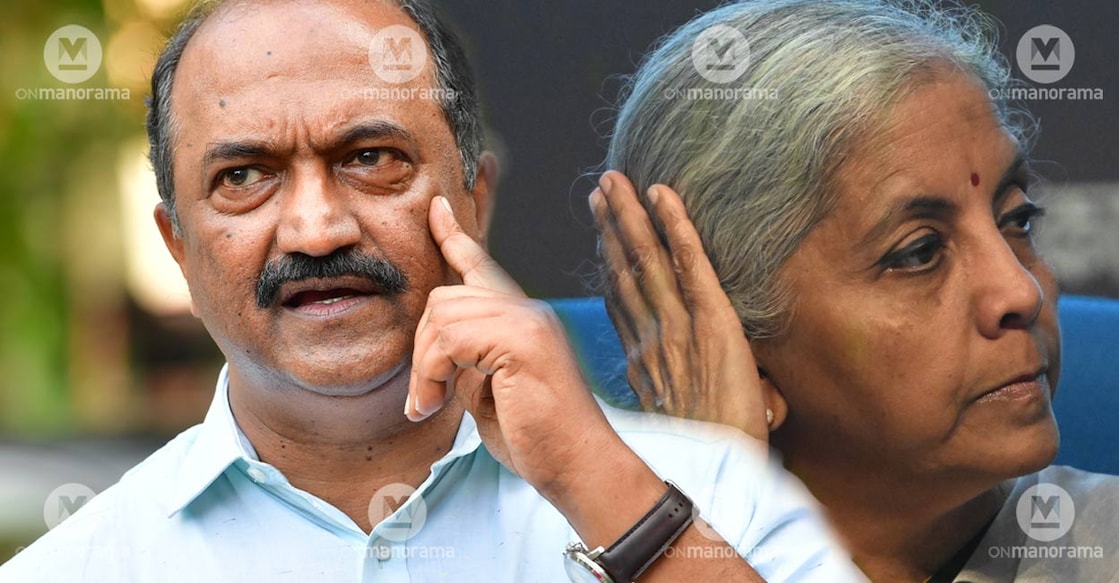
Kerala has sought a dedicated budgetary allocation from the Union government to address the mounting fiscal and social pressures arising from its rapidly ageing population, with senior citizens projected to number 8.4 million, or 22.8 per cent of the population, by 2036. The demand was raised by Finance Minister K N Balagopal during the pre-Budget consultation meetings for the Union Budget 2026–27 in New Delhi on January 10.
In his address, Balagopal said Kerala’s demographic transition is far ahead of the national curve, where the elderly population is expected to be around 15 per cent by 2036. This shift, he said, would significantly increase expenditure on healthcare, specialised hospitalisation, assisted living, social security and long-term care, creating an urgent need for sustained central support.
“The scale of ageing-related challenges in Kerala requires a dedicated Union budgetary provision to strengthen healthcare systems, expand welfare schemes and manage rising functional disabilities among senior citizens,” the minister said, positioning the state as a potential national model for eldercare policies.
Alongside the ageing challenge, Kerala also pitched for the establishment of a Defence Research and Development corridor, leveraging its strategic coastline and existing defence and maritime institutions. The state proposed a Defence R&D Corridor anchored by national assets such as the Indian Naval Academy, DRDO’s Naval Physical and Oceanographic Laboratory, Cochin Shipyard and BrahMos Aerospace.
Balagopal argued that Kerala’s naval orientation and skilled workforce make it a natural pilot site for defence-tech innovation, with lessons that could be replicated across the country. The proposal also envisages strengthening rubber-based engineering, marine product value chains and modernising MSMEs through shared facilities and green upgrades.
Addressing climate vulnerabilities
Climate vulnerability formed another key pillar of Kerala’s pre-Budget pitch, with the state seeking the introduction of catastrophe bonds as a national risk-financing instrument to address losses from natural disasters. Highlighting Kerala’s repeated exposure to floods, landslides and coastal erosion, Balagopal said innovative financing tools were essential to ensure rapid post-disaster recovery without destabilising public finances.
He also proposed the creation of a Coastal Resilience Fund to support seawalls, mangrove restoration and flood mitigation, and called for greater investment in renewable energy microgrids, rooftop solar and community storage systems as part of a broader green growth strategy.
Fiscal correction package
Beyond these demands, Kerala flagged severe fiscal stress caused by what it described as overlapping economic shocks. The minister said GST rate rationalisation had resulted in an estimated annual revenue loss of ₹8,000 crore, while reciprocal tariffs imposed by the United States had affected export-oriented sectors such as marine products, spices, cashew and textiles, causing an additional loss of around ₹2,500 crore a year.
These pressures, he said, were compounded by a declining share in the divisible pool, shrinking central assistance under centrally sponsored schemes and cuts in borrowing limits. Kerala has therefore sought a special fiscal correction package to address a resource gap of over ₹21,000 crore, arising mainly from reduced borrowing space and changes in GSDP estimation methodologies.
Among other proposals, the state asked for an additional borrowing space of 0.5 per cent of GSDP exclusively for capital expenditure, flexibility in GST reforms to protect state revenues, and higher central cost-sharing for centrally sponsored schemes. The Kerala government also requested to restore Central assistance under centrally sponsored schemes from 60% to 75% for VB–G RAM G. It also reiterated long-pending demands such as an AIIMS for Kerala, early completion of the Sabari rail project, support for plantation crops, and special packages for traditional industries and returning migrants from Gulf countries.
Kerala has also sought ₹2,000 crore from the FCI to clear Supplyco dues, modernise paddy procurement and milling infrastructure, and a one-time relaxation from the three-year average allocation norm (to facilitate settlement of the State ceiling).
Concluding his address, Balagopal said the Union Budget 2026–27 should adopt an expansionary macroeconomic stance that empowers states, strengthens capital expenditure and upholds the spirit of cooperative federalism, while recognising Kerala’s unique demographic and structural challenges as nationally relevant policy test cases.
 Add as a preferred source on Google