

India-EU FTA: Luxury cars like BMW, Mercedes, Lamborghini to get cheaper in 2027
Mail This Article


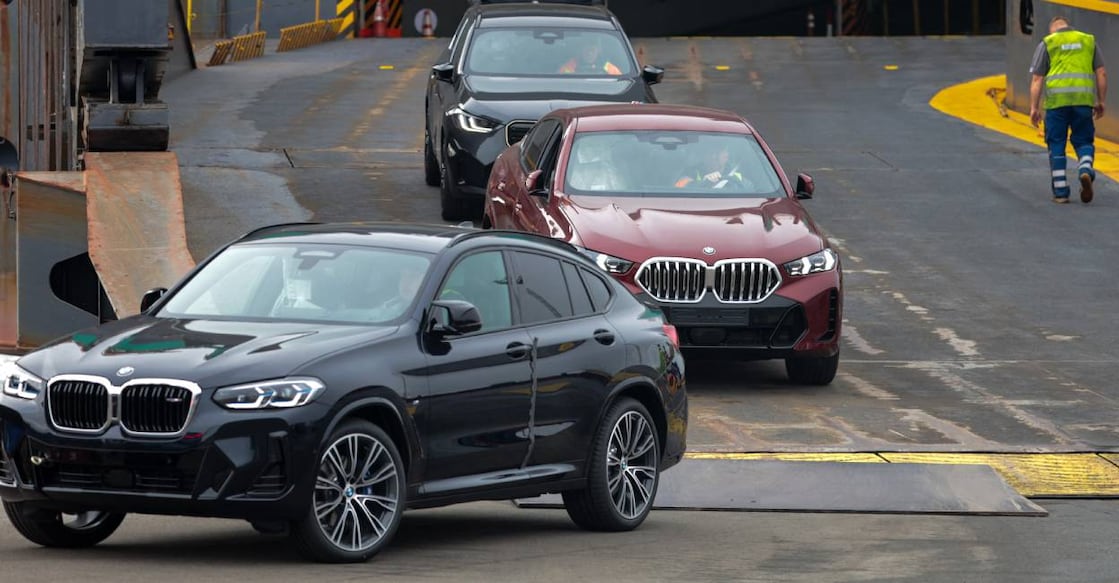
New Delhi: Premium luxury European cars such as BMW, Mercedes, Lamborghini, Porsche and Audi are expected to become more affordable in India once the India-European Union free trade agreement (FTA) takes effect, likely next year. Under the pact, India will extend quota-based import duty concessions, a government official said.
While the EU will phase out duties on Indian automobiles, India will lower import levies to 10 per cent for a limited number of vehicles. Italian supercar maker Lamborghini, which imports all its models into India and sells vehicles starting at around ₹3.8 crore, is among the companies likely to benefit from the agreement.
India and the EU announced on Tuesday that negotiations for the long-pending FTA have been concluded. The agreement is expected to be signed later this year and could come into force early next year.
The progress of the trade deal, negotiations for which began in 2007, had been closely followed by European manufacturers and Indian consumers alike. Differences over duty concessions for automobiles were a major reason talks were suspended in 2013.
With India’s automobile sector gaining strength, the country has begun offering duty concessions under FTAs and has already provided quota-based benefits to UK car manufacturers, reported PTI.
Quota-based system of duty concessions
According to the commerce ministry official, the agreement provides for a quota-based system of duty concessions, noting that the EU had made a “very” aggressive push for market access in the auto sector. At the same time, India continues to strongly safeguard its automobile industry, which is expanding rapidly, generating employment and forming a key pillar of the government’s ‘Make in India’ initiative.
"The EU has got a very well laid out auto industry, one of the most advanced auto industries, and their cars are one of the best, and it is a reality," the official said.
"Taking note of sensitivity on both sides, we have agreed to a quota-based ecosystem, wherein we are trying to take care of each other’s sensitivities," the official added.
The official explained that India’s automobile market is largely driven by small cars priced between ₹10 lakh and ₹25 lakh, an area where EU manufacturers have limited interest.
"So, that has been taken cognisance of, and we have decided that cars that are likely to sell below ₹25 lakhs in this country, the EU will not be exporting those cars to India. They may manufacture it here, but they will not be exporting those cars," the official said.
Cars priced below ₹25 lakh form the most important segment for India, where domestic manufacturers are strong and demand is growing rapidly. Vehicles in this category include petrol, diesel and hybrid models. Beyond this price point, while the market size is smaller, EU manufacturers have a stronger presence.
"Having taken care of that, we have given them quota-based market access. The market has been segmented into three parts beyond that. And the quota will increase in a phased manner," the official said.
Under this quota framework, import duty reductions will apply only to a specified number of vehicles. Currently, customs duties on imported automobiles range between 66 per cent and 125 per cent.
Duty-free access to European market
India will not extend duty concessions beyond the agreed quotas, with the intention of encouraging EU manufacturers to set up production facilities in the country.
"The idea is that beyond quota, if your market grows, you come and build it here, as India is a growing market," the official said.
"We would like European car manufacturers to test this market, come here, and if they find this market good, they set shops here, which will be win-win again, because they will not do 100 per cent on capital. They will have their supply chains from the EU. So, you will have some bit of value-add, we will have some bit of value-add," the official added.
The quota-based approach is also expected to generate employment opportunities in both India and Europe.
“That's how we have designed it, and we hope this will create some competition and bring in a lot of manufacturing technology in the medium and long run. So, that will be something good for consumers and in the long run, good for our manufacturing ecosystem also," the official said.
"For every car quota that we have given them, we take 2.5 tile quotas from them. So, if I give them 1 lakh cars, I will take 2.5 lakh cars," the official added.
"They are twice our market. We are able to sell in that market, and they will give us complete duty-free access. We are giving quota duty reduction, phased duty reduction in five years," he said.
"Further elaborating, the official said the effective threshold under the agreement is 15,000 euros, or roughly ₹15 lakh. A vehicle of this value arriving at Indian ports would subsequently incur duties, taxes, registration charges and other costs, potentially adding ₹10–12 lakh or more, depending on GST rates, insurance, freight and logistics.
Concessions to vary for electric vehicles
For electric vehicles, India’s quota-based concessions will begin only from the fifth year of the agreement.
"It will not start from day one because our EV market is growing, and the EV production is growing. So, we have actually protected them for the first five years," the official said.
Duty reductions for EVs will vary by segment.
"In some segments, it will be 35 per cent and in some, it will be 30 per cent in the first year. And then it will go down slowly,” the official said.
Currently, imported passenger vehicles priced below USD 40,000 attract a basic customs duty of 70 per cent, while those above USD 40,000 face an effective duty of 110 per cent.
The government has introduced several initiatives to strengthen the domestic automobile sector, including the Automotive Mission Plan 2047 (AMP 2047), an industry-led programme supported by the Centre to enhance global competitiveness.
 Add as a preferred source on Google