

Delhi on flood alert as Yamuna swells breaching danger mark
Mail This Article


Delhi has been placed on high alert after record water discharge from Haryana’s Hathnikund barrage raised fears of flooding. Chief Minister Rekha Gupta said the city is fully prepared to face any emergency, reported PTI.
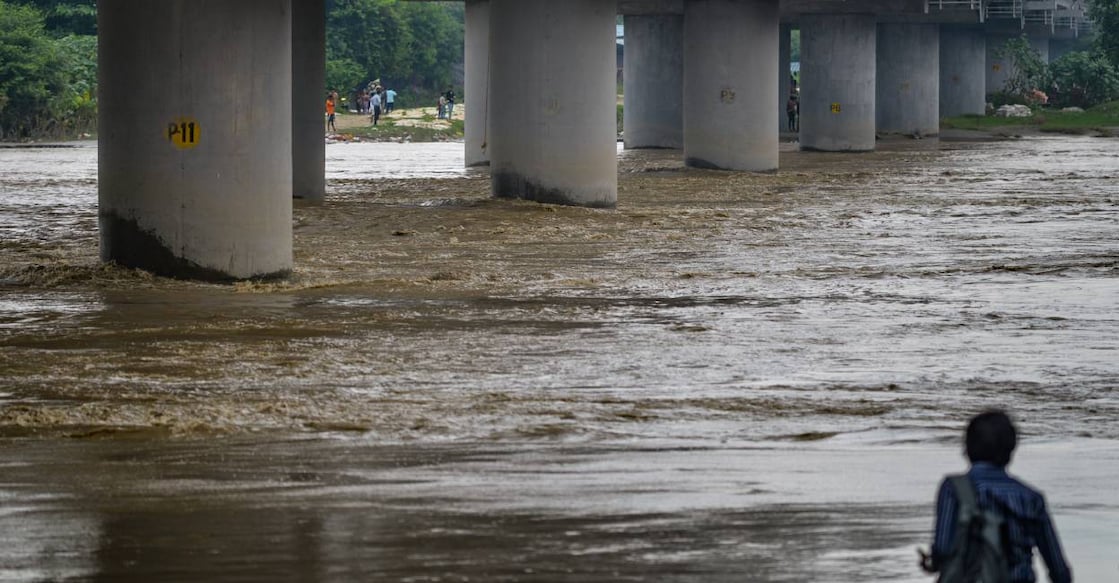
Authorities warned residents living along the Yamuna floodplains to move to safer locations, with the river expected to reach the evacuation mark of 206 metres by Tuesday evening. On Monday evening, the Yamuna touched 204.94 metres at the Old Railway Bridge, crossing the warning level of 204.50 metres and nearing the danger mark of 205.33 metres.
The Delhi Disaster Management Authority (DDMA) announced the closure of traffic movement on the Old Railway Bridge from 5 pm Tuesday. According to the Irrigation and Flood Control Department, the Hathnikund barrage released 3.29 lakh cusecs of water at 9 am on Monday, while 38,900 cusecs were discharged from the Wazirabad barrage. Officials expect continued high discharge in the coming days.
Divisional Commissioner Neeraj Semwal said that district magistrates have been instructed to ensure food supplies, power availability, and the establishment of relief camps. “Announcements are being made in the floodplain areas, and some residents have already been shifted. Most people are farmers who wait until the last moment, but they are being persuaded to move,” he said.
Approximately 15,000 people reside in low-lying areas of six districts, while 5,000 live directly in the floodplain. Temporary shelters have been set up, providing basic facilities such as fans, lights, and food. A resident of Yamuna Bazaar said authorities have often failed to respond to calls for help when waterlogging and mud disrupt daily life. Another resident, however, acknowledged that the current relief arrangements were adequate and that more shelters would open if water levels rose further.
Chief Minister Rekha Gupta urged citizens not to panic, emphasising that water entering the floodplain is part of the river’s natural cycle and does not necessarily pose danger to outer Delhi. She reassured that officials are monitoring the situation closely and providing hourly updates.
Environmental experts have urged stronger preventive measures. According to Nitin Bassi of the Council on Energy, Environment and Water, rising rainfall intensity in July and August and land use changes in the Western Himalayas have made the Yamuna more prone to dangerous swelling. “Given Delhi’s recurring challenges of waterlogging and localised flooding, it is crucial that preparatory systems are strengthened,” he said.
As officials prepare for possible evacuations, residents have begun placing sandbags and cement sacks along vulnerable points of the riverbank to minimise damage. The government has assured that arrangements for food, electricity and shelter will remain in place as long as necessary.
 Add as a preferred source on Google