

Despite SC order on green crackers, Diwali celebrations push Delhi's AQI to 'very poor'
Mail This Article


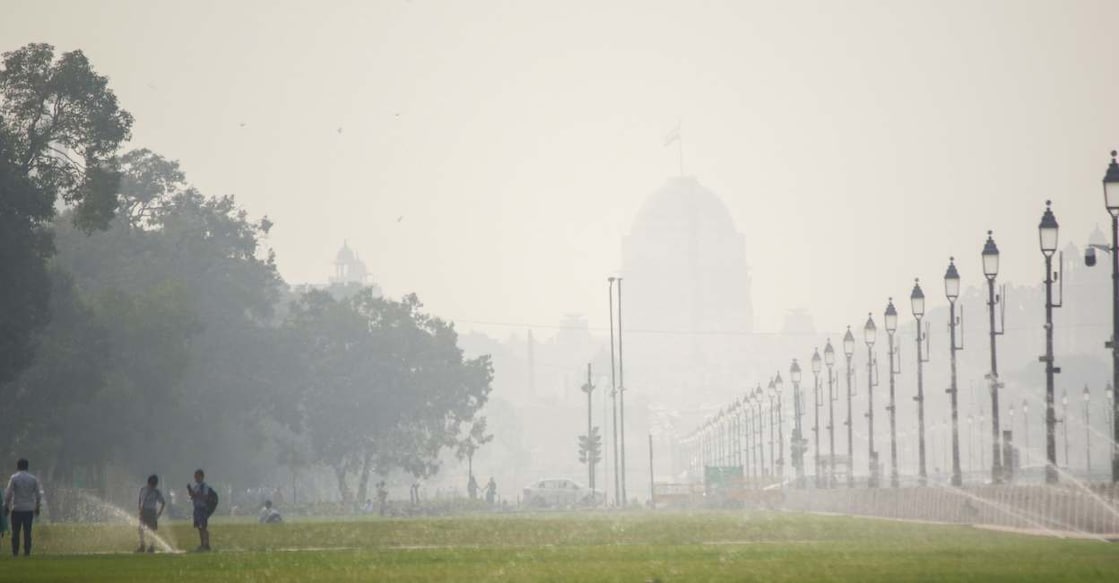
New Delhi: Delhi-National Capital Region (NCR) was blanketed in smoke, and the Air Quality Index (AQI) fell to the "very poor" category on Monday morning. The AQI at the national Capital stood at 335 at 8 am on Monday, according to the Central Pollution Control Board (CPCB), following the celebrations that took place on the eve of Diwali.
CPCB forecasts similar trends in the coming days, with a further fall in air quality anticipated on Tuesday and Wednesday, with the AQI falling to the "severe" category. This projection comes following the Supreme Court order permitting the public to burst green crackers for a limited time.
The Commission for Air Quality Management (CAQM) in the NCR and adjoining areas were prompted to swiftly activate Stage-II of the Graded Response Action Plan (GRAP) as the region's air quality crisis deepened.
On Sunday, the city's daily average Air Quality Index (AQI) climbed to 296 ('Poor') by the CPCB, surging to 300 by 6 pm and hitting 302 by 7 pm, entering the 'Very Poor' category.
An urgent meeting of the CAQM's GRAP Sub-Committee was called to manage the situation. It reviewed forecasts from the India Meteorological Department (IMD) and Indian Institute of Tropical Meteorology (IITM), predicting sustained 'Very Poor' conditions (301-400) in the days ahead due to localised emissions, stagnant winds, and temperature inversions.
Attempting to curb the worsening pollution, the Sub-Committee unanimously rolled out a 12-point action plan under Stage-II, building on existing Stage-I measures. Agencies such as the Pollution Control Boards of NCR states and the Delhi Pollution Control Committee (DPCC) have been assigned to ensure rigorous enforcement.
The plan begins with daily mechanical sweeping and water sprinkling on key roads, ramping up machinery shifts, and dusting hotspots and traffic corridors with suppressants before peak hours.
Higher parking fees aim to discourage private vehicles, and public transport, bolstered by additional CNG/electric buses and Metro services with off-peak incentives, will see a boost. Only electric, CNG, or BS-VI diesel inter-state buses can enter Delhi.
CAQM also urges citizens to embrace public transport, avoid dusty construction, and avoid waste burning, aligning with the Citizen Charter for Stages I and II.
The situation is under close watch, and regular reviews are planned. The full GRAP details are online at CAQM's website.
(Using IANS inputs)
 Add as a preferred source on Google