

Onmanorama Explains | How SIM binding affects WhatsApp, Telegram users? Does Sanchar Saathi risk privacy?
Mail This Article


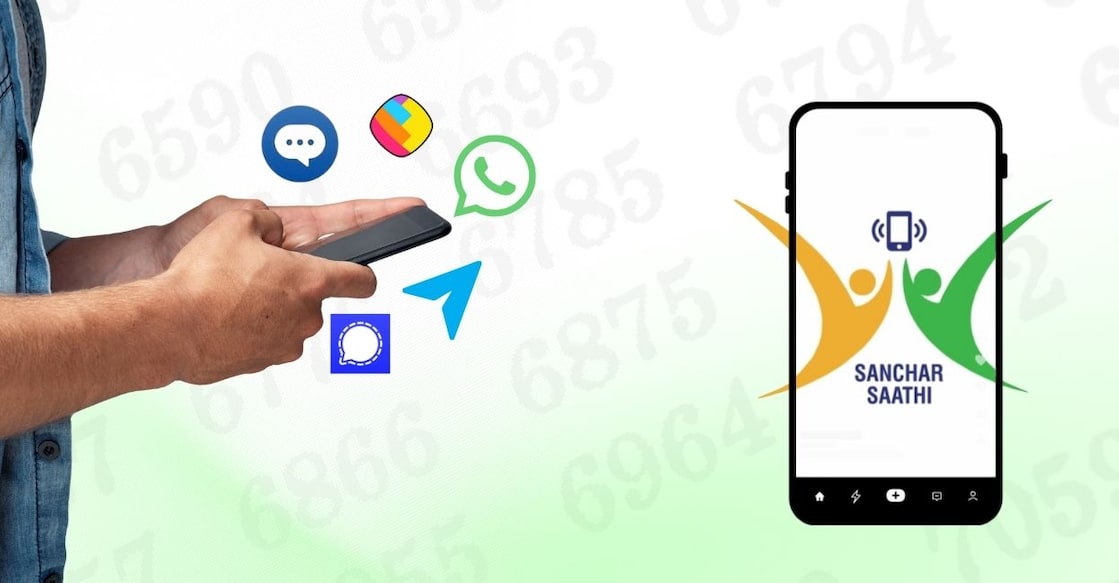
India’s telecom department has issued a landmark directive requiring all major messaging apps to verify that the device contains the same active SIM used during registration. Under the November 28 order, platforms must ensure within 90 days that they “work only if an active SIM is present in the user’s device”. The government has also directed that all new smartphones sold in India must come pre-installed with the Sanchar Saathi app. Onmanorama Explains looks at which apps are affected and what the new rules mean for users.
Which apps are affected
Any app that identifies users via mobile numbers will be covered. This includes WhatsApp, Telegram, Signal, Snapchat, Arattai, ShareChat, JioChat, Josh and other app-based communication services.
If the registered SIM is removed, replaced or deactivated, the app must immediately stop functioning. The rule applies across devices: phones, tablets, PCs and web interfaces. Companion portals like WhatsApp Web must automatically log users out at least every six hours, requiring fresh QR-code authentication.
Platforms have 90 days to modify their systems for SIM binding and 120 days to file compliance reports, failing which they may face penalties under the Telecommunications Act and cybersecurity rules. Roaming use will not be affected as long as the registered SIM remains active in the handset.
How will this change user experience
Until now, apps verified SIM ownership only during initial OTP registration. After that, they continued working even if the SIM was removed or swapped. The new mandate requires continuous verification via the SIM’s unique IMSI number.
For users, this means chat apps will stop working the moment the registered SIM is absent or inactive. People who regularly switch SIMs, use multiple phones, or rely on Wi-Fi–only devices are likely to face disruptions. Travellers abroad who insert a local SIM may also find their accounts inaccessible.
Web and desktop versions will expire every six hours, forcing frequent logins. Office users dependent on WhatsApp Web or Telegram Desktop will probably feel the change most immediately.
Why the government says SIM binding is necessary
The government argues that continuous SIM verification closes a loophole exploited by cybercriminals. Officials say scam networks often operate chat accounts on devices without the original SIM, making them harder to trace. With reported cyber-fraud losses crossing ₹22,800 crore in 2024, the DoT views SIM binding as a way to restore accountability by tying every account to a KYC-verified SIM.
The system would function similarly to banking apps, which periodically validate device and SIM credentials instead of relying on a one-time OTP.
How Sanchar Saathi fits into the directive
Alongside SIM binding, the government has ordered that all new smartphones sold in India must come pre-installed with Sanchar Saathi — its fraud-prevention and device-tracking app. The platform already supports features such as reporting lost phones, checking SIM connections linked to a person’s ID and flagging suspected fraudulent numbers.
Officials frame Sanchar Saathi as a complementary tool: SIM binding secures app-level identity, while Sanchar Saathi monitors misuse of SIMs and devices at the network level. Critics, however, argue that pairing a mandatory system app with compulsory SIM validation strengthens state visibility over citizens’ digital activity, raising broader privacy and proportionality concerns.
Privacy and feasibility concerns
Telecom operators, through the Cellular Operators Association of India, have welcomed the rule as a boost to national security and a deterrent against anonymous misuse.
Technology firms and internet industry bodies, however, have raised serious concerns. The Broadband India Forum has warned that the directive exceeds the scope of the telecom law, could inconvenience millions of users and may not meaningfully curb fraud, since scammers often rely on SIMs obtained through fraudulent KYC anyway. The Internet and Mobile Association of India has termed the policy an “overreach” that blurs the long-standing regulatory separation between telecom networks and over-the-top apps.
Privacy advocates say continuous SIM checks and the forced presence of government-linked apps could expand state surveillance capabilities. Opposition leaders and digital rights groups have also questioned whether such a major change should be introduced without public consultation or statutory backing.
The government maintains the directive falls within its cybersecurity powers. Minister Jyotiraditya Scindia has said users are free to delete Sanchar Saathi if they do not wish to use it.
Does any other country do this?
India is believed to be the first country to mandate continuous SIM linkage for global messaging apps. While some countries like Russia require linking state messaging accounts to phone numbers, none have demanded persistent verification tied to the physical SIM. Analysts warn that the measure could make seamless overseas use significantly harder for Indian residents.
 Add as a preferred source on Google