

Renowned ecologist Madhav Gadgil passes away
Mail This Article


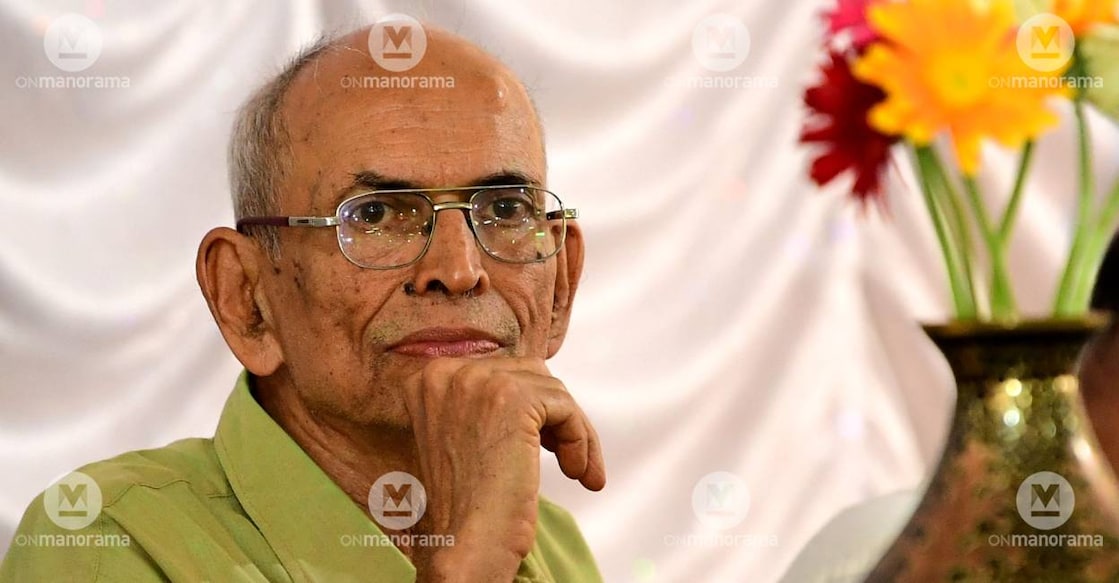
Pune: Renowned ecologist, academician and writer Prof Madhav Gadgil passed away after a brief illness at a private hospital in Pune on Wednesday night. He was 83. His family confirmed the news on X.
The cremation will be held at 4 pm at Vaikunth Smashanbhumi, Navi Peth, Pune.
Prof Gadgil was widely known for his pioneering research on the Western Ghats and for his contributions to environmental policy and conservation in India.
Gadgil was the founder of the Centre for Ecological Sciences at the Indian Institute of Science (IISc), Bengaluru. As chairman of the Western Ghats Ecology Expert Panel (WGEEP) in 2011, Prof Gadgil authored the landmark “Gadgil Report” on the conservation of the Western Ghats. He recommended declaring the entire Western Ghats an Ecologically Sensitive Area and called for bans on mining and large dams in high-sensitivity zones.
Although the report was initially sidelined by state governments fearing an impact on economic development, the devastating floods and landslides witnessed in recent years in Kerala and Karnataka have brought Gadgil’s warnings back into national focus.
The Government of India conferred on him the Padma Shri, the country’s fourth-highest civilian honour, in 1981 and the Padma Bhushan, the country's third highest civilian award in 2006. The Council of Scientific and Industrial Research (CSIR) awarded him the Shanti Swarup Bhatnagar Prize for Science and Technology — India’s highest science award — in 1986. In 2024, the United Nations honoured him with the UNEP Champions of the Earth award for his lifetime contributions to environmental protection.
Born in Pune on May 24, 1942, Madhav Gadgil came from a distinguished academic background. His father, Dhananjay Ramchandra Gadgil, was a prominent economist and former head of the Gokhale Institute.
Gadgil completed his undergraduate studies in biology at Fergusson College in 1963 and earned his master’s degree in zoology from the University of Mumbai in 1965. He then pursued a doctorate at Harvard University, completing it in 1969 with a focus on mathematical ecology and animal behavior.
After returning to India in 1971, Gadgil joined the Indian Institute of Science (IISc) in 1973.
While at IISc, he helped establish significant academic centers, including the Centre for Ecological Sciences and the Centre for Theoretical Studies, thereby shaping the development of contemporary ecological research in India.
He superannuated from IISc in 2004, but continued scholarly work with the Agharkar Research Institute in Pune and later at the University of Goa.
Over the course of his career, Gadgil also served on numerous major national and international committees, including the Scientific Advisory Council to the Prime Minister, the National Advisory Council, and the National Tiger Conservation Authority.
A prolific writer, he has authored seven books and over 250 scientific papers. In 2023, he released his autobiography, 'A Walk Up the Hill', documenting his journey through India's changing landscapes. His other major works are: 'This Fissured Land: An Ecological History of India (with Ramachandra Guha)', 'Ecology and Equity: The Use and Abuse of Nature in Contemporary India' and 'Ecological Journeys: The Science and Politics of Conservation in India'.
 Add as a preferred source on Google