

Veteran journalist and author Mark Tully dies in Delhi at 90
Mail This Article
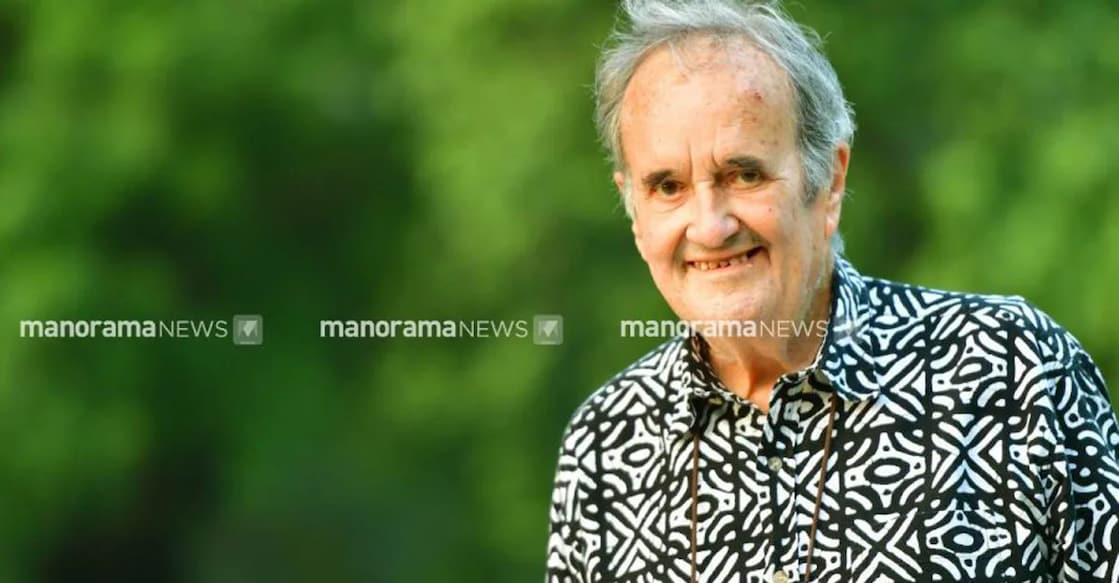
Veteran journalist and author Mark Tully, widely regarded as one of India’s most perceptive chroniclers, died in Delhi on Sunday. He was 90.
Hospital authorities said Tully passed away at a private hospital in South Delhi following multi-organ failure. He had been unwell for some time and was admitted to Max Super Speciality Hospital, Saket, on January 21 under the nephrology department.
Confirming his death, the hospital said in a statement, "Max Super Speciality Hospital, Saket, confirms with deep sadness the passing of Mr William Mark Tully on January 25, 2026, at 2:35 pm. The cause of death was multi-organ failure following a stroke.
Our thoughts and heartfelt condolences are with his family, loved ones, and all those affected by his passing."
Veteran journalist Satish Jacob, a close associate of Tully, also confirmed the news, telling PTI, “Mark passed away at Max Hospital Saket this afternoon.” Born in Calcutta (now Kolkata) on October 24, 1935, Tully served as the BBC’s New Delhi bureau chief for 22 years and became one of the most recognisable foreign correspondents covering India. His reporting for the broadcaster shaped international understanding of the country during several crucial decades.
Apart from journalism, Tully made a significant mark as an author and broadcaster. He presented the BBC Radio 4 programme Something Understood and featured in numerous documentaries exploring themes ranging from the British Raj and post-Independence India to the Indian Railways.
Tully received a knighthood in 2002 and was awarded the Padma Bhushan by the Government of India in 2005 for his contributions to journalism and literature. His books on India include No Full Stops in India, India in Slow Motion and The Heart of India.
His BBC career was defined by coverage of some of the most significant moments in India’s post-Independence history, including the 1971 Bangladesh war, the Emergency between 1975 and 1977, the execution of former Pakistan president Zulfikar Ali Bhutto in 1979, Operation Blue Star, the assassination of Prime Minister Indira Gandhi and the anti-Sikh riots in 1984, the killing of Rajiv Gandhi in 1991, and the demolition of the Babri Masjid in 1992. Operation Blue Star and the Punjab crisis also formed the subject of Tully’s first book, Amritsar: Mrs Gandhi’s Last Battle (1985), which he co-authored with Satish Jacob.
 Add as a preferred source on Google