

Call for justice for Kerala ASHA workers at Bonn Climate Change Conference
Mail This Article


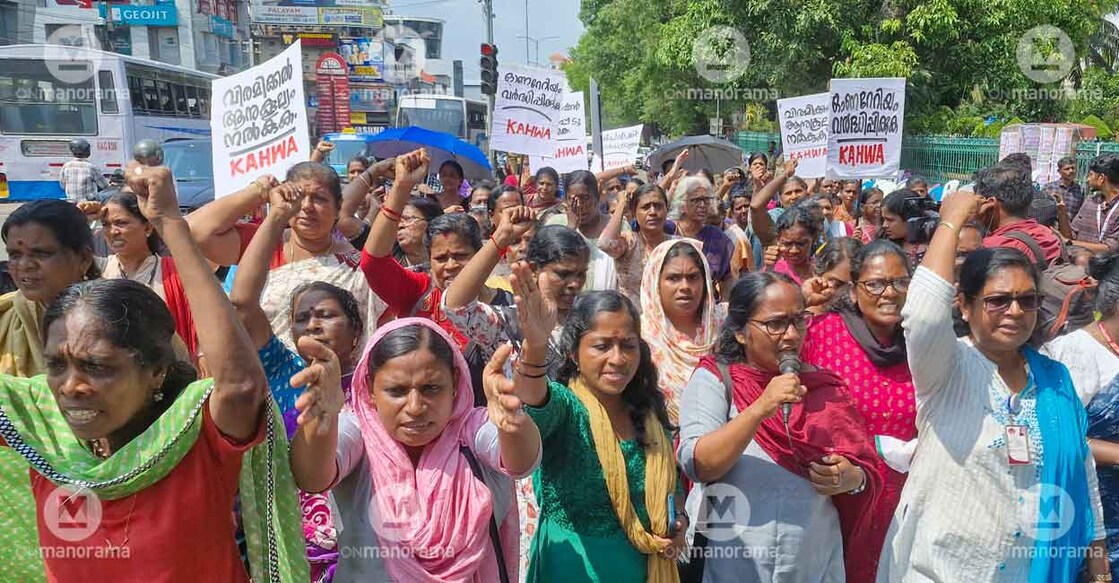
Thiruvananthapuram: On June 18, as the fight of ASHA workers for minimum wages entered the 129th day, a voice was heard in solidarity with their tireless agitation at an important world stage, the annual Climate Change Conference organised by the United Nations Framework Convention on Climate Change (UNFCCC) in Bonn, Germany, from June 16 to 26.
It was a climate activist from Kerala, Babitha P S, who in her spirited three-minute speech at the Bonn Climate Camp, an auxiliary event of the Bonn Climate Change Conference, talked about the heroic struggle of ASHAs and their importance to Kerala's health sector. Babitha, the co-founder of Menstruation Matters, represents Women and Gender Constituency at the UNFCCC.
ASHA workers began their strike in front of the Secretariat on February 10, demanding a hike in monthly honorarium from ₹7000 to ₹21,000, its disbursal by the fifth of every month, and pension benefits of ₹5 lakh.
Babitha told a global audience of climate change activists that Kerala's claim of a model state would sound hollow as long as ASHA workers were treated unfairly. "Kerala prides itself on being a model development state in India, boasting the highest literacy rate, a top-tier healthcare system, and a multitude of progressive policies. However, this impressive facade often conceals a critical oversight: the plight of the women who are foundational to these achievements."
She told her audience that the ASHA workers in Kerala have been on strike for more than 100 days, demanding minimum wages, "braving scorching sun and pouring rain". "It is time for Kerala to acknowledge and address the systemic undervaluing of these essential workers, ensuring that our progress truly stands on a foundation of equity and fairness," she said.
Babitha said that ASHA workers, the backbone of community healthcare, "were neither privileged nor part of the ruling class". When she said that "they received honorariums, not wages", a chorus of "shame' rose from the audience.
Even in the face of personal loss and crisis, Babitha said they were relentless in how they showed up for their communities, to protect and preserve the lives of others. "In many areas, they were effective in aiding the interventions of the medical personnel with their knowledge of each family's medical history and the local geography," she said.
Justice for ASHAs was important even in the context of the world's collective move towards environmental sustainability. "The Just Transition agenda will not be possible if the importance of care work is not recognised, and unless initiatives are developed for it to be distributed fairly and channels for participation and leadership are opened for caregivers," Babitha said.
A 'just transition' is broadly defined as ensuring that no one is left behind or pushed behind in the transition to low-carbon and environmentally sustainable economies and societies. "ASHA workers are community stewards, frontline care workers, and primary responders and they must be centred in the Just Transition agenda," Babitha said.
The Bonn Climate Change Conference is an annual mid-year meeting that takes place under the UNFCCC — an international agreement, signed in 1992, that has provided a basis for climate negotiations. Besides the annual Conference of the Parties (COP), the Bonn Conference is the only other regular climate summit hosted by the UNFCCC.
 Add as a preferred source on Google