

Sinking of ELSA 3: Greenpeace wants MSC to bear entire clean up cost and fisherfolk compensation
Mail This Article


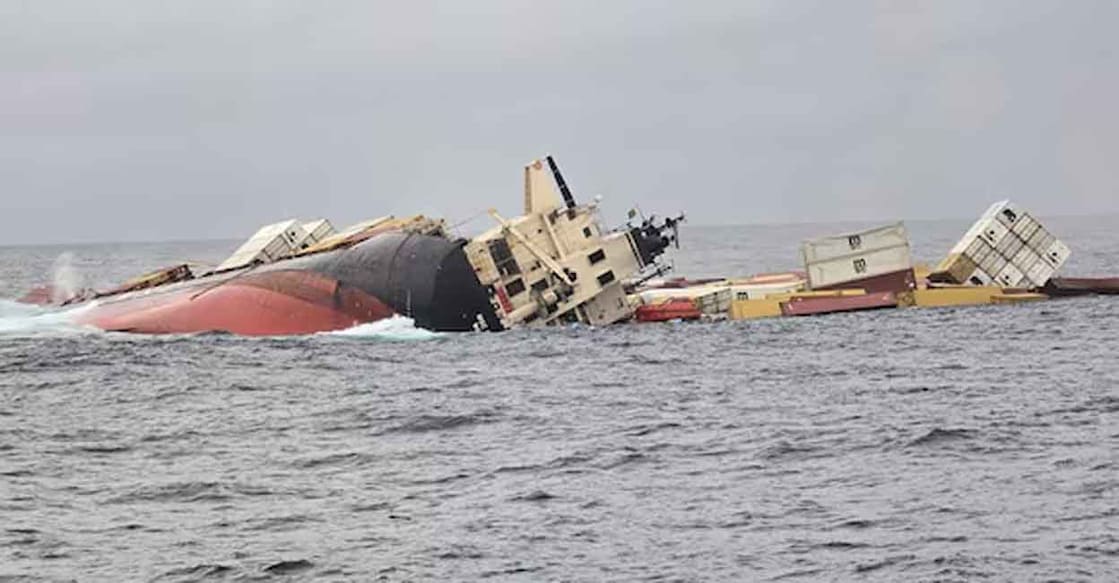
Greenpeace India, the Indian branch of the global non-profit NGO Greenpeace, has called the sinking of MSC Elsa 3 off the coast of Kerala on May 25 a case of "corporate negligence" and has called upon Mediterranean Shipping Company (MSC) to "support an independent environmental and social impact assessment and roll out a comprehensive compensation package that reflects the magnitude of the damage".
This was stated in a White Paper released by Greenpeace India and Citizen Response Group in Thiruvananthapuram on Monday. The MSC, on its part, has refused to pay the compensation of Rs 9531 crore demanded by the Kerala government and has maintained that the shipwreck had not caused any significant ecological damage.
The Greenpeace White Paper says that the company (MSC) has to be held "fully accountable". It then calls for "immediate and full clean up funding to remove the billions of plastic nurdles spilled across the coastlines of Kerala, Tamil Nadu and Sri Lanka, along with long-term compensation for the lingering environmental and economic impacts of nurdle pollution and toxic chemical discharge".
The MSC ELSA 3 was carrying 643 containers, including hazardous chemicals such as calcium carbide and hydrazine, over 450 tonnes of diesel and furnace oil and more than 60 containers of plastic nurdles, tiny raw plastic pellets, whose content have washed up along the Kerala coast, reaching Tamil Nadu’s Dhanushkodi sanctuary and the UNESCO Biosphere Reserve of the Gulf of Mannar, considered one of the world’s richest marine biodiversity regions.
If there is oil spill and hydrocarbon contamination, the White Paper anticipates four kinds of impacts.
One, direct toxicity. The leakage of diesel and furnace oil poses an immediate threat to marine life. "Hydrocarbons can coat the feathers of seabirds, impairing their ability to fly and regulate body temperature, leading to hypothermia and drowning. Marine mammals can suffer skin irritation, respiratory issues, and internal organ damage from ingestion," the White Paper says.
Two, habitat degradation. Oil slicks can smother sensitive coastal ecosystems such as mangroves, estuaries, and mudflats, which are crucial breeding and feeding grounds for numerous marine and avian species.
"Once oil penetrates these areas, cleanup becomes extremely difficult, leading to long-term habitat degradation. Beneath the surface, oil spills disrupt coral reefs and seagrass beds, harming critical habitats for fish and invertebrates," the paper says. Filter-feeders (aquatic animals that distil nutrients from water using gills or tentacles) such as sardines (maththy) and mackerel (ayala) common to these waters, are especially vulnerable as "they ingest oil-contaminated particles, leading to bioaccumulation and widespread toxicity across the food chain".
Three, food chain disruption. Oil can enter the marine food web through ingestion by plankton and small fish, bioaccumulating up the chain and potentially affecting larger fish, marine mammals, and ultimately human consumers.
Four, threat to industry. Oil contamination can lead to fish mortality, reduced productivity, and public hesitation in consuming seafood, severely impacting the livelihoods of fishing communities. "The timing of the spill during the monsoon, a critical fish breeding season, amplifies concerns about the loss of entire fish cohorts," the paper says.
On top of this are the hazardous chemical leaks. The presence of 12 containers with calcium carbide is particularly concerning. "When calcium carbide reacts with seawater, it produces acetylene gas (highly flammable and explosive) and calcium hydroxide. The latter increases the alkalinity of the water (raising pH levels), which can severely disrupt aquatic ecosystems," it says.
Plastic nurdles and other container debris pose further existential problems for both marine and human life. "Large amounts of microplastic pellets (nurdles, less than 5mm) have washed ashore along the Kerala coast (e.g., Kovalam, Thiruvananthapuram, Kollam, Alappuzha) and drifted to ecologically sensitive areas like the Gulf of Mannar Marine Biosphere Reserve and roughly 80 to 600 km along the coastline of Sri Lanka," the paper says.
Nurdles are primary microplastics that can absorb toxic chemicals from seawater and are frequently mistaken as food by marine animals (fish, seabirds, sea turtles), leading to internal injuries, starvation, and exposure to absorbed toxins.
The disaster has significantly affected over 10 lakh fisherfolk in Kerala, especially after early monsoon weather restrictions and the 20-nautical-mile fishing ban period following the accident, with serious consequences on daily income, food security, and occupational health.
Jackson Pollayil, the State Secretary of Kerala Swathantra Matsya Thozhilali Federation (KSMTF) said: "Our fishers are staring at a bleak future. With the fishing ban, the seafood market collapsed due to contamination fears. This has hit our livelihood, food security, and dignity. MSC must be held accountable and the government should also increase the compensation and ensure corporate accountability," he told reporters on Monday.
 Add as a preferred source on Google