

SC questions objection to Presidential reference on timelines for Governors, President
Mail This Article


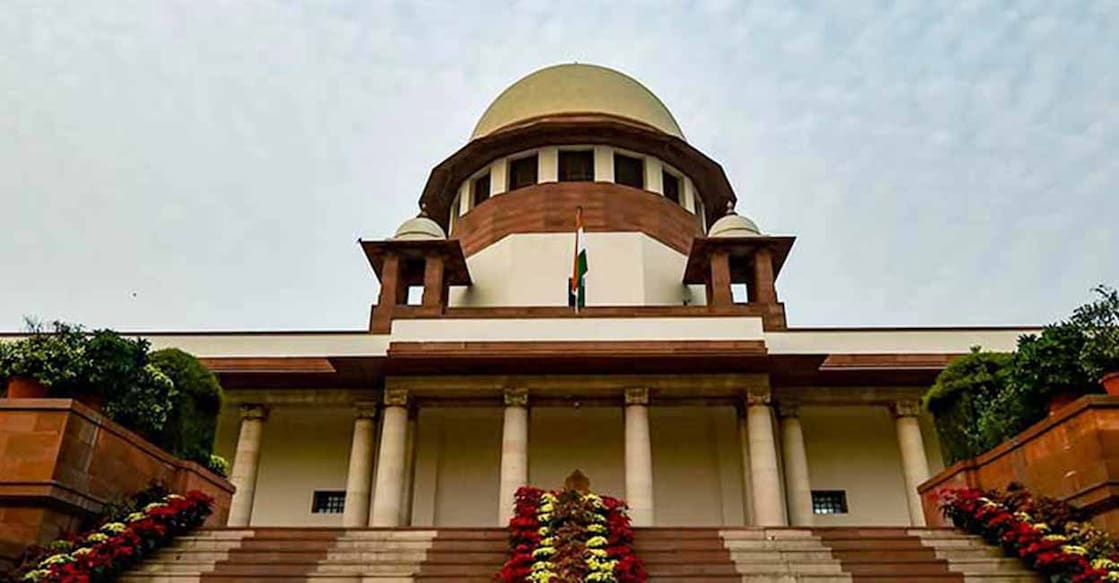
The Supreme Court on Tuesday asked why it would be wrong for the President herself to seek views through a presidential reference on whether fixed timelines can be imposed on governors and the President for acting on bills passed by state legislatures.
A five-judge Constitution bench headed by Chief Justice of India (CJI) B R Gavai posed the question when the counsel representing the Tamil Nadu and Kerala governments questioned the very maintainability of the presidential reference. The bench also comprised Justices Surya Kant, Vikram Nath, P S Narasimha and A S Chandurkar.
"When the president herself is seeking reference, then what is the problem...? Are you really serious about contesting this?" the bench asked while beginning a crucial hearing on the reference. "It is very clear that we are sitting in an advisory jurisdiction," the bench said, adding that it will be expressing its views only on law, not on the decision in the Tamil Nadu case (the April 15 verdict).
Justice Kant said under Article 143 of the Constitution, the court can render an opinion that a certain judgment does not lay down the correct law, but it will not overrule the judgment.
In May, President Droupadi Murmu exercised powers under Article 143(1) to know from the top court whether judicial orders could impose timelines for the exercise of discretion by the president while dealing with bills passed by state assemblies.
The Centre said in its written submission that imposing fixed timelines on governors and the president to act on bills passed by a state assembly would amount to one organ of the government assuming powers not vested in it by the Constitution and lead to a "constitutional disorder".
Appearing in the court on behalf of the Kerala government, senior advocate K K Venugopal said similar questions regarding Article 200 of the Constitution, which requires governors to act "as soon as possible" on state bills, were already interpreted by the top court in cases concerning Punjab, Telangana and Tamil Nadu. Citing several Supreme Court verdicts, he said the governor's powers under Article 200 have been interpreted by the apex court time and again. For the first time, in the Tamil Nadu (State vs Governor) case, a deadline has been fixed for the assent of bills passed by a state Assembly.
"These issues are no longer res integra (undecided). Once judgments cover the field, a fresh presidential reference cannot be entertained," he contended, adding that the government of India should have sought a formal review instead of invoking Article 143 to seek a reference by the president.
Venugopal also said the president is bound by the aid and advice of the council of ministers under Article 74, leaving little room for discretion. "In substance, this is not the president's reference but the government's," he argued and added that "issues are covered by a series of judgments".
Senior advocate Abhishek Singhvi, appearing in the matter for the Tamil Nadu government, said there cannot be an "intra-court appeal directly or indirectly" by filing the reference under Article 143. "This court is being asked to change the contents and substance of a judgment between two different parties and this is a subversion of institutional integrity.... This is an appeal, howsoever nicely you camouflage it," Singhvi said.
Singhvi submitted that the power under Article 143 cannot be used as an intra-court appeal and nor is it a substitute for review or curative powers. He referred to the presidential reference verdict in the Cauvery water-sharing dispute, which held that Article 143 cannot be used to answer questions that have already been decided in a judgment.
Singhvi further submitted, "If the reference is allowed to proceed, it would mean for Tamil Nadu, this will be the law, but for the rest of the country, the law will be something else. That would be an anomalous position." He added that if all the questions raised in the reference are answered in a way different from the April 15 judgment of a two-judge bench, then it will constitute a change of law also in the decided case, which is not permissible in Article 143 jurisdiction.
Attorney General R Venkataramani opposed the pleas of Venugopal and Singhvi. The hearing remained inconclusive and would continue on Wednesday.
 Add as a preferred source on Google