

Minister hits back at experts doubting poverty eradication claims, offers point by point rebuttal
Mail This Article


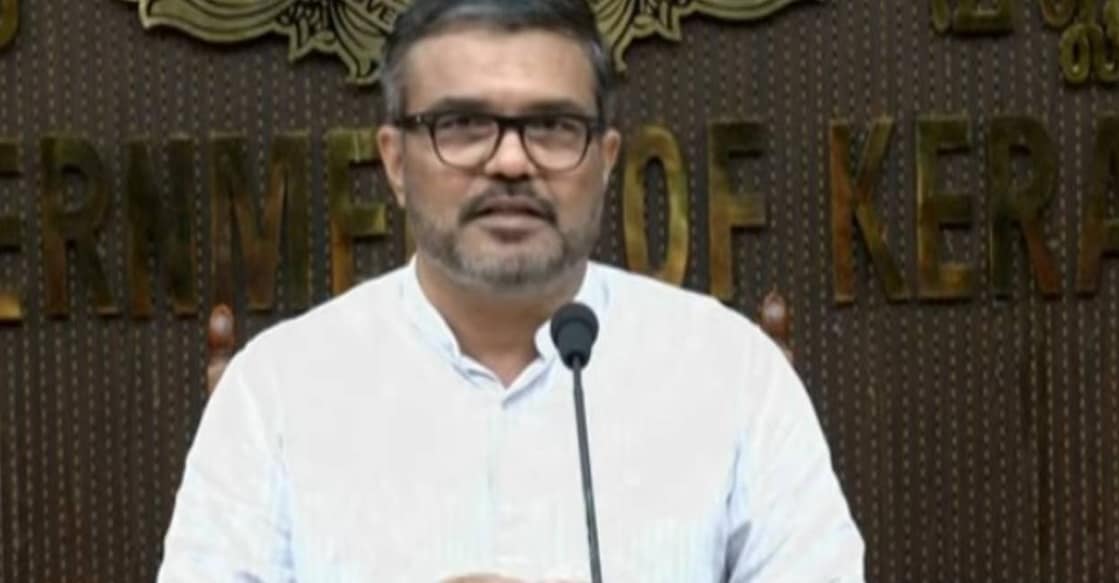
Local Self Government minister M B Rajesh on Friday said that experts who had implied that the Extreme Poverty Eradication Project (EPEP) was mere LDF government propaganda did not bother to fill themselves with publicly available information on the project. "It looked like they were swayed by certain political interests," Rajesh told the media on Friday.
The Left-leaning intellectuals led by scientist R V G Menon and the country's foremost authority on decentralised governance M A Oommen had spotlighted in an open letter on October 30 areas they felt were left unaccounted for in the implementation of the project. Rajesh gave detailed responses to most of the posers.
Question: How was the poverty survey carried out? It is a mystery that the original EPEP list of 1.18 lakh families had shrunk to 64,006
Answer: How to identify the extreme poor is detailed in Chapter 3 of the handbook, "Process to Identify Extreme Poor," published by the Kerala Institute of Local Administration (KILA) in October 2021.
The first phase was to conduct pilot projects in three places: Wadakkancherry Municipality in Thrissur, Tirunelly grama panchayat in Wayanad and Anchuthengu grama panchayat in Thiruvananthapuram.
Finding the extremely poor was the most important component of the project. KILA issued the guidelines on the basis of the information gathered from the pilot studies. KILA also gave training in the identification process to over 4 lakh volunteers made up of officials, local body representatives, and Kudumbashree workers.
There were also committees to vet the lists at the corporation/municipality/panchayat level and also at the ward level. This way a longlist of 1.18 lakh families were drawn up. This was filtered down to 87,158 families.
The houses of all these families were visited by officials, and information was collected. After this, a priority list of 73,747 families was prepared. This list was subject to super-checks, and eventually 64,006 families with one lakh three thousand and ninety-nine (1,03,099) individuals were identified as extremely poor.
Microplans were prepared for every individual unit and policy responses were tailormade for individual cases. It is for the first time in the country that microplans were used to lift families out of poverty.
From the original list of 64,006, 4729 units were taken out. Of this, 4421 were removed because of deaths; all were single -individual units. 231 families had migrated to other states, and there was duplication in 47 cases. So the final number of extreme poor families in Kerala is 59,277.
Q. Which expert committee had conducted the survey? What is the authenticity of the data used? Did the Local Self-Government Department merely collect a list of recommendations from panchayats and municipalities?
A: Such a question reveals that the experts have an abysmal understanding of the project. The identification process was done with massive public participation. As the experts seem to believe, the extremely poor were not picked by collecting "lists of recommendations" from the local bodies. The data was collected from regular house visits by trained volunteers. There was a clear system in place.
Q. Is 'extreme poor' another word for 'destitute'?
A: The experts seem confused about the difference between poverty and extreme poverty. The first thing said in their open letter is that Kerala has been freed of poverty. That is not our claim. Our claim is that extreme poverty has been eradicated through the Extreme Poverty Eradication Programme.
And the extremely poor are those without any documents, like an Aadhar card, a ration card, or a health card, that can prove their identity. They are virtually invisible. They might be alive, but are non-existent. They are the ones who cannot benefit from government poverty eradication schemes.
Q. What is the factual basis for the claim that extreme poverty has been rooted out?
A: 4677 families were given houses. Land and house were provided to 2713 families. Rs 2 lakh each was given for the repair of 5522 houses. Steady income was guaranteed for 4394 families, and for this Kudumbashree had developed an exclusive scheme called Ujjeevanam.
Rights documents were made available to 21,263 families. Meaning, over 35 per cent of the list did not have any documents. 20,648 families that had no access to food were provided three square meals a day. Of this 18,438 families were given food kits and 2210 families were provided food through Kudumbashree Janakeeya hotels and community kitchens.
35,955 families are regularly supplied medicines. Individuals in 219 families were taken to hospitals and provided treatment. 173 of them were also give bystanders. 5777 individuals are given palliative care. Seven organ transplants were conducted.
These are the facts that we use to claim that extreme poverty has been eradicated.
Q. Was the Planning Board and Statistical Department involved?
A: This was shocking, coming from the experts. The Planning Board was actively involved. It is a Planning Board member, Jiju P Alex, who chaired the State Resource Group which had the leadership role in framing the guidelines for the project. It is the Statistics Department that did the super-checks.
Q. Shouldn't ASHA workers and other scheme workers who receive a daily wage of Rs 233 be considered extremely poor?
A. It is strange that a group of experts have raised such a question. As I have already said, the basic condition to identify a person as extreme poor is the absence of documents to prove identity.
Additionally, the Centre's cut-off daily wage for categorising families below the poverty line is somewhere around Rs 60. Here, ASHA workers, when their incentives are also factored in, pocket not Rs 233 but over Rs 430.
What was left unanswered
Nonetheless, the minister did not respond to two critical questions raised by the experts.
One, what was the magic done to eradicate the extreme poverty of 4.85 lakh tribals in 1.16 lakh tribal families in Kerala. These are figures from the 2011 census. "The latest figures show that the number of extremely poor families among tribals is 6400, which is just 5.5% of the 2011 figure. Are these 5.5 per cent destitutes or the extremely poor under Antyodaya Anna Yojana," the letter wanted to know.
Two, is the EPEP a revised version of the Aashraya Scheme?
 Add as a preferred source on Google