

Are AI voice assistants Alexa & Siri teaching kids to disrespect women?
Mail This Article


To realise how artificial intelligence could create "intergenerational gender oppression", one only has to listen to female-voiced digital assistants like Alexa or Siri.
Human rights activist Dinu Veyil said that when Siri was told, "Hey Siri, you are a slut", her response was: "I would blush if I could". (The AI software that powers Siri has recently been updated to reply to the insult more flatly: "I don’t know how to respond to that". But the coyness and submissiveness, and the refusal to stand up for her, is still intact.)
When Alexa is asked the same question, her response was: "Thank you for your feedback." Once again, a lack of boldness, completely at odds with the women of today. Dinu was demonstrating the gender divide inherent in an AI-powered world.
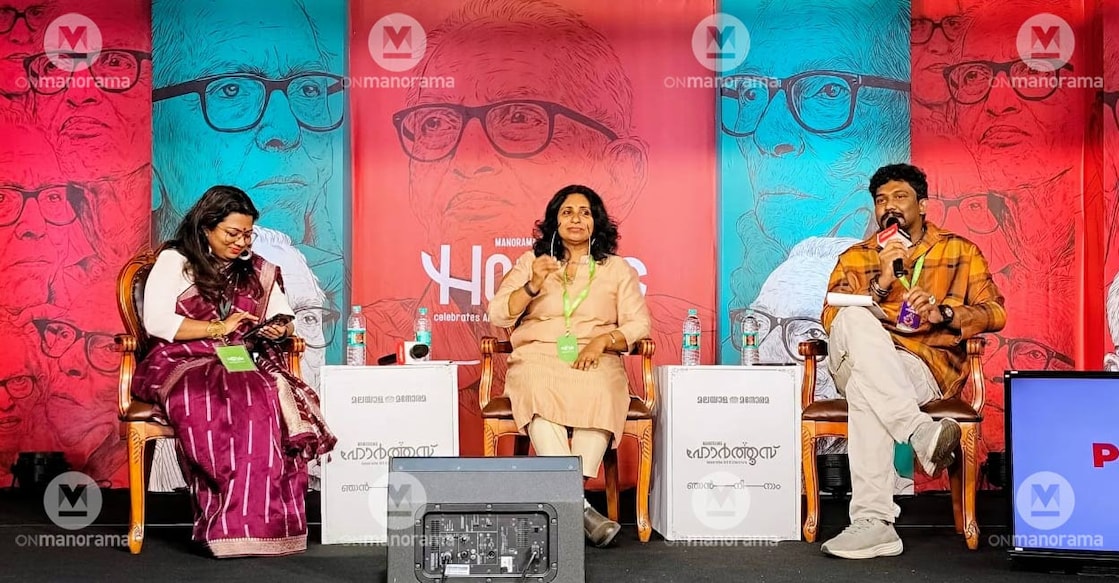
The human rights activist was in conversation with Binitha V Thampi, author and Madras IIT professor, and Dr Malavika Binny, historian, writer and academic, at the Manorama Hortus session "Feminism and AI".
"Artificial intelligence becomes artificial gendered oppression," Dinu said. Dr Binny made a small correction. "Artificial intelligence does not lead to artificial gendered oppression but to very real oppression," she said.
According to Dr Binny, such submissiveness of voice assistants creates inter-generational oppression. "Just think about houses that use Alexa or Siri. How can a boy or a girl who grows up commanding a subservient Alexa or Siri to do this and that be expected to respect females? There is a clear signalling to the new generation as to who is expected to respond to such commands. Therefore, Siri and Alexa are platforms for inter-generational oppression," Dr Binny said.
She said that under the social reproduction theory, the aspirations of women are kept firmly in check to keep wages forever low. "The capitalist system rests on the unpaid labour of women," Dr Binny said. If the theory is extended to an AI-powered world, she said that it would be the women's work that would be the most devalued.
Binitha Thampi said that women, rather than stepping back, should engage with technology. "To begin with, feminists did not have a nice relationship with technology. Especially in the second wave of feminism, technology was looked at with suspicion. It was a time of eco-feminism and it was felt that technology would do to feminism what capitalism did to the environment," Thampi said.
It was Dona Haraway, through her Cyborg Manifesto, who exhorted feminists to reinvent the foundation of feminism by expanding its base to include all that contributes to the making of the woman, including technology. Thampi said Haraway called for the "politics of affinity", to include in the feminist movement all groups that would have been excluded and marginalised had the movement confined itself just to women.
Thampi said that women should explore the power of technology. She said technology had contributed immensely to the feminist movement. The Me Too movement was the example she provided. "It was the anonymity provided by the digital space that allowed millions of women to take part in the Me Too movement," Thampi said.
 Add as a preferred source on Google