

False smut, bacterial blight hit paddy fields in Venmony
Mail This Article


Alappuzha: Farmers in the Mambra polders at Venmony are facing severe distress following the outbreak of false smut, locally known as Lakshmi disease, and bacterial blight in paddy fields nearing harvest. Of the nearly 100 acres under cultivation, around 15 acres have already been identified as affected.
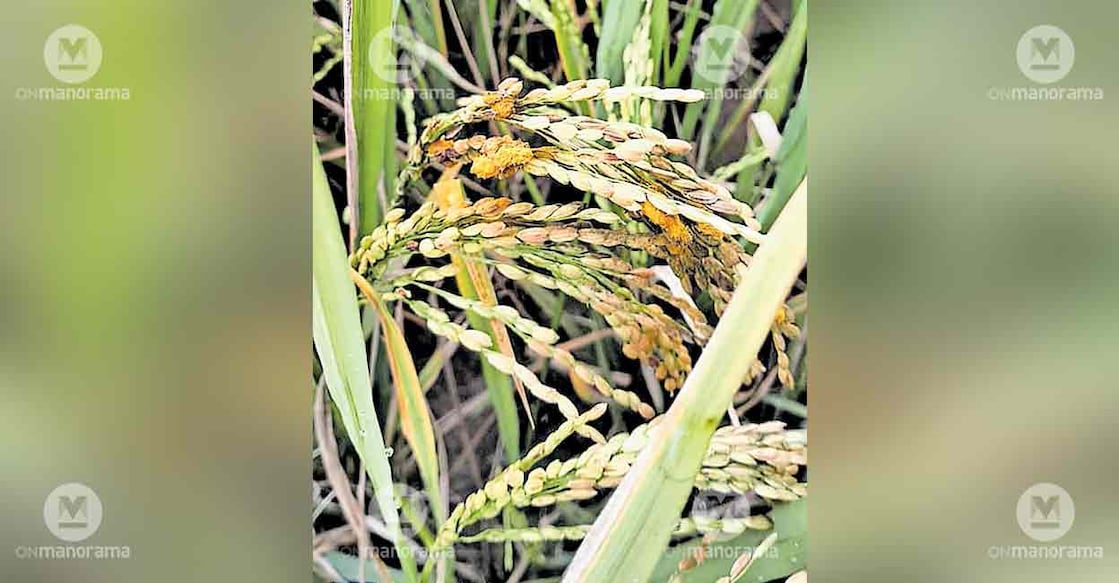
False smut manifests as a yellow, pollen-like fungal growth on the grain stalks, eventually causing the crop to weaken and wither. At the same time, bacterial blight has resulted in scorching and drying of paddy leaves, further threatening crop health. With the crop in its final stage before harvest, farmers say they are unable to apply chemical treatments or pesticides, raising fears of a significant drop in yield.
Of the 72 farmers cultivating paddy across the polder network, at least 15 have had their crops confirmed as infected. There is growing concern that the disease could spread further to adjoining fields.
Paddy harvesting in the Mambra polders is usually completed by January, after which farmers shift to vegetable cultivation by February.
Agricultural Officer K S Sandeep Kumar and Assistant Agricultural Officer V V Anilkumar inspected the affected fields and submitted a report to the Principal Agricultural Officer. Officials have observed that since the crop is almost ready to harvest, the only viable option is to implement preventive measures ahead of the next cultivation cycle beginning in February.
False smut, also known as Varipoovu or Pola Azhukal, is a fungal disease that attacks paddy during the flowering or grain-filling stage. Though a traditional belief persists among farmers that this disease appears only during the high yielding season, there is no scientific evidence available to support this claim.
 Add as a preferred source on Google