

Sifting golden dust and trading it a daily business in Nilambur
Mail This Article


We bade farewell to Muhammadali and Abdul Razak, natives of Maruthakkadavu, with the realisation that the fruit of hours, or even days, of back-breaking labour often amounts to gold no larger than a mustard seed. Our next journey followed the route by which their hard work is converted into money. Sales take place only after enough gold has been collected to make it worth-selling, a process that requires days of toil. Those who earn their living by sifting gold then seek out small-time jewellers. We too went in search of them.
Gold in transit by autorickshaw
Nilambur town bustled with impatient vehicles under the scorching sun. We waded through the rush and turned into a narrow bylane lined on both sides with small jewellery shops. Entering one such shop, we were told outright that they did not deal in this type of gold. Yet, they were willing to share details on this business.
The majority of those selling gold sifted from the Chaliyar are tribals while the price of the metal they bring in is fixed by the small jewellers. The quantities they bring in are tiny, often just 100 to 150 milligrams. Large finds are rare, and sellers are irregular, since luck does not favour them every day.
A goldsmith, overhearing our conversation, added more. He shared details of the gold that arrives in autorickshaws dail evening, carried as small balls. Payment depends on the prevailing market price. When gold sifted by many hands is sold, each worker may earn around ₹700–800. Jewellers and goldsmiths use this gold to craft ornaments. Some claim that its quality is often superior, even better than 916 carats.
To beat hunger
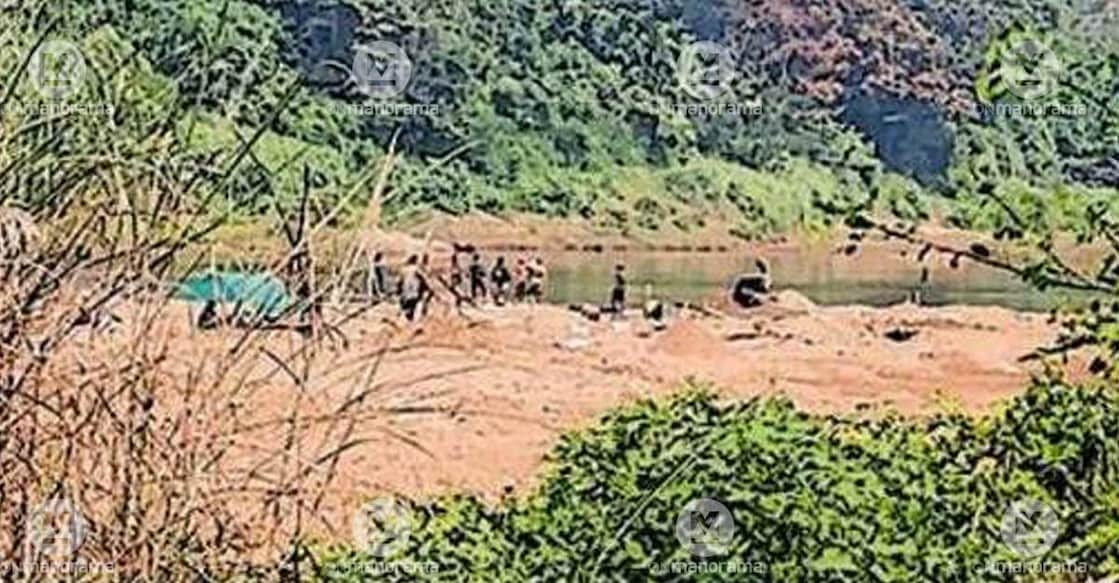
Gold sifting is no longer confined to Nilambur but it is now underway at several points along the Chaliyar. At one such site, we found many people at work. Their stories revealed a harsh story of hunger that even gold cannot fully address.
Some approached us as we photographed the riverbank. When told that we were there after seeing media reports, they pleaded with folded hands: “Kindly don’t put our families through hunger.” Once reassured that we meant no harm, they explained why they sift for gold along Chaliyar’s shores.
What other way to fight joblessness?
Most of those engaged in gold sifting are former sand miners. Around 300 workers lost their livelihoods when sand mining was banned. Now, they survive by looking for gold. After earning thousands from a single day’s work in the river in the past, they are now scraping through by trying their luck to make ends meet. Some have migrated abroad. But for the aged and unskilled, this is the only option left.
Under the blazing sun, they dig pits in the riverbed, searching for grains of gold. Sometimes, an entire day’s effort yields nothing. They claim to redeposit the sand after sifting. Yet, a full day of toil rarely brings more than ₹700–800.
While tribals and locals at Maruthamala continue traditional methods of sifting sand for gold, a few others have begun experimenting with new techniques too.
 Add as a preferred source on Google