

New Year, New York, Mamdani

Mail This Article


It's official now – Mayor Mamdani begins his term in New York on New Year's Day.
Zohran Mamdani, branded a '100% Communist lunatic' by US President Donald Trump, assumed office at the helm of capitalism, taking charge of Manhattan's historic City Hall Mayor's Office. Born to Indian-origin Columbia University professor Mahmood Mamdani and Indian-American filmmaker Mira Nair, he has become the first South Asian Muslim mayor of any US city.
From the perspective of democracy, everything appears simple: New Yorkers voted, and Mamdani was elected. However, for those familiar with New York and its core values, the picture is far from simple. The rise of Mamdani, a declared democratic socialist, to power in a city built on capitalism is almost paradoxical.
Imagine the so-called socialist mayor taking an evening break from office. A five-minute walk from City Hall, down Broadway, would land him in the heart of American capitalism – the Financial District, Wall Street.
At the heart of Wall Street, where corporate power holds sway, lies the soul of New York – and, by extension, that of the United States of America.
The capitalist dream
The contradiction a New Yorker confronts cannot easily be grasped by someone living in Kerala. In Malayali life, capitalism and communism coexist more or less comfortably. For nearly five decades, Kerala has been ruled by two coalitions – one ostensibly pro-capitalist, the other pro-communist – yet both have largely embraced socialist principles.
Many small parties have switched sides between the UDF and the LDF with remarkable ease, creating the impression that ideological differences matter little. For most Americans, capitalism and communism are worlds apart.

Capitalism is the sole ideology they regard as a beacon, since free-market capitalism has worked very well for Americans over the last half-century.
The US has long been a global symbol of capitalism, a land where hard work and innovation promised prosperity. Giant corporations such as Ford and Boeing generated employment and raised workers' wages, effectively creating a new middle class.
In the post-Cold War years, the United States emerged as the ultimate exemplar of wealth creation, entrepreneurship, and global dominance. During this period, the American economy grew tremendously, with per capita real GDP nearly doubling and wealth and income rising significantly for ordinary citizens.
With the dawn of digital capitalism, American tech giants such as Microsoft and Google revolutionised the world as never before, further reinforcing the country's immense financial and technological power. It is no wonder then that a vast majority of Americans regard capitalism as the guiding principle behind their country's rise as an unquestioned global power in wealth and influence.
The "American Dream" – the belief that anyone could rise through effort – became both religion and reality for generations. In contrast, Americans see communism and socialism as both menacing and failed.
The collapse of the Soviet Union and the stagnation of Britain's welfare state system seemed to confirm that capitalism was the only sustainable path. Perhaps, Mamdani's rise to power marks America's biggest ideological rupture since the Cold War, challenging the belief that unfettered free-market capitalism is the only viable path forward.
The socialist crack
Totally incidental, one of the authors arrived in New York on November 4 – the very day the city held its historical mayoral election.
Most surveys predicted the Democratic candidate's victory. However, Mamdani's rise from a relatively unknown figure and the widespread appeal he had generated by election time remain a puzzle.
Anywhere in the United States, it is quite easy to strike up a conversation with a stranger, especially if one begins with politics. On asking about the election, the taxi driver from JFK International Airport said, "I like Zamdani", mispronouncing the name but speaking with full conviction.
"He was calm and composed during the debate. He's the only one who can stand up to those corrupt corporates." The driver said he voted for Mamdani because "he talks for people like us."
A middle-aged New Yorker friend, however, disagreed. In his view, Mamdani's socialist ideas would "kill business." He argued that socialism only encourages "lazy people" to live off government welfare and food stamps funded by hardworking taxpayers like him.
Like him, many New Yorkers are of the view that innovation thrives only under capitalism. The real surprise in Mamdani's victory lies not in religion but in ideology: not that a Muslim won the mayoral election in post-9/11 New York, but that a socialist triumphed in the global citadel of finance.
Behind the shift
Mamdani's victory is not simply the result of a charismatic young man's success, but also of growing frustration with a system that no longer works for all. Young Americans are increasingly disillusioned by a system in which the gap between the haves and the have-nots is widening at an alarming pace.
The richest 1 per cent of Americans now own more wealth than the entire middle class combined. During the COVID-19 pandemic, when millions lost their jobs, the net worth of America's billionaires increased by $1.2 trillion.
A recent survey revealed that more than one-third of households in the United States could not cope with an unexpected expense of just $400.
Elon Musk, the richest man alive, dismissed Mamdani as 'a charismatic swindler.' Strikingly, in the same week, Musk's company approved a future pay package worth an astounding $1 trillion for him – more than the annual budget of most countries.
For ordinary Americans, it is becoming increasingly clear that the system works "beautifully" for the billionaires – and barely at all for ordinary people. Many young people, weighed down by student loan debts and rising living costs such as housing rents, feel trapped in a system that no longer sustains the promise of the American Dream.
During the election campaign, Mamdani made his position unmistakably clear: "I don't think we should have billionaires," as he called for higher taxes on New York's ultra-rich.
Not a local story
Mamdani's victory in the financial capital of the world is therefore not merely a local story – it is deeply symbolic. It signals that Americans, especially younger voters, are ready to question the very foundations of the capitalist economy they were raised to defend.
Ironically, the same frustration with "the system" that once fuelled right-wing politics and Donald Trump's rise may now be driving the ascent of the left-leaning Mamdani from near obscurity just a year ago.
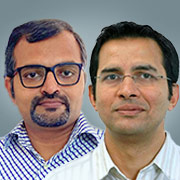
(Social anthropologist and novelist Thomas Sajan and US-trained neurologist Titto Idicula, based in Norway, write on politics, culture, economy, and medicine)
 Add as a preferred source on Google