

Russian oil standoff sparks tariff blow to Indian exports; textiles, footwear sectors at risk
Mail This Article
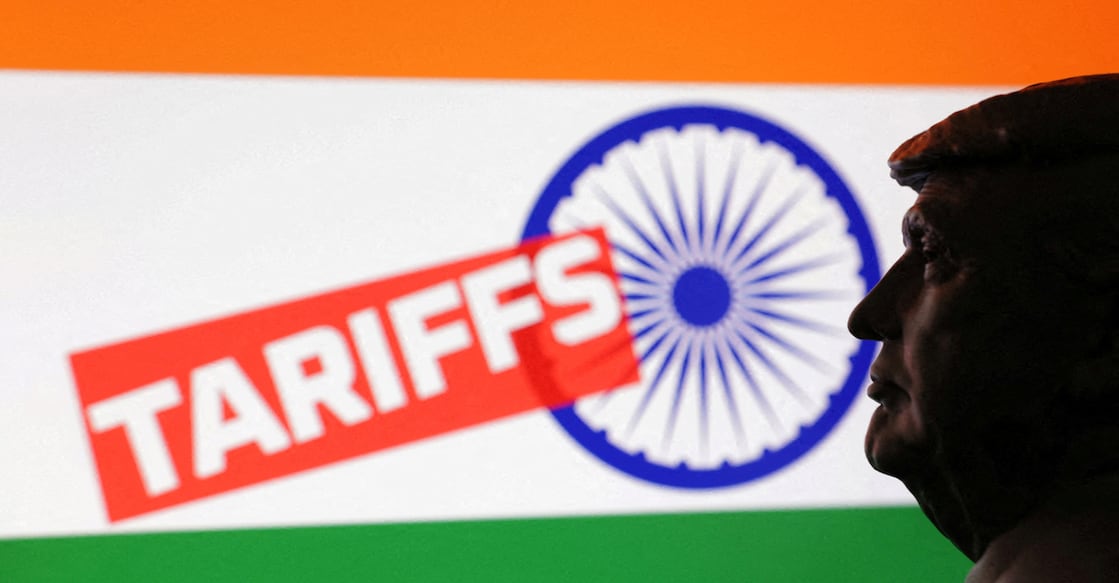
US President Donald Trump has singled out India for its continued import of Russian oil, imposing an additional 25 per cent tariff on Indian goods as a punitive measure. He accused New Delhi of supporting Moscow's aggressive war in Ukraine by purchasing discounted oil.
The new import tax, set to take effect 21 days after August 7, will raise duties on certain Indian exports to as high as 50 per cent- among the highest imposed on any US trading partner. The earlier 25 per cent tariff comes into effect today, with the US President announcing the new measure just ahead of its implementation.

How will Trump's tariffs affect India
Trump's new measures are widely expected to impact trade relations between the US and India, the world's biggest and fifth-largest economies, respectively. Bilateral trade between the two nations is estimated to be over $190 billion, with the US being India's largest export market. In 2024, Indian exports to the US totalled nearly $87 billion.
Analysts predict that this trade dynamic could be disrupted, and Indian exports from sectors such as textiles, footwear, gems, and jewellery may take a significant hit. The increased tariffs are expected to place Indian exporters at a 30–35 per cent disadvantage compared to competitors from countries like Vietnam, Bangladesh and Japan.
"This is a severe setback. Nearly 55 per cent of our shipments to the US will be affected," said SC Ralhan, president of the Federation of Indian Export Organisations.
What made Trump do this
After assuming office for the second time, one of President Trump's first actions was to impose tariffs on several of the US's trading partners in a bid to reduce Washington's trade deficit. In response, India attempted to negotiate a bilateral free trade agreement with the US, but talks stalled over key American demands.
The US sought greater access to India's agriculture and dairy markets, which New Delhi resisted. Additionally, India refused to significantly reduce its imports of Russian oil, which surged to a record $52 billion last year. This refusal, along with the trade deadlock, is seen as a major trigger behind the latest escalation in tariffs.

Trump has consistently criticised India for its energy ties with Russia, despite New Delhi's repeated defence that such imports are necessary to meet its vast energy needs and protect national interests. In his recent remarks, Trump called India’s economy "dead," labelled its trade barriers "obnoxious," and accused the country of profiting from cheap Russian oil while turning a blind eye to the human cost of Russia's three-and-a-half-year-long invasion of Ukraine.
India responded sharply
Following Trump's decision to impose additional tariffs, India responded sharply, calling the move "unfair, unjustified, and unreasonable." In a strongly worded statement, India also pointed to what it described as US double standards, accusing Washington of continuing to import materials from Russia for its nuclear industry, while expecting other countries to halt even essential imports like oil.
India emphasised that its oil purchases from Russia were driven by necessity, especially after traditional suppliers raced to meet Europe's oil demands after the EU cut its imports of Russian oil. Moreover, many European nations that continue to buy Russian oil are untouched by Trump's tariffs.
India not alone
Brazil has been hit with an additional 40 per cent tariff, raising the total rate to 50 per cent. The move comes in the wake of the trial of former Brazilian President Jair Bolsonaro - a right-wing ally of Trump - who stands accused of plotting a coup similar to what MAGA supporters did on January 6, 2021.
Despite the sweeping tariff hike, key exports, including orange juice and civil aircraft, were exempted and are expected to cushion the impact. However, Brazil has taken the first formal step at the World Trade Organisation (WTO) to initiate dispute proceedings against the US tariffs.
Switzerland has been hit with a 39 per cent tariff, although its crucial pharmaceutical industry has been spared. However, Trump has warned that future tariffs on pharmaceuticals could rise as high as 250 per cent.
Syria faces one of the highest tariffs at 41 per cent, while US trading partners are seeing varied increases from the previous baseline of 10 per cent. The EU, Japan, and South Korea now face tariffs starting at 15 per cent.
South Africa has been slapped with a 30 per cent tariff, and Pakistan is subject to a 19 per cent rate. Iraq and Canada each face 35 per cent tariffs.
Surprisingly, Trump's executive order did not mention China, a major importer of Russian oil, though he later indicated that additional tariffs on Chinese goods could be announced in the future.
(With inputs from Reuters, AFP)
 Add as a preferred source on Google