

Of chuckers & 15-degree law that governs cricketers' fairness

Mail This Article


A look at the history of cricket shows that the law relating to the “fairness of arm” in delivery has been the most dynamic, as evidenced by the number of amendments. Cricket is essentially a game between bat and ball, and the manner in which the ball is delivered has a significant influence on determining the outcome of the match. Given the importance of the process by which the ball is sent to the batsman, it is only natural that it has evolved with the times.
In the early years of the game, bowling was done underarm, and attempts to raise the arm above shoulder level while delivering the ball were considered an unfair tactic. It was only in 1835 that the Marylebone Cricket Club (MCC) allowed round-arm bowling, in which the arm was permitted to be raised to shoulder level while delivering the ball. This was due to difficulties faced by umpires arising from repeated instances of bowlers raising their arms to shoulder level during delivery, and the absence of clear provisions in the laws to address this practice.
However, bowlers realised that raising their arms above shoulder height while bowling gave them a distinct advantage and started doing so. Though initially MCC stuck to its guns and insisted that only round-arm bowling would be allowed, it was unable to prevent the increasing use of over-arm bowling. Finally, in 1864, MCC decided to go with the tide rather than trying in vain to reverse the trend of bowlers sending the deliveries overarm. Thus, by the time Test cricket began in 1877, overarm bowling had established itself as the default method, though underarm deliveries continued to be used at some levels until the turn of the last century.
The law, as drafted by MCC at that time, stated that while bowling overarm or underarm, the arm should be straight at the elbow and the ball should not be thrown. This became the essence of the law despite the various changes and amendments that have crept into the statute's wording.

But the history of cricket shows that even in the 19th century, there were bowlers who bowled the ball. The first bowler to be “no-balled “ for “throwing” in a Test match was Ernie Jones of Australia. This incident took place in the Melbourne Test of 1897 and the umpire who “called” Jones was also an Aussie named Jim Philips. Incidentally, Philips developed a reputation as a tough, no-nonsense umpire and he went on to call England fast bowler Arthur Mold for throwing 16 times in a county match in 1901. The fallout of this incident was that all county captains met and decided not to employ the services of 14 bowlers with suspect actions. This strong measure had a positive impact, and the number of bowlers with less-than-clean actions decreased considerably in the years after that.
Though it was widely accepted that fast bowlers tried to bring the elbow into play while trying to add extra years of pace to their deliveries, there were no suspicions about the bowling actions of Harold Larwood and his fellow England speedsters who pinned down Aussie batsmen during the infamous “Bodyline “ series. The bowlers of that era had a simple logic - the arm should be straight with no bend at the elbow, and anyone who failed to pass these criteria risked being banned from playing the game altogether.
It was only in the years after World War II that the malady of “chucking” reared its ugly head again. Perturbed over reports about a spurt in the increase of bowlers resorting to throwing, MCC amended the laws in this regard to state that “delivery is illegal if the bowing arm, whether having been bent at the elbow or not, is suddenly straightened immediately prior to the instant of the delivery”. Umpires also began to maintain a tighter vigil, with the result that more bowlers started being called for unfair bowling action.
Geoff Griffin of South Africa was called for throwing during the series against England in 1960. In the Test at Lord’s, where he was no-balled no fewer than eleven times due to suspect action, Griffin even picked up a hat-trick, though his side lost the game. It was later found that Griffin had suffered an accident during childhood, which prevented him from straightening his arm fully.
Ian Meckiff of Australia was the next bowler to face the ignominy of being called for 'chucking'. This took place at Brisbane in the first Test of the series against South Africa in 1964, when umpire Colin Egar no-balled him four times in his first over. Skipper Richie Benaud promptly removed Meckiff from the attack and did not allow him to bowl again in this game. He was dropped from the side after this Test and did not play even first-class cricket after that incident.
England off-spinner Tony Lock, who was accused of “throwing” his “faster one”, which was bowled at a surprisingly high speed, and West Indies speedster Charlie Griffith were the other bowlers of this period who were called for chucking. However, Lock and Griffith made suitable changes to their action and continued to play the game at the highest level.
The definition of a “fair delivery” underwent a further change in the Laws of Cricket brought out by MCC in 1980. It stated that “a ball is considered to have been delivered fairly if the process of straightening of the bowler's arm does not take place in that portion of the delivery stride immediately preceding the ball leaving the hand: this shall, however, not debar a bowler from using his wrist while bowling.” This clarity in the definition led to greater scrutiny of bowling actions by umpires. This, along with the support received from TV cameras, helped keep this issue under check for most part of the 1980s and early 1990s.
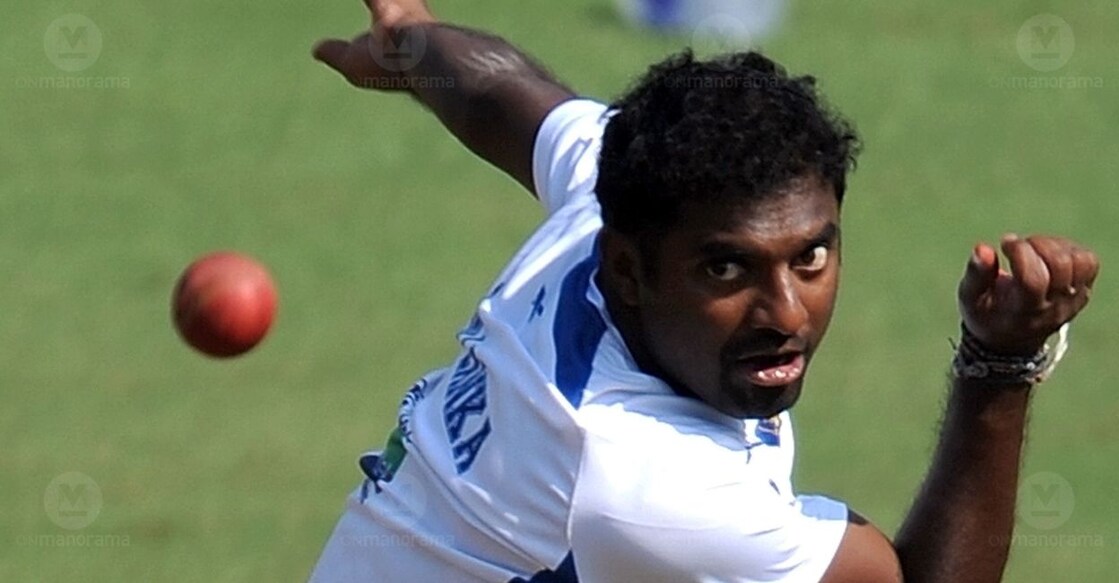
However, the situation underwent a huge change in 1995, thanks to the emergence of Muttiah Muralitharan, the off-spinner from Sri Lanka who turned the ball prodigiously. Murali was born with a disability which left him with a bent elbow and shoulder and wrist joints that were more flexible than those of normal people. To the naked eye, it appeared as though Murali bowled with a bent arm and the optical illusion was so powerful that few were surprised when umpire Darell Hair of Australia called him for throwing in the first Test of the series at Melbourne in 1995.
Unlike skippers of the past era, Sri Lankan captain Arjuna Ranatunga refused to agree with Hai's call. He demanded that a proper study be undertaken into Murali’s action before umpires called him for throwing. Ranatunga was supported by the Sri Lankan Cricket Board, and with the Board of Control for Cricket in India and other bodies administering the game joining the chorus, Murali underwent a bio-mechanical test at the University of Western Australia in the presence of independent witnesses, which revealed that he did not throw the ball.
However, the International Cricket Council (ICC) also commissioned a detailed bio-mechanical study on this subject, the result of which came as a huge shock to the cricketing world. It was found that almost all bowlers flex and straighten their arms as they lift the ball above shoulder level to deliver it. This evidence warranted a change in the laws by making allowance for some degree of extension of the elbow in the delivery stride of the bowler. After prolonged research and deliberations, ICC decided that bowlers will be allowed to extend their elbow provided the amount of extension does not exceed 15 degrees.
This created the difficulty that the extent of the extension could not be measured during the course of play. Hence, at present, all umpires at the first-class level and above are required to keep a close watch on the bowler’s arm to assess the fairness and to report any instance that appears to constitute a contravention. It is the responsibility of the authority administering the game to subject the bowler to the required bio-mechanical tests and suggest remedial action, if required. This process has been working satisfactorily during the last decade and a half.
However, it is too early to state whether this is the last word on the topic. The emergence of limited-overs cricket, particularly the T20 version, has led to many innovations, and some of them will likely involve new bowling styles in the coming years. Hence, one can look forward to further developments on this subject in future also.
Meanwhile, underarm bowling virtually disappeared from the scene, though it was mentioned in the law book until the 1980s. The last cricketer to deliver the ball underarm in international cricket was Trevor Chappell of Australia, who was goaded to do so by his elder brother and captain, Greg, to prevent New Zealand hitting a six off the last ball and win an ODI. But the storm of protests and uproar that it generated was so powerful that the clause allowing underarm bowling was promptly removed from the statutes!
 Add as a preferred source on Google