

I attended the funeral of a man who would’ve been the Holy Roman Emperor
Mail This Article


Never in my wildest travel fantasies had it occurred to me that I would one day attend the funeral of the last crown prince of the Holy Roman Empire – the man who could’ve been the Holy Roman Emperor. Believe it or not, I was there. I wrote in the visitors’ diary these words: ‘Please accept the condolences of a traveller from Kerala, India.’ It was Vienna, Austria, July 15, 2011.
For about 800 years, from the 1100s CE to the 1800s CE, the Holy Roman Empire was a crucible that produced game-changing developments in the history of mankind: in science, education, scholarship, industry, philosophy, legal and political systems, architecture, arts and literature, and global exploration. It also created some of the most horrendous episodes of war, religious bloodshed and cruelty in recorded history. In its heyday, it was one of the greatest political and religious powers of the world. In its own haphazard way, it represented the evolution and growth of a civilisation that changed the course of history not only in the West but also in faraway lands like India and the Americas.
The word ‘Roman’ expressed the idea that the Empire was a successor to the original, famous, Roman Empire, which flourished during the 1st century BCE and 2nd century CE – who doesn’t know Julius Caesar? ‘Holy’ referred to several things that would strike us today as outrageous. It pointed to the Empire’s Christian identity – that it was a creation of God and the emperor was the divinely appointed defender of the Catholic Church and the Christian world. Emperors were crowned by the Pope himself to emphasise that their authority came from God, since the Pope was considered the representative of God on earth.
For about 400 years a single royal family controlled the Holy Roman Empire: the Habsburgs. It was the funeral of the man who was the last crown prince of the Habsburg lineage, Otto von Habsburg, that I had, by sheer chance, attended in Vienna. His father, Charles I, was the last monarch of the Austro-Hungarian Empire, the last vestige of the Holy Roman Empire in the 20th century.

It was in the course of a longish journey via the United States to Europe, Ireland and the UK that I reached Austria. It’s a pleasure – a traveller’s pleasure - to look back and see how tightly planned the travel was. From the US I had landed in Dusseldorf, Germany, and gone to the village Unkel on the Rhine where my friend Jose Punnamparampil lived; and to the city of Heidelberg where lived another friend George Kuttikat; and to Basel in Switzerland where yet another friend, George Cherian, resided. From Basel I returned to Germany, to Waldshut-Tiengen, a town on the Swiss border where my friend Sabu Jacob lived. From there my friends Mathew Joseph and Edward Nazareth who lived respectively in Mettmann and Dusseldorf, Germany, picked me up for a trip to Austria and the Czech Republic. Yes, you guessed it! I was networking. It’s one of the secrets that makes shoestring travel possible.
From Waldshut it’s about 725 kilometers to Vienna, Austria. It was a beautiful journey that can only be quickly summed up here. Starting at 9 am, we crossed the Rhine bridge within minutes – the pre-European Union border check-posts still stand, though deserted - into Switzerland’s northernmost end and were going east. Lake Constance appeared on our left. It’s the water body where the borders of Germany, Switzerland and Austria meet – or rather, merge or dissolve in water!
We were cruising through a Swiss summer, blue skies, green hills, grasslands, orchards, farms and forests – a verdant world under a shining sun. We passed the city of St. Gallen, and to our right, the micro-nation of Liechtenstein. By 11 am we were in Austria and in a section of the Alps that’s not much celebrated – the Northern Limestone Alps. I had never heard of it and was filled with the joy of discovery that travellers know well. But you hardly get to see much of the scenery because you are in tunnels most of the time.
As we passed the city of Innsbruck, Munich, Germany, was temptingly only 2 hours away but we were determined to reach Vienna at least by late evening, and also wanted to take a short break in Salzburg city. To get to Salzburg, we crossed a corner of Germany again. It was wonderful being in Salzburg on two counts: here was the hill and the palace made famous by the musical hit of the sixties, ‘Sound of Music’, full of nostalgia for me; secondly, here was the home of Mozart, the great master of Western music. (Many famous Indian music directors have borrowed - creatively and brilliantly - tunes from Mozart.) We made quick pilgrimages to both places, set off again and reached Vienna by 8 pm.
Our hosts in Vienna were three brothers from Kerala – Prince, Siji and Siresh - who run an exotic foods supermarket, PROSI, that takes your breath away by its sheer size and the astounding collection of vegetables, fruits and food preparations from over a hundred countries representing all the continents of the world. The supermarket occupies nearly a whole street.
It was while sitting in PROSI that I saw on television the news that the funeral of the last crown prince of the Holy Roman Empire was to take place in Vienna two days later. I felt as if I had been thrown into a melting pot of time. The climax of a legendary, 800-year-old tale of power, God, money and blood was about to unfold in the very city to which circumstances had brought me. I was determined to be there.
It's worth knowing Otto von Habsburg, to whose funeral fate had brought me. It’s a story that’ll put Destiny on its head. Otto was born to a man who was king of two European nations at the same time and carried two names. He was Charles I as emperor of Austria and Charles IV as king of Hungary. The reasons are too mixed up to go into here.
Otto’s father was deposed and exiled by the Austrian parliament in 1918, after the disaster of the 1st world war. He thus became the last European emperor in the lineage of the Holy Roman Empire. The 1st world War had brought one historical Europe to an end and laid the shaky foundation of another. Otto was six years old then and an exile.
If his father had two names, Otto von Habsburg, the crown prince who would’ve been emperor, had a string of names. He was baptised Franz Joseph Otto Robert Maria Anton Karl Max Heinrich Sixtus Xaver Felix Renatus Ludwig Gaetan Pius Ignatius. These names were chosen to ensure that he would reign as Emperor Franz Joseph II when his time came. That time never came. His mother had made him learn German, Hungarian, Croatian, English, Spanish, French and Latin because she was sure he would one day rule over many nations. He didn’t. But he wrote books in German, Hungarian, French and Spanish. Otto, the last crown prince of the Holy Roman Empire, lived 48 years of his life in exile, stateless and wandering from country to country, including the United States.
During the 2nd world War, Otto, from exile, bitterly resisted Hitler and was sentenced to death by the Nazis. Many of his supporters were arrested and executed. Even after the war, he did not have a passport as he was no more an Austrian citizen but a few nations supported him with honorary passports. Finally, after he had officially renounced all claims to the Austrian throne, and much political wrangling and confusion, he was issued an Austrian passport in 1966 and returned to Austria as an ordinary citizen. Considering all the things he underwent as a stateless refugee for 48 years, perhaps he would’ve made a great Emperor!
Otto was one of the earliest advocates of European unity. He not only saw his dream becoming a reality but was elected a member of the European Parliament. He also campaigned for the expansion of the European Union and succeeded in opening up the Union to the lesser nations of Europe. He enjoyed politics and controversy and was outspoken. He once described Russian President Putin as a ‘stone cold technocrat’ and ‘cruel and oppressive’.
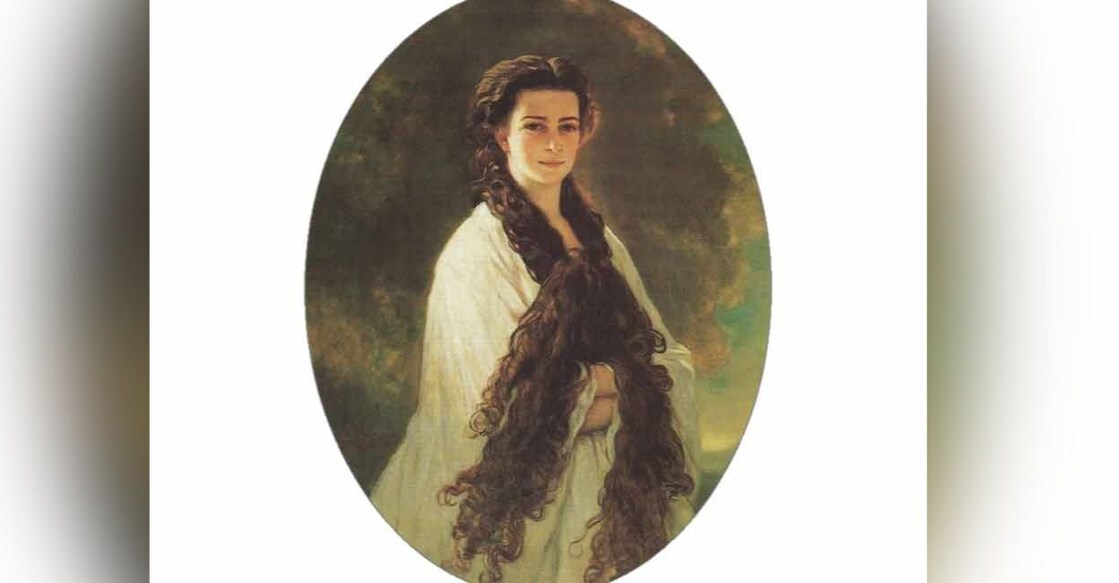
Before the funeral I went to pay my loving respects to another remarkable personality of Vienna: Empress Elisabeth of Austria, fondly known as Sisi. She is the poster-girl of Vienna; a major tourist attraction; her exquisite face is imprinted on hundreds of mementos from beer mugs and dinner plates to T-shirts and caps. Wife of Emperor Franz Joseph I of Austria, she was Empress of Austria and Queen of Hungary from 1854 to 1898 in which year she was assassinated. Sisi was considered one of the most beautiful women of her times. To describe her in the briefest manner, it’s best to use modern parlance: she was one hell of a woman. Fiercely independent, rebellious, feminist at a time when feminism was unheard of, health-freak, exercise-freak, dieting-freak, obstinate outsider to the royal way of life, traveller, horse-rider, outspoken, loner, lover, poet, obsessed with possessing the narrowest waist and the longest hair. She lived away from the palace for long periods and always travelled anonymously.
Sisi was stabbed to death in Geneva by an Italian anarchist while travelling incognito with her aide. The assassin had planned to kill another royal whom he missed. He received secret information about Sisi’s identity and killed her even as she was boarding a ship to Montreux. Just before she died, she only asked, ‘What has happened?’
Otto von Habsburg was Sisi’s grand-nephew. The string of names given to Otto at baptism was to enable him to ascend the throne as Franz Joseph II, continuing the lineage of Franz Joseph I who was Sisi’s husband.
On the day prior to the funeral, I went to the Capuchin Church – a modest, unostentatious building - where Otto and his wife lay in state. The Imperial Crypt in the Capuchin Church is the traditional burial site of the Habsburgs since 1633. Sisi too sleeps there. There was a crowd, but not a big one by Indian standards. Everything was quiet and silent except for the low intonation of prayer from inside the church. I stood in a queue under a warm sun for about 45 minutes to gain entry into the church. Otto’s wife’s body, buried in her family vault, had been exhumed so the couple could be buried side by side in the Imperial Crypt. The coffins had been placed before the altar draped with the Habsburg flag, and guards of honor stood by in Austro-Hungarian uniforms. The church was resplendent with the insignias and decorations of the House of Habsburgs. It was also crowded, especially with TV crews and reporters pushing for space. Before signing the visitors’ book, I picked up a copy of the traditional obituary notice with the pictures of Otto and his wife. I stood there amazed at myself. It seemed impossible that I was at this funeral. But history is a mysterious force. Perhaps Sisi would’ve understood my presence because she was a poet.
I couldn’t participate in the funeral ceremony the next day as I had to be on my way again. I read that the final departure of the man who had lived 48 years as a wandering refugee was attended by around 1000 political and religious dignitaries from all over the West. A hundred thousand Viennese came to watch the funeral procession. Austria gave Otto a royal, glittering goodbye, even though he had been readmitted to the country as an ordinary citizen.
Otto’s heart was buried in the Benedictine Archabbey in Pannonhalma, Hungary. It was the custom of the Habsburgs to have their heart buried separately from their body in a place they personally favoured. Hungary was Otto’s favourite country, and he had spent time in the Archabbey as a young student in his childhood. Hungary was Sisi’s favourite haunt, too. Thus ends the story of a man who was - to borrow the title of Rudyard Kipling’s famous short story – The Man Who Would be King; rather The Man Who Would Never be King.
 Add as a preferred source on Google