

A surreal encounter in Washington DC

Mail This Article


Washington DC is a capital that is spread out lavishly and built in grand style. But it isn’t a vibrant human confluence like New York. It is distant and withdrawn. Perhaps it is so because it is the hub of power. But Washington DC holds out to you some of the finest repositories of knowledge the world has: the Smithsonian museums. You can immerse yourself in them for days together, and all 17 of them, big and small, give you free entry. Each one is a gem, whether Natural History, African American History, American Indian History or Air and Space. The last has two centres, the older one on the National Mall, where all the famous museums are, and the newer one in Chantilly, Virginia, 39 kilometres away.
It was in the Chantilly centre of the National Air and Space Museum that I had my surreal, incredible encounter. My friend Benny had driven me to Chantilly from his home in Bethesda, on the outskirts of Washington, DC, because it was a Sunday and he was free. Sunday crowds thronged the lawns of the Steven F. Udvar-Hazy Centre of the National Air and Space Museum. Udvar-Hazy, by the way, is a Hungarian-American billionaire whose parents migrated to the US in 1958, fleeing Soviet occupation. He made his billions from leasing commercial aircraft. He donated $66 million to establish the Chantilly centre of the National Air and Space Museum. I’m sure he did so because he ekes out a living from aircraft and wanted to give something in return!

The Chantilly centre of the National Air and Space Museum has on display around 200 aircraft, missiles and spacecraft. The mind-boggling world of flying machines, it unravels, can send lovers of aircraft lore into flights of joy. Nearly every flying contraption is on show, from bare bones gliders for a single person to passenger aircraft, military aircraft and spacecraft. You can get a thrill viewing Space Shuttle Discovery from a few feet away; or examine a Concorde from close quarters; or be terrified by the sight of the SR-71 Blackbird, the long-range, high-altitude, Mach 3 + spy craft whose very look is pure evil. (The Wright Brothers’ 1903 flying machine, from which everything started, is on show only at the National Mall Centre of the Museum. It’s a pilgrimage you must not miss.)
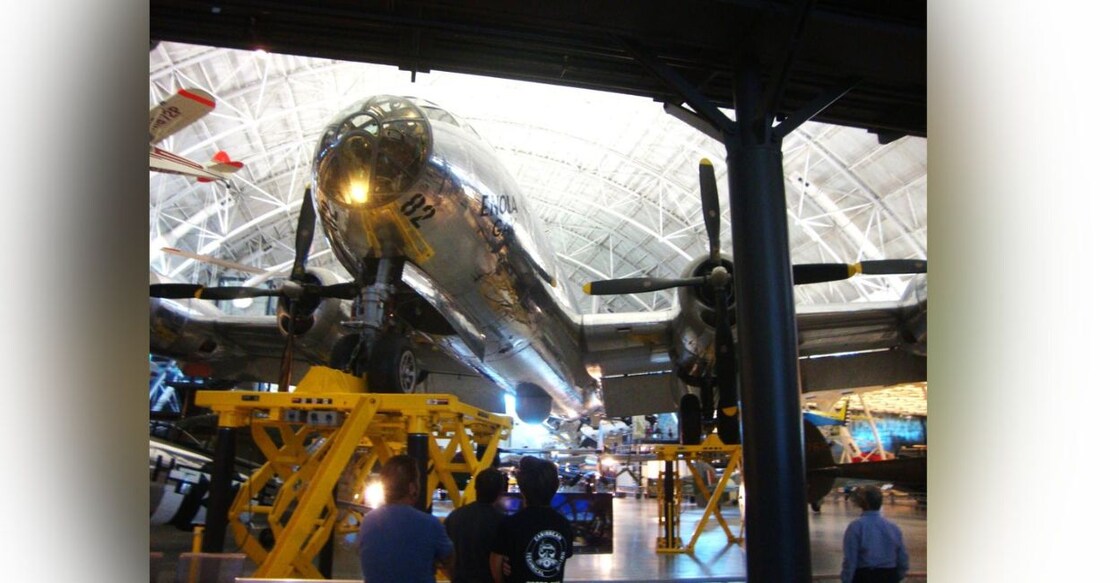
It was as Benny and I were wandering in the 65,800 sq. meter maze of flying machines and artefacts, marvelling at the astounding variety and fascinating histories, that my eyes fell on a plane whose body shone with a silvery glow and towered over the others around it. It was big, had four propellers and a cockpit enclosed in glass above and around. As I stood admiring it, I saw the name painted on its nose in black, block letters: ENOLA GAY.
My head whirled. It was as if I had been thrown into an abyss of history. The sight was so unreal that I told Benny: either my eyes are playing a trick on me, or my memory is. I can’t be seeing what I’m seeing. I pulled out my phone and checked the name again. Yes, my memory hadn’t failed me, nor my eyes. I was looking at Enola Gay, the plane from which an atomic bomb was dropped over Hiroshima, Japan, on August 6, 1945, at 8.15 am. I knew the name and the story behind it by heart, having come across it in nearly every history of the Second World War I had read. Enola Gay may not be as famous as Oppenheimer, but it played a crucial role in bringing to a culmination Oppenheimer’s deadly mission.
I had visualized, in terrifying detail, a plane suddenly appearing, perhaps like a moving dot or just a droning sound, in the sky over Hiroshima, the bomb bay opening and the atomic bomb tumbling headlong through the morning sky to wreak destruction of a kind and a proportion till then unknown in the history of mankind upon a city that was just beginning its day, with children boarding school buses. I was now standing before the plane that had dropped Death on Hiroshima. Enola Gay looked beautiful. But it was a terrible beauty, like that of many sophisticated killing machines. It had something about it that made me feel that I didn’t want to come face to face with it somewhere up in the lonely sky.
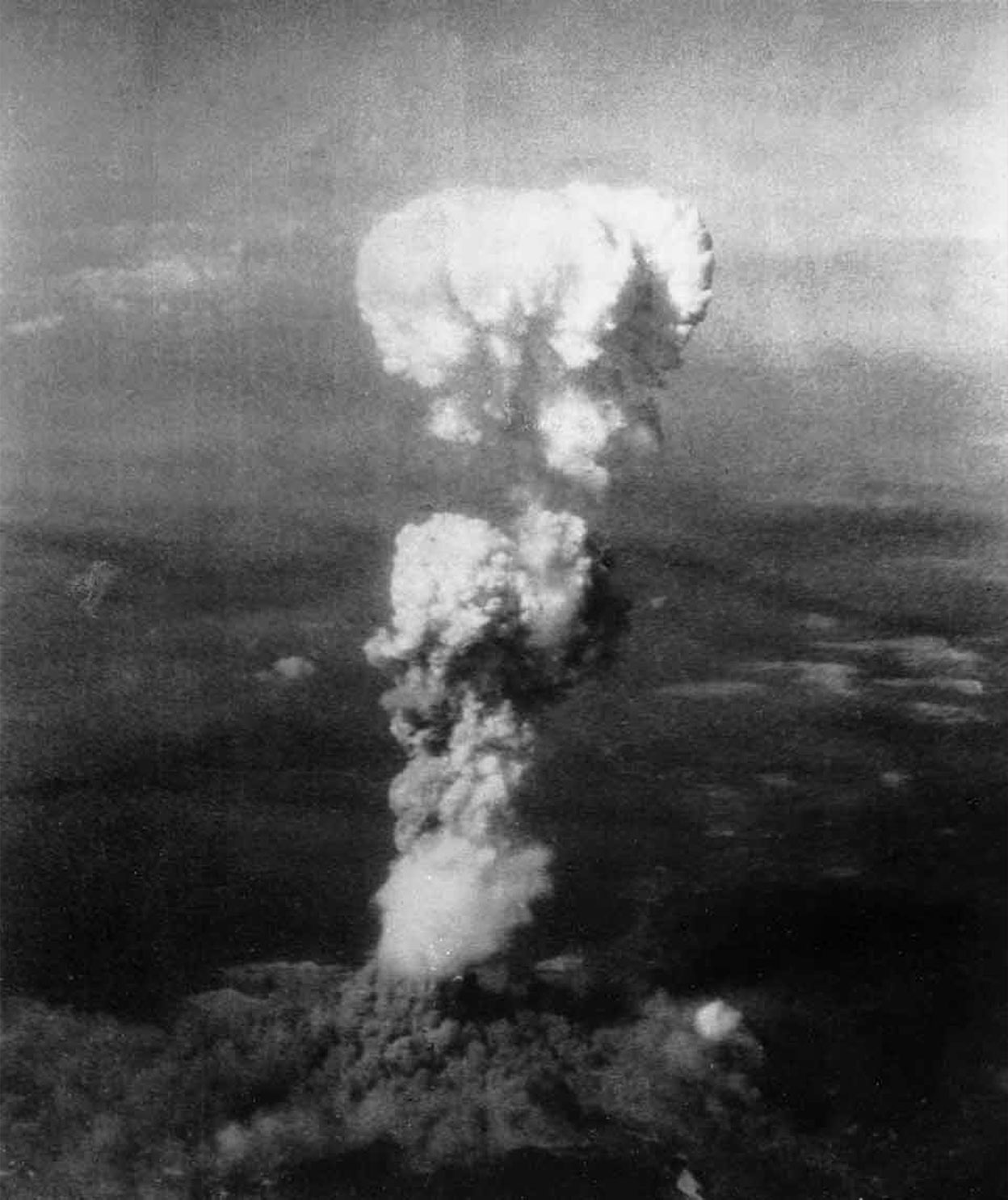
At 8.15 am on August 6, 1945, around 80,000-90,000 people died in Hiroshima – simply became shadows imprinted on the ground and walls - from the intense heat and radiation released by the bomb. By end-1945, the death toll stood at around 140,000, which included those who had died a slow death from severe burns and radiation-related illnesses. The final ‘take-away’, so to say, of the bomb was around 166,000 people - 156,000 civilians and the rest soldiers. (Yet, we continue to hear politicians and self-appointed patriots talking glibly and dangerously about nuclear war as if it’s a video game. And, today’s thermonuclear bombs are about a hundred times more powerful than the ones that were used in Hiroshima and Nagasaki.)

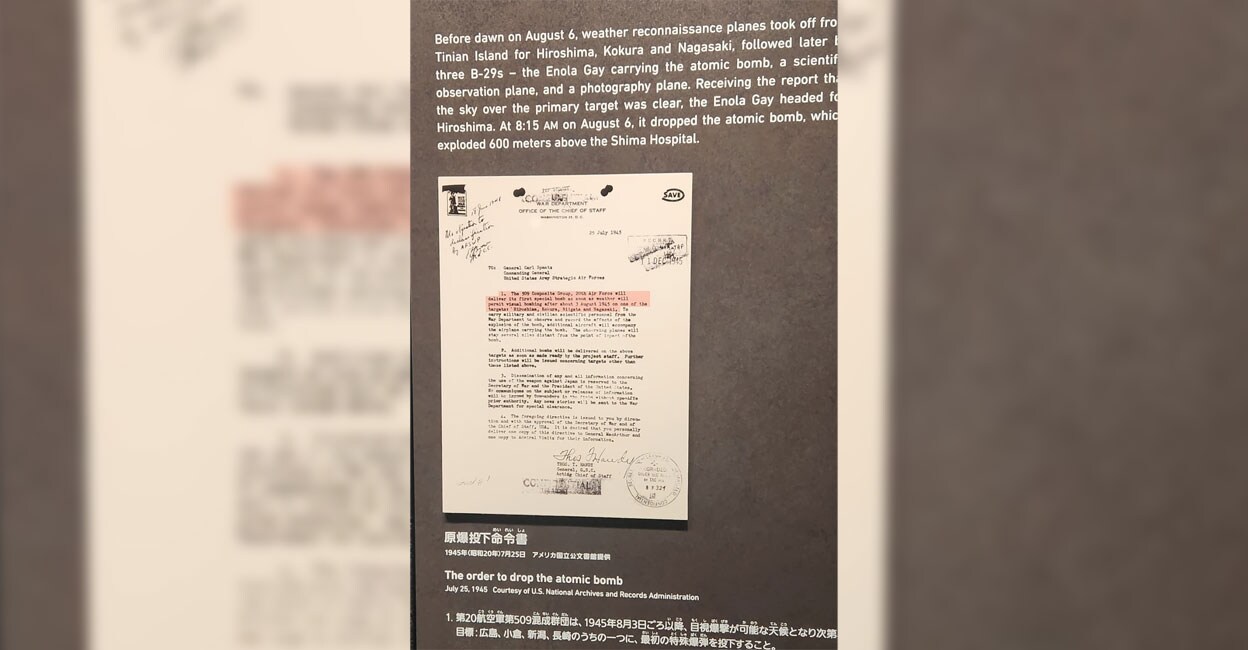
Here's the background to the Hiroshima bombing: Nazi Germany surrendered to the Allies on May 8, 1945. But Japan kept the war going in the Asia-Pacific region. On July 26, 1945, the Allies issued an ultimatum to Japan to surrender or face ‘total destruction.’ Just a day before, on July 25, US President Harry S. Truman had signed the executive order listing four Japanese cities as targets of the atomic bomb. The first in the list was Hiroshima. Other targets were to be used one by one if Japan didn’t yield after Hiroshima. Enola Gay enters the picture here.
30-year-old Colonel Paul W Tibbets Jr. who had been asked to command the bombing mission had personally visited the manufacturing plant in Omaha, Nebraska, to select the Boeing B-29 Superfortress bomber that would become Enola Gay. He selected an aircraft with the serial number 44-86292 from the assembly line because it had cleared all tests without any faults. On 14th June, 1945, he flew the brand-new plane to a US Air Force base in Utah and later to Tinian Island. (Tinian Island is part of the Northern Mariana Islands, a US territory in the Pacific, some 2400 kilometres off Japan.) Just before the Hiroshima mission, Tibbets had his mother’s name, ‘Enola Gay’, painted on the plane. He wished to honour her memory. I doubt if anybody would want to sit in judgment over this sentimental act, which may seem unbefitting if we consider the nature of the mission the aircraft was about to undertake. However, Colonel Tibbets obviously felt good about it.
Thus, the flying machine that was now sitting frozen in time in the museum’s clinical space like a gigantic, shining bird about to fly up into the sky, had set out around 2.45 am on August 6, 1945, from an airfield in Tinian Island on its lethal mission, carrying the atomic bomb nicknamed ‘Little Boy’. Enola Gay was accompanied by two other B-29 bombers with eerie names: ‘The Great Artiste’ and ‘Necessary Evil.’ The crew members ranged in age from 20 to 30. Major Thomas Ferebee, bombardier, who released ‘Little Boy’ over Hiroshima, was 26 years old.
The plane was at an altitude of 31000 feet. As is recorded, the bomb fell for about 43 seconds and then detonated at an altitude of around 1900 feet above the city centre. Enola Gay had executed a 155-degree turn to escape the blast zone. Even at 17 kilometres away, the plane was rocked by the shock waves. It was Technical Sergeant George R Caron, the tail gunner, who took the well-known photo of the atomic mushroom over Hiroshima. Colonel Tibbets quotes, in an interview, an unnamed historian to describe the atomic explosion: ‘In one microsecond, the city of Hiroshima didn’t exist.’
In the same interview, Tibbets describes the release of the bomb and the next few moments:
“So we’re coming down. We get to that point where I say ‘one second’ and by the time I’d got that second out of my mouth the airplane had lurched, because 10,000 lbs (the weight of the bomb) had come out of the front. I’m in this turn now, tight as I can get it, that helps me hold my altitude and helps me hold my airspeed and everything else all the way round. When I level out, the nose is a little bit high, and as I look up, the whole sky is lit up in the prettiest blues and pinks I’ve ever seen in my life. It was just great.” (He’s referring to the atmospheric phenomena that followed the explosion.)
For Tibbets, the soldier, it was another call of duty. And he enjoyed it.
Interviewer Studs Terkel asked Tibbets: “Do you ever have any second thoughts about the bomb?”
He said, “Second thoughts? No, Studs, look. Number one, I got into the Air Corps to defend the United States to the best of my ability. That’s what I believe in and that’s what I work for… So, no, I had no problem with it. I knew we did the right thing because when I knew we’d be doing that, I thought, yes, we’re going to kill a lot of people, but by God, we’re going to save a lot of lives. We won’t have to invade (Japan).”
What we hear is the killing system speaking through a simple man. Like lots of people, he too has been smartly acclimatised to mass murder by smart people. Justifications of genocide sound so convincing. Then as now.
I took one last look at Enola Gay, the beautiful machine whose destiny was to participate in the largest instantaneous genocide in the history of mankind. I suddenly realised it was innocent. So were the crew. They just obeyed orders. The atomic bomb, too, was innocent. It didn’t create itself. Humans made it. It detonated on order. The evil was in the minds of those who controlled it all.
***
(Finally, a grim tale about destiny: In the list of bombing targets that President Truman had signed, the city of Kokura was second, and Nagasaki the third. When the Japanese refused to surrender after the bombing of Hiroshima, a B-29 bomber named ‘Bockscar’ set out on August 9 to drop the nuclear bomb ‘Fat Man’ on Kokura. But because of poor visibility over the city, the plane was directed to the third target in the list: Nagasaki – where 60,000 – 80,000 people were killed instantly. Enola Gay was the reconnaissance plane for this mission.)
 Add as a preferred source on Google