

São Paulo: Pavilion and pulse of the Bienal
Mail This Article


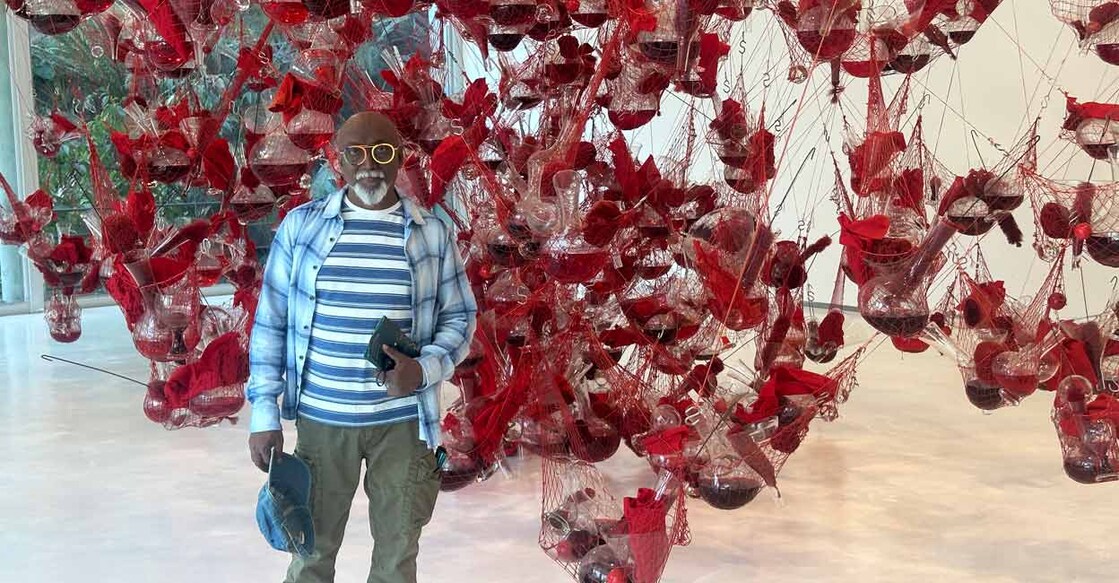
I landed in São Paulo with a suitcase full of notes and the feeling that no other Brazilian city carries its cultural calendar so deeply in its bones. In the public imagination, the Bienal lives inside the Pavilhão Ciccillo Matarazzo. To walk its long corridors is to walk through a history of intention. What you see is an industrialist’s gift that transformed into a civic stage, an architectural membrane that holds debates, gestures, and the inevitable friction of large-scale encounter.
The 36th Bienal, curated by Bonaventure Soh Bejeng Ndikung and his team, felt like a performance of solidarity. Ndikung deliberately threaded Africa, South America, and Asia through the exhibition, creating a geography of the Global South rather than a map that reflexively points back to Europe or North America. The result was a Bienal attentive to materiality: works insistent on touch, scale, and labour. Installations made from humble, often local materials, textiles, earth, and repurposed industrial detritus, which spoke of histories of extraction and care. The show was restless, generous, and, most importantly, relational. It asked the visitors to feel the entanglements between people, place, and politics.
India’s presence in this fold was notable and moving. Sixteen participants arrived as a collective formed around shared histories and commitments. Prabhakar Kamble’s leadership and the curatorial networks built by Sumesh Sharma were discernible. Younger practitioners, many of whom connected through initiatives such as Clark House and Stranger’s House Gallery, brought works that engaged with Ambedkarite thought and Dalit histories in ways that were both precise and poetic. These artists and their works were not “exported curiosities.” They were interlocutors proposing new languages of solidarity and resistance, and they held their ground against the Bienal’s very global, sometimes noisy frame.
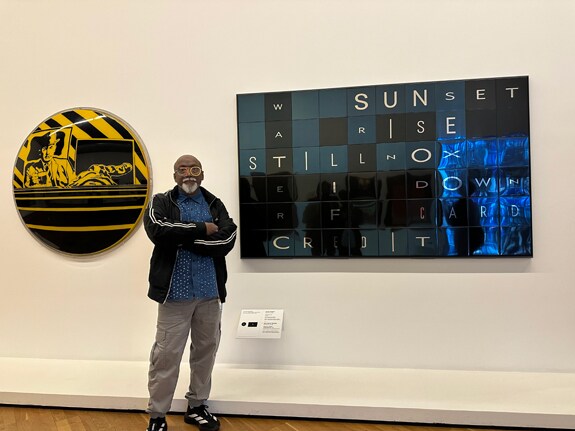
São Paulo’s museums offered complementary registers to the Bienal’s urgency. The Afro-Brazilian collections I visited were encyclopedic in scope: fashion and photography rubbing shoulders with oral histories, religious artefacts, and monumental sculpture. These institutions preserve and narrate memory with gravity. Their curatorial choices often feel like acts of cultural triage, amplifying voices too often relegated to the margins. MASP (Museum of Art São Paulo) and other city museums function not only as repositories but as active classrooms, hosting exhibitions that teach through arrangement, juxtaposition, and disciplined choreography of objects.
Some of the best moments were less institutional than personal. Friends and colleagues guided me from one opening to another. Ana Maria Tavares and other contacts from the embassy graciously opened doors and made introductions. Evenings that might have unfolded as formal receptions or gallery openings became warm domestic occasions, with the simple pleasure of a home-cooked meal of rice and chicken curry in a homestay kitchen, sending the scent of spices through São Paulo’s urban air. These small rituals matter. They are how artist-collectives translate into trust, and how professional generosity evolves into human friendship.
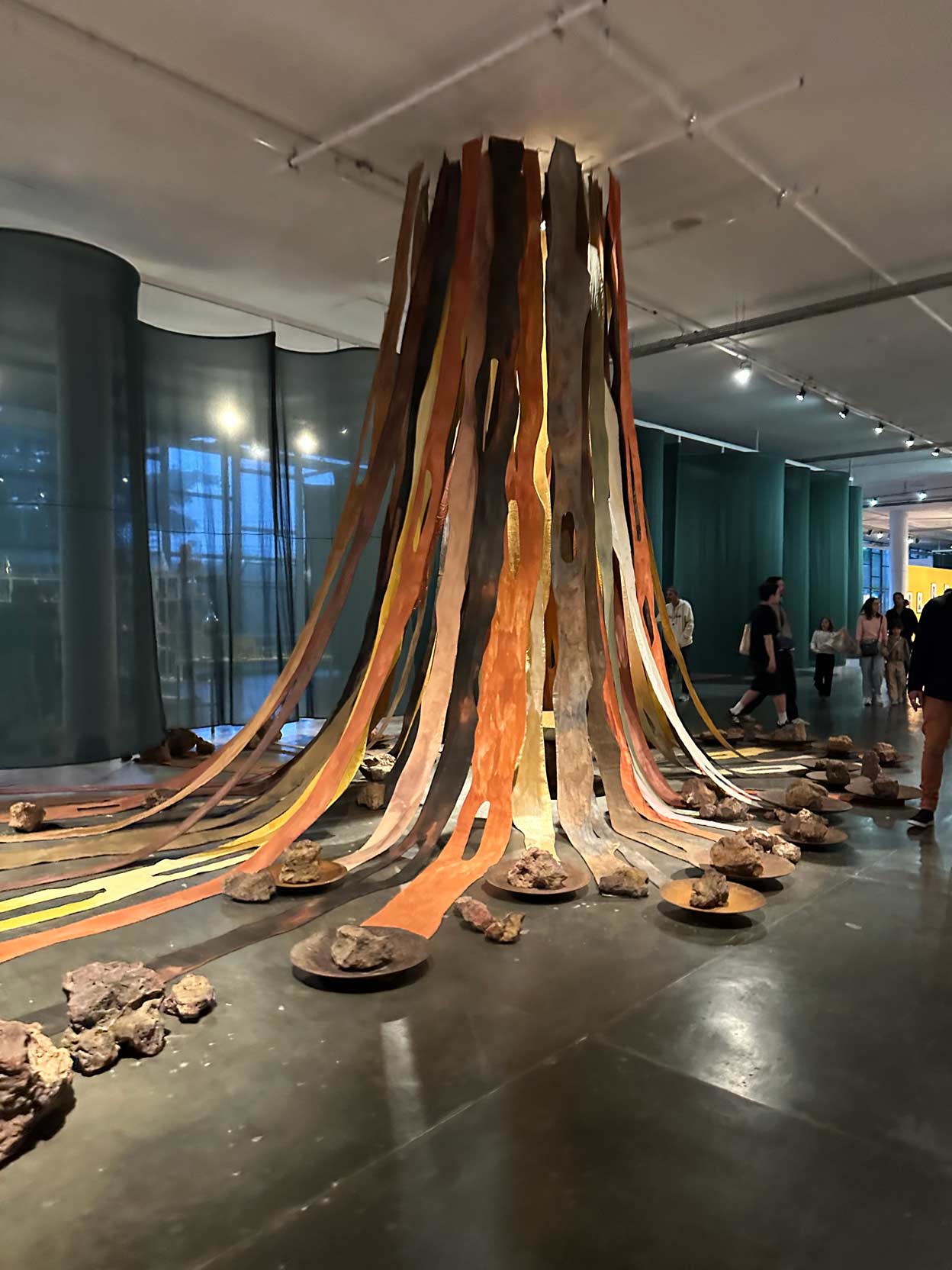
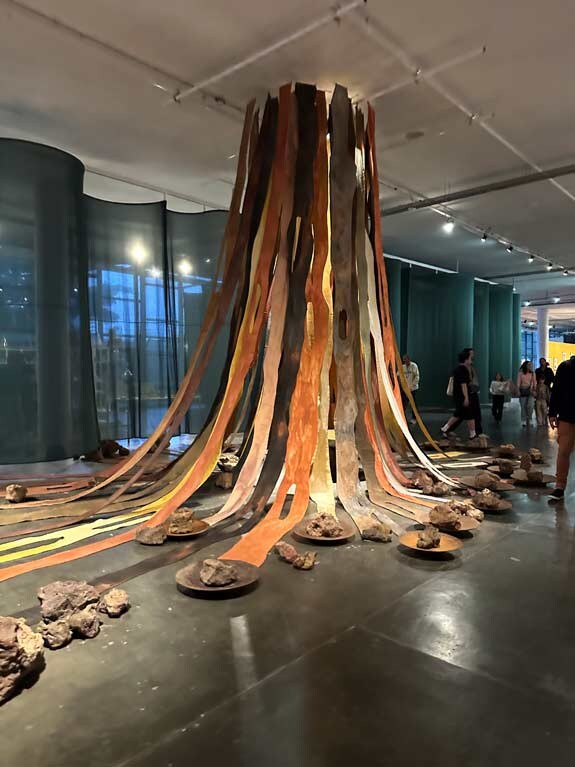
Walking the Biennale and its satellite shows, I noticed how language and translation work as both aid and limitation. São Paulo’s daily vernacular is Portuguese. Many artists, curators, and collectors relied on translators, apps, notes, and gestures. But art speaks on its own terms. A gesture, a surface, a loop of sound can bypass language and still carry meaning. Translation tools help with names and press releases, but they cannot - and should not - replace the slow work of standing before an artwork and allowing it to register.
Material presence surrounded me. Textile panels faintly bearing studio scents, concrete floors that took the imprint of heavy installations, the human rhythm of volunteers and loaders quietly moving works through the night. There was a persistent generosity of attention, of students tracing audio guides with their fingers, elderly visitors leaning into slow, deliberate looking, young people photographing and sharing discoveries. In that sense, São Paulo Biennale felt like a plot of cameras, literal and otherwise, where everyone participated in the act of framing, archiving, and passing on what they had seen.
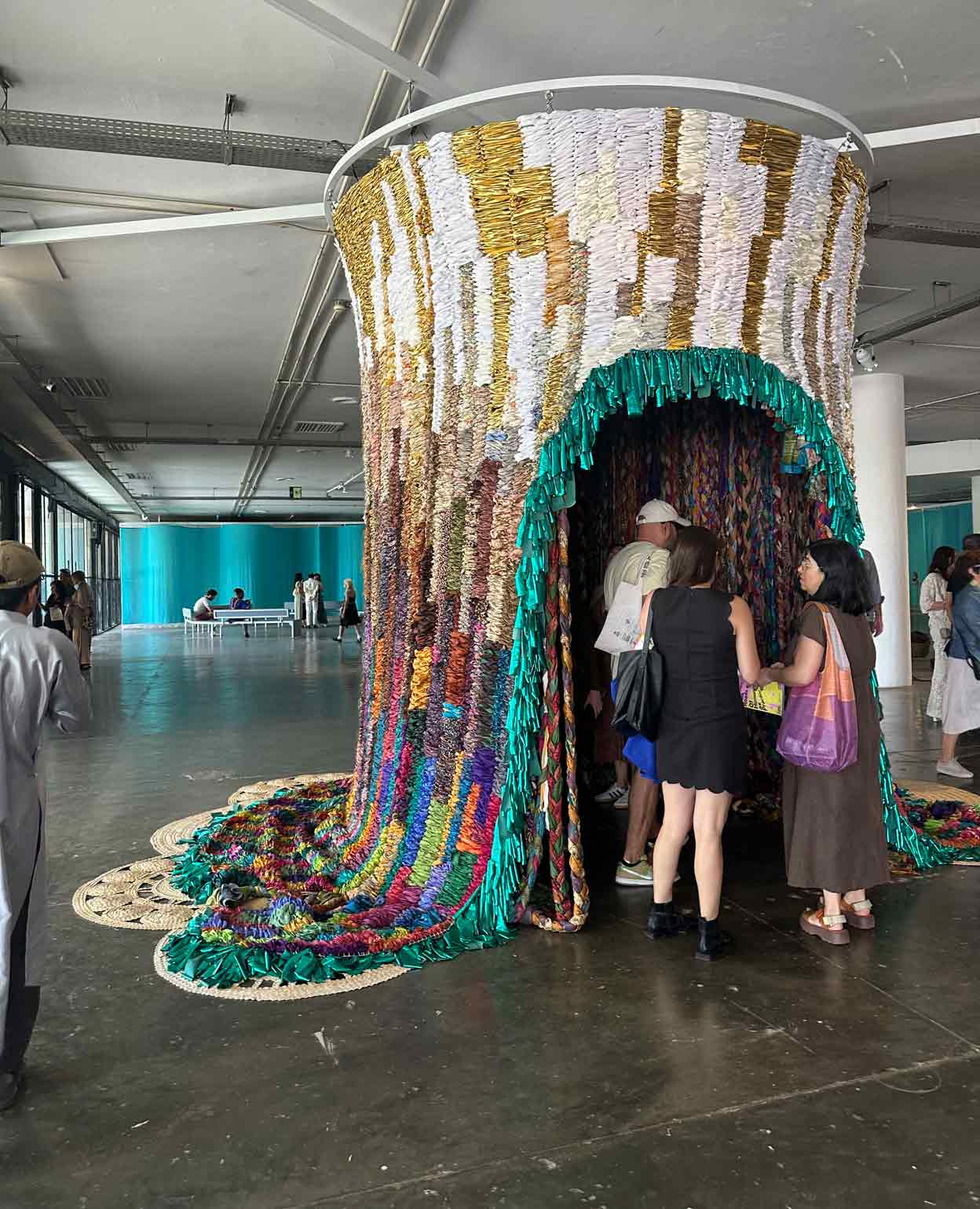
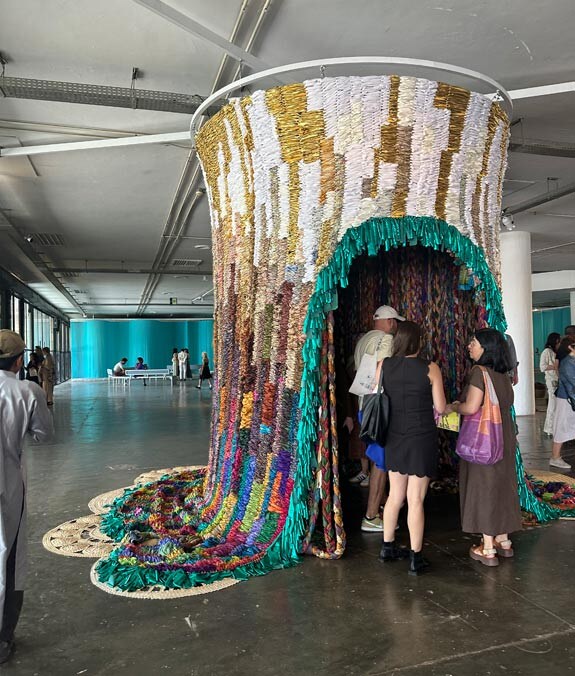
If São Paulo taught me one thing, it was how institutional history and grassroots energy can coexist. The Pavilhão is a monumental stage, but the lifeblood of the Biennale is the conversation that circulates in its shadows. Artist collectives were forming, curators arguing late into the night, and local communities turning an exhibition into a reference for future practice. Here, the Biennale is less a show than a conservatory, a place where artists learn to speak to a global public without losing regional specificity.
Rio de Janeiro: tides of art, music, and community
If São Paulo bears the weight of Brazil’s institutional muscle, Rio, breathes art, its movement keyed to the cadence of the sea. The city is a paradox. Its mountains press into the Atlantic, with favelas cascading down hillsides, and waves of Samba and Bossa Nova spilling into the night. Within this context, culture is not decoration but a tool for daily sustenance.
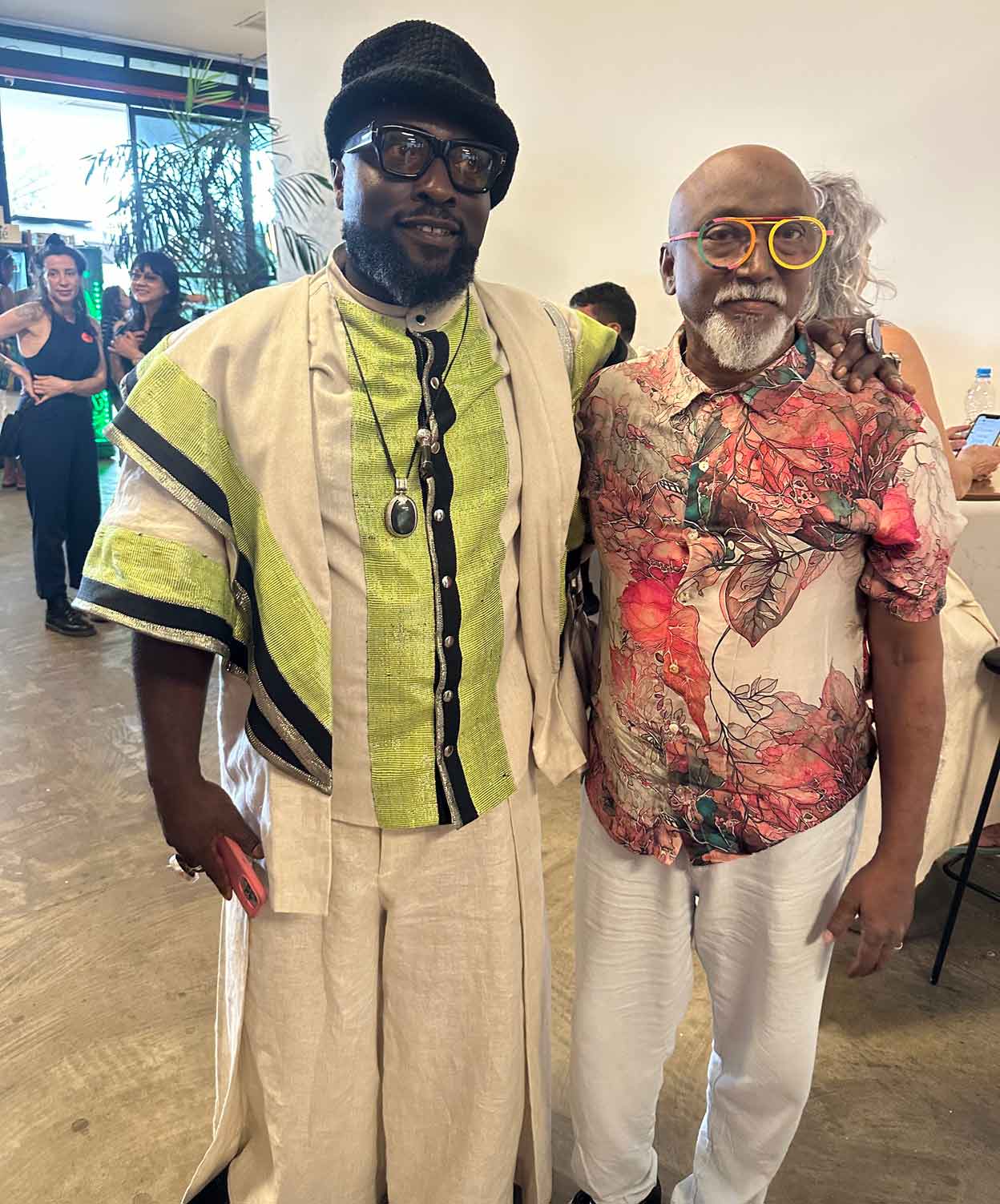
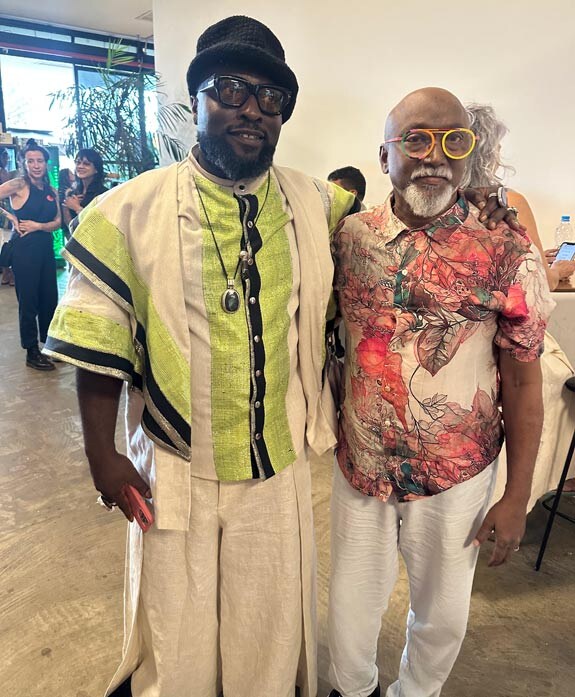
I arrived in Rio for ArtRio, the city’s annual fair and a reference point for Latin American art. The fair buzzed with conversations: collectors hunting with curiosity rather than speculation, young gallerists pushing forward artists who might otherwise be overlooked, and curators weaving connections across continents. Unlike many fairs that become spectacles of wealth, ArtRio was in touch with the ground. Emerging artists received as much visibility as established names, and conversations felt less transactional but more like commitments to long-term practice.
But Rio is never only about the fair. My days proceeded in layers. There were studio visits, conversations, shared meals, and evenings spent on the seashore. One memorable encounter was with artist Ernesto Neto. I visited his home and studio, which was a place alive with texture, fabrics, suspended forms, and the unmistakable fragrance of herbs and incense. Ernesto speaks about art with the same cadence he uses in percussion. It is steady, thoughtful, and rhythmic. Over a simple lunch, he told me about learning new musical instruments, experimenting with drums, and treating rhythm as both personal meditation and collective ritual. His generosity extended beyond the studio. He introduced me to gallery partners and artist friends. We spoke about the challenges and joys of sustaining artists’ careers amid Brazil’s shifting political and economic landscape.
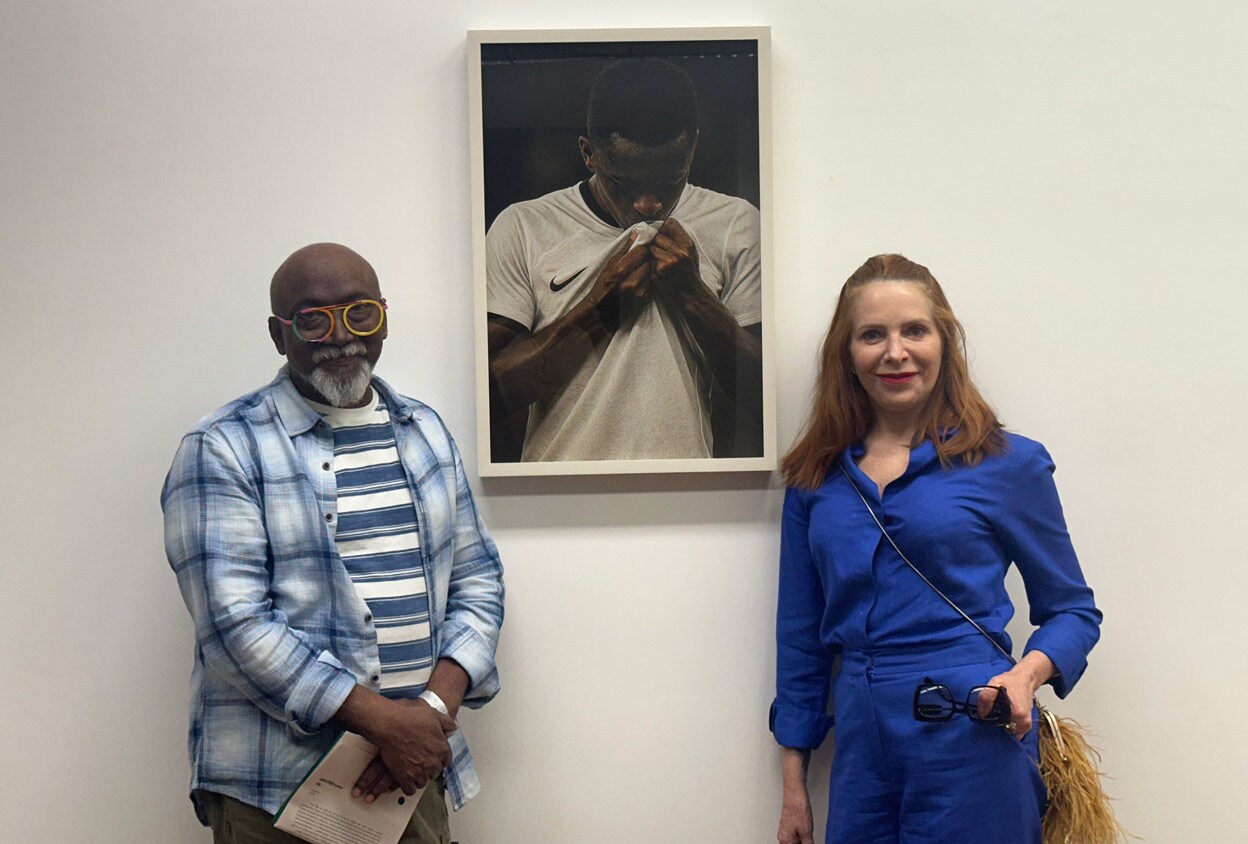
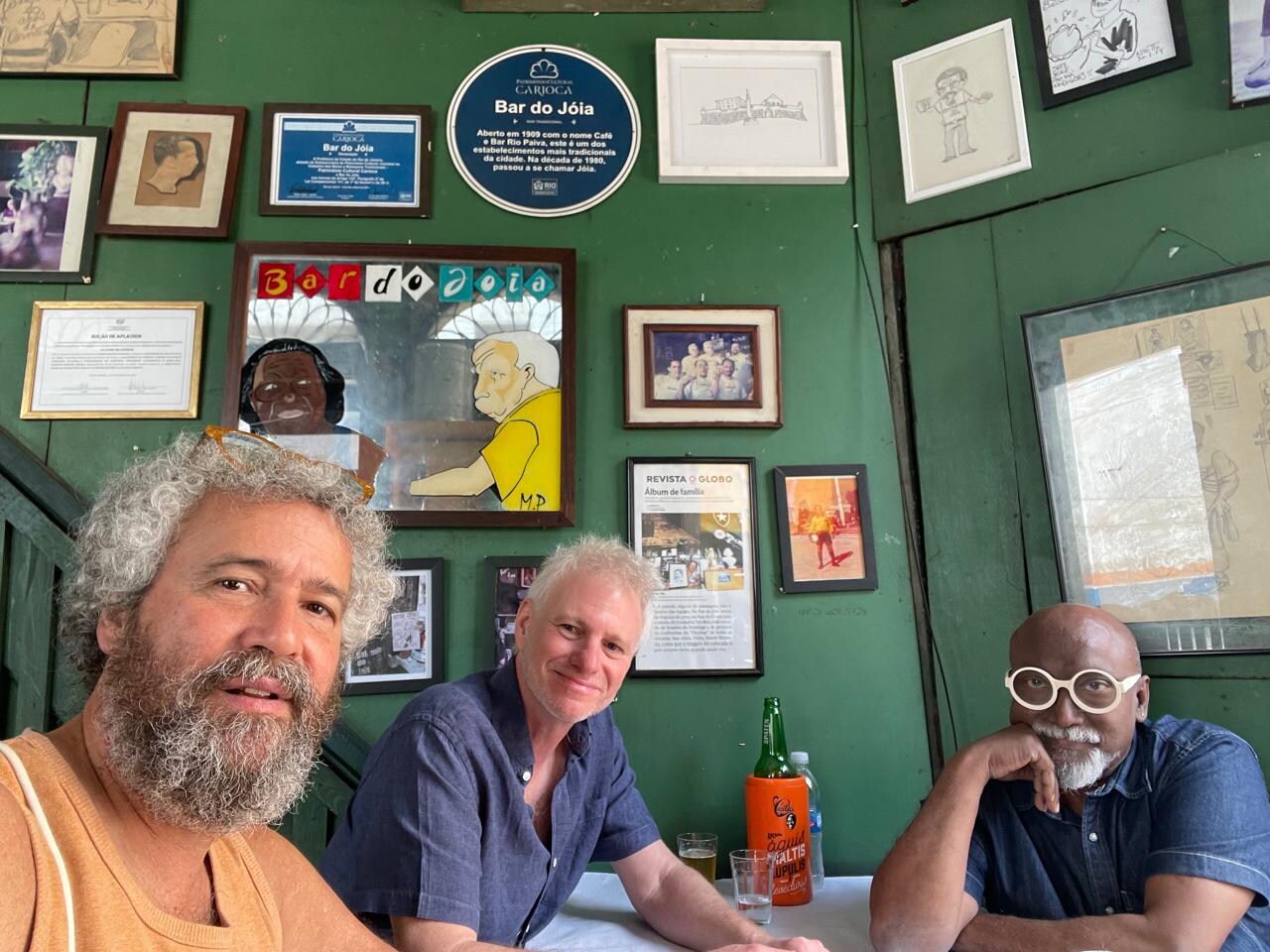
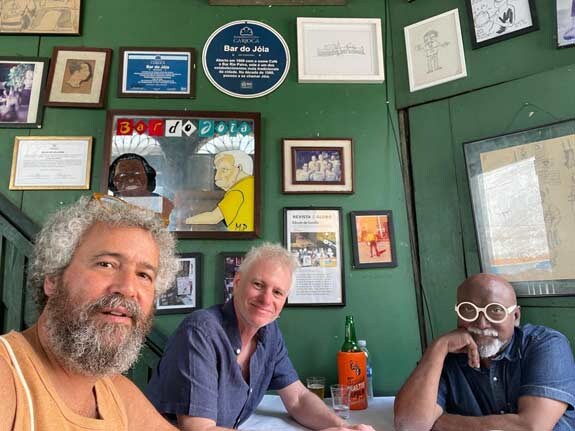
And meals in Rio were not mere refuelling stops. They were extensions of the studio spaces where ideas circulated as freely as food and wine. Sitting across from Ernesto and his collaborators, I was struck by how conversations about art always bent toward community: “How can we share this? How can we make others feel it?” The answers to these questions were lived, not confined to theories.
Afternoons on the beach felt like public celebrations, with volleyball and handball, music, the hazy mountains on the horizon, and waves glittering against the sand. One evening, Ernesto and some 20–30 musicians rehearsed on the seafront before heading to an art opening, seamlessly moving between rhythm, community, and institution. Rio teaches that culture cannot be confined to galleries or museums; it spills into everyday life. The coastline becomes an open-air gymnasium: volleyball nets, impromptu football games under a burning orange sunset, joggers tracing long arcs. Health, play, and art intermingle; these rituals are cultural practices as much as any exhibition opening.
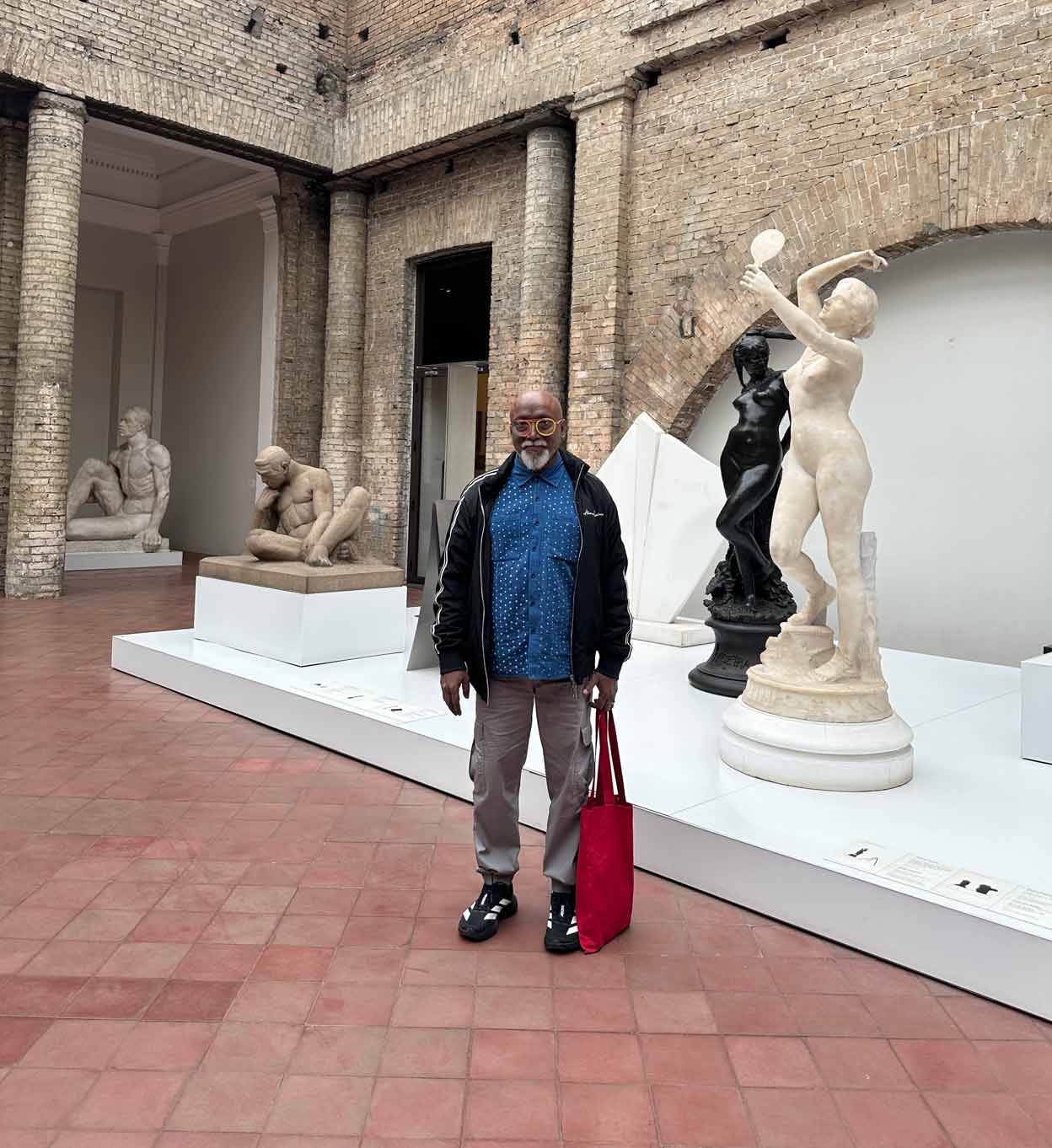
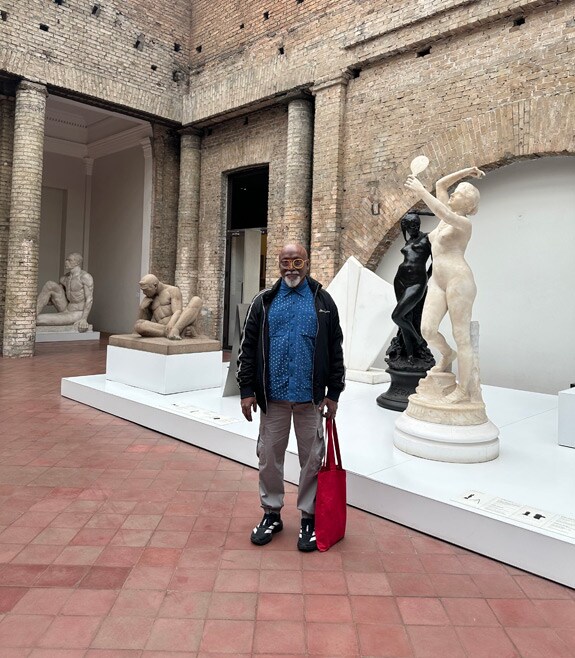
At MAM (Museu de Arte Moderna do Rio), artistic director Pablo Lafuente welcomed me and introduced me to artists and curators developing new projects. I also visited CAPACETE, the residency founded by Helmut Batista in 1998. Its makeshift, experimental energy, alive and risk-tolerant, reminded me of early, quiet moments of art history elsewhere. These are spaces where new narratives are authored, away from market pressures.
All of this deepened a realisation. Rio’s strength lies in its balance between formal structures, museums, fairs, and residencies, and informal rituals, unplanned gatherings on the shore, conversations at studio lunches, and spontaneous night music. It is a city that insists culture is common property; everyone belongs to it.
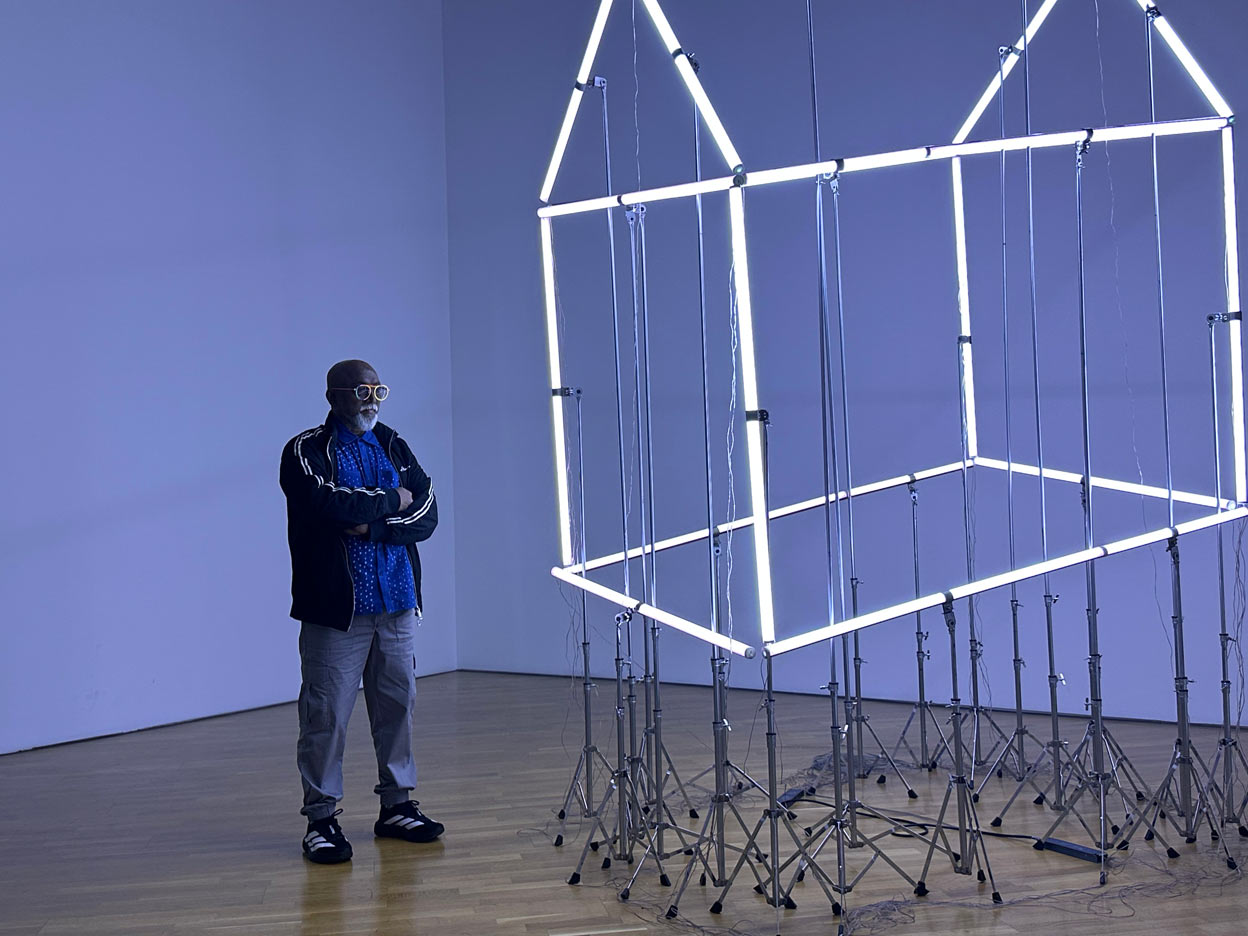
As I prepared to leave Rio for Belo Horizonte, I thought again of Kochi and our Biennale; how festivals and cultural gatherings give joy, open possibilities, and create collective memory. Rio reaffirmed that conviction. In its beaches, music, meals, and fairs, I was reminded that art at its highest is not just an object on display but a community gathered around it.
Belo Horizonte & Inhotim: vision, wealth and the garden of art
After São Paulo’s scale and Rio’s rhythm, Belo Horizonte offered a different proposition, an entry point to Inhotim museum, perhaps the most ambitious experiment where art, architecture, and ecology intertwine. Minas Gerais bears the memory of mining wealth. Gold, iron, gemstones, and with it, contradictions. Baroque churches that gleam with the proceeds of extraction, hills scarred by industry. Against this backdrop, one man’s vision and a friendship with artist Tunga gave the world Inhotim.

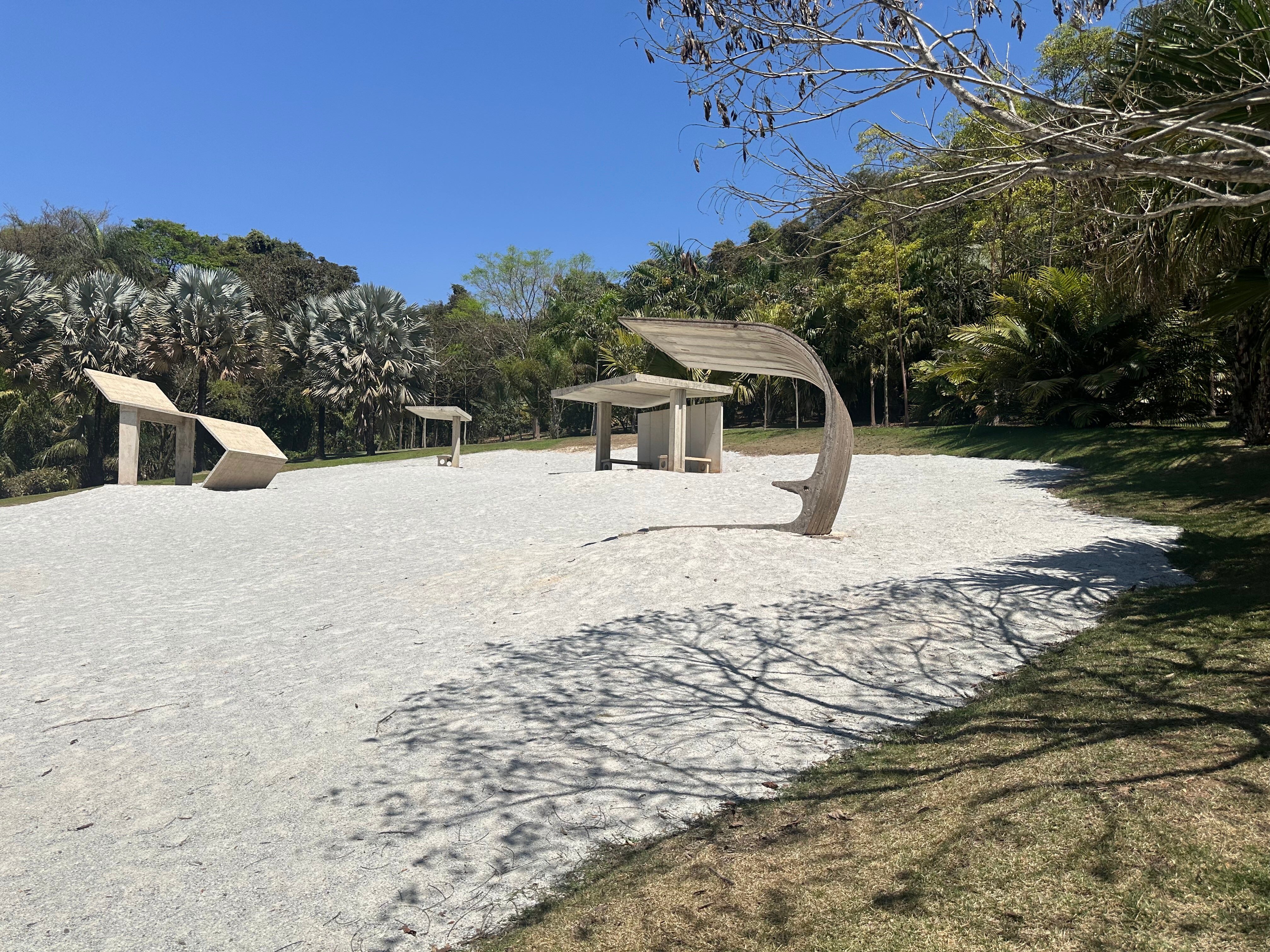
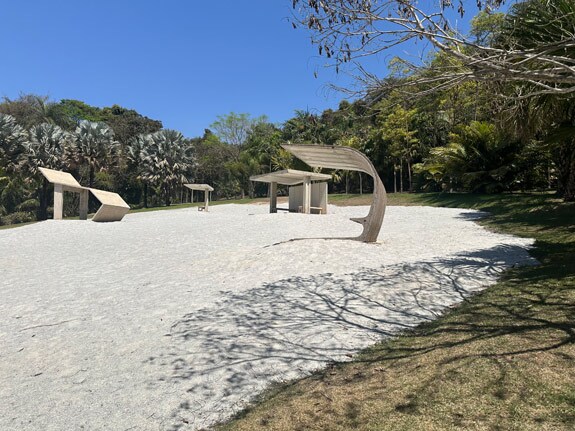
About two hours from Belo Horizonte, Inhotim unfolds across 120 hectares, 4,300 species of plants, electric buggies ferrying visitors from pavilion to pavilion, sculpture gardens spilling into lakes and forests, and buildings conceived as artworks in dialogue with the land. The project began with Bernardo Paz and the artist Tunga, whose mythic practice persuaded Paz to see collecting as a public offering rather than private accumulation. Tunga’s spirit still saturates Inhotim. Walking the grounds, we recalled the time we showed his work in Mumbai at gallery BMB.
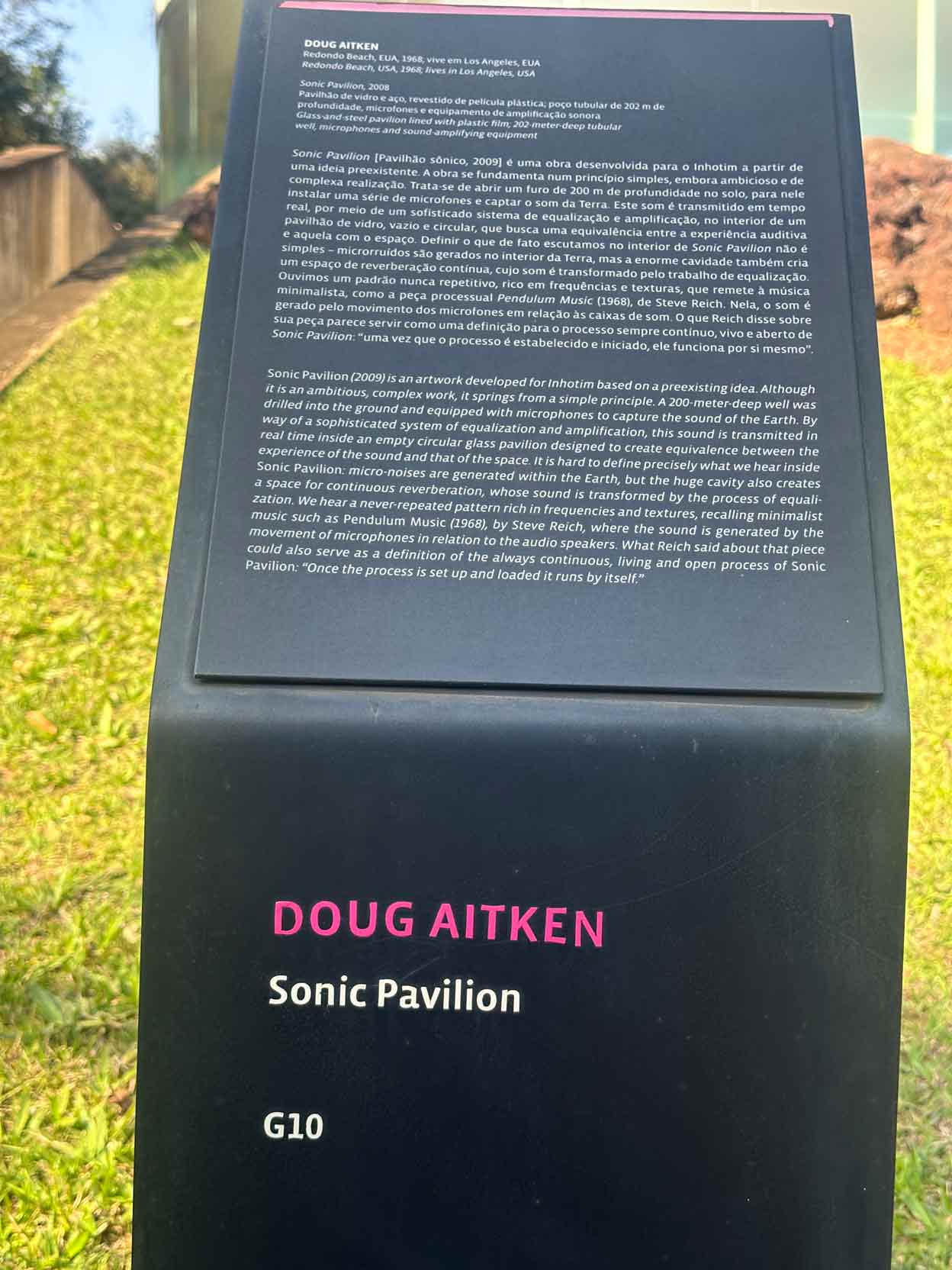
I was fortunate to be shown around by Lucas Meneses, an assistant curator, who explained how each pavilion is conceived in dialogue with an artist’s practice. Monumental galleries for single artists, smaller spaces for experimentation, installations sited to converse with the surrounding ecology. Here are works by Cildo Meireles, Adriana Varejão, Chris Burden, Yayoi Kusama, Olafur Eliasson, Doris Salcedo, and Anish Kapoor, each experience amplified by the landscape. The balance between art and nature is not incidental; it is Inhotim’s ethos.
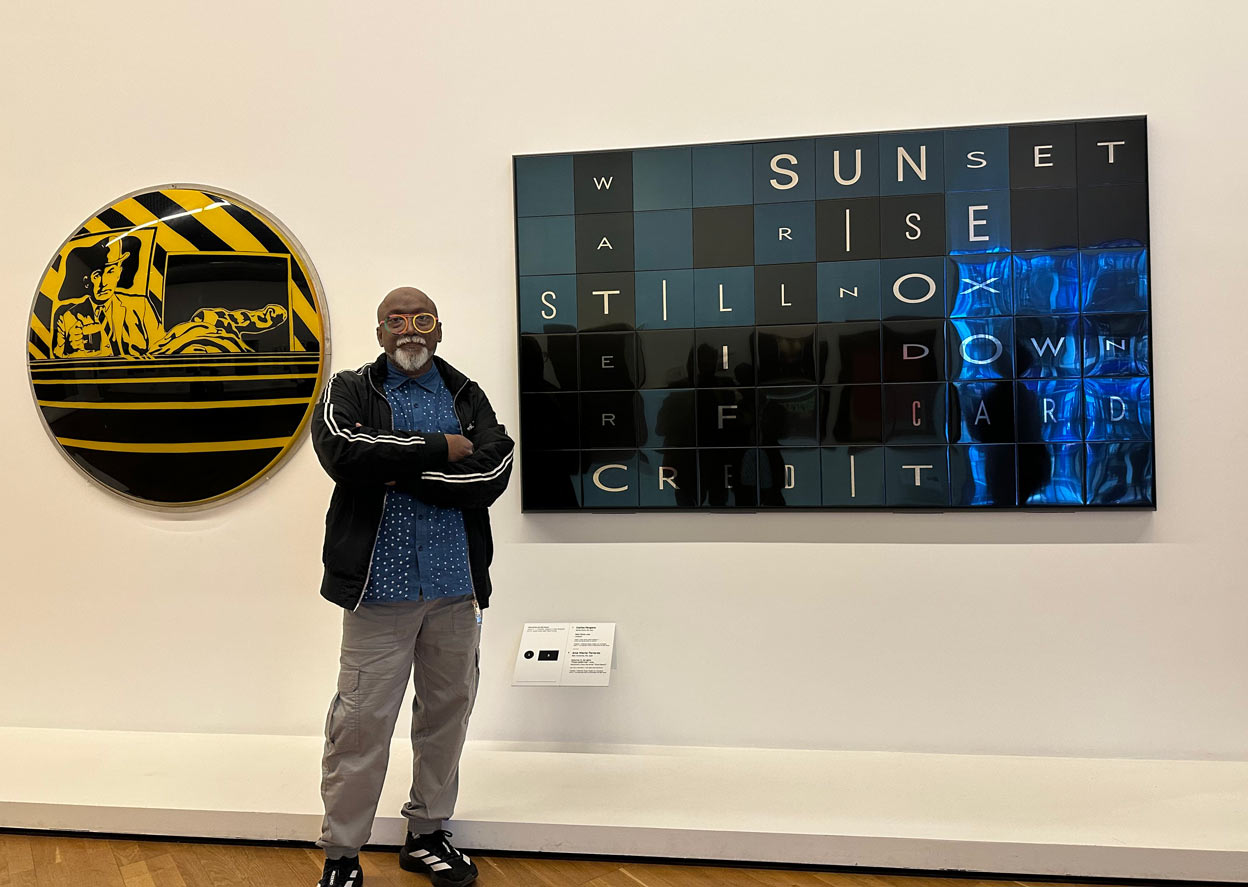
What impressed me equally was the infrastructure. Mediators of Inhotim conducted guided tours for local students. Electric carts, gardeners, cleaners, architects, guides, and technicians choreograph the place’s daily life. Inhotim is a workplace as much as a museum, providing employment and opportunities to the local community. In blending art, nature, and social responsibility, it becomes a socio-economic model as well as a cultural project.
Inhotim sits amidst a global constellation of similar experiments, such as Naoshima and Teshima in Japan, Jupiter Artland in Scotland, and Sifang in China. But its scale and botanical ambition make it distinctive. It is part botanical garden, part open-air museum, a place that demands two or three days to absorb fully.
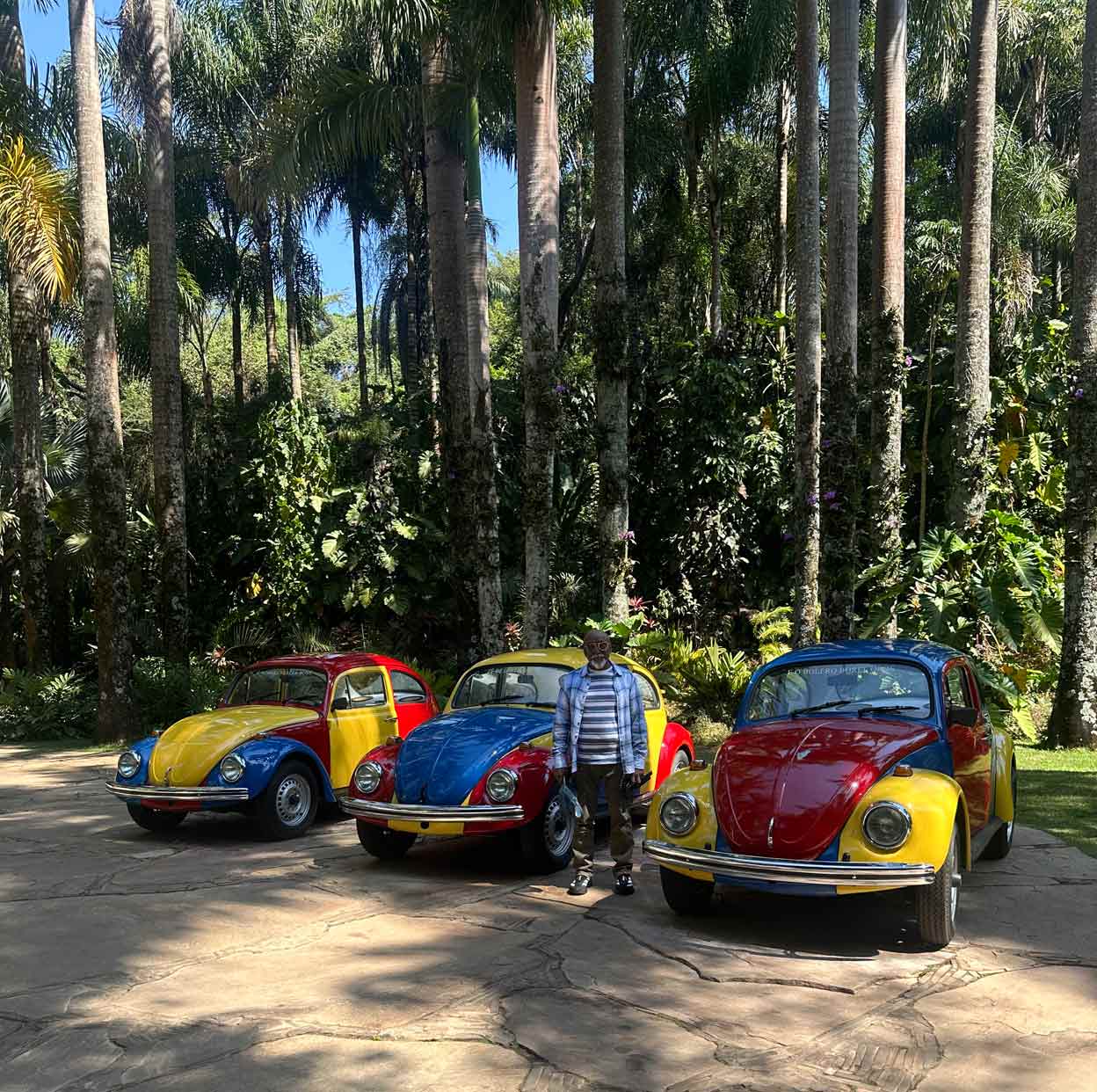
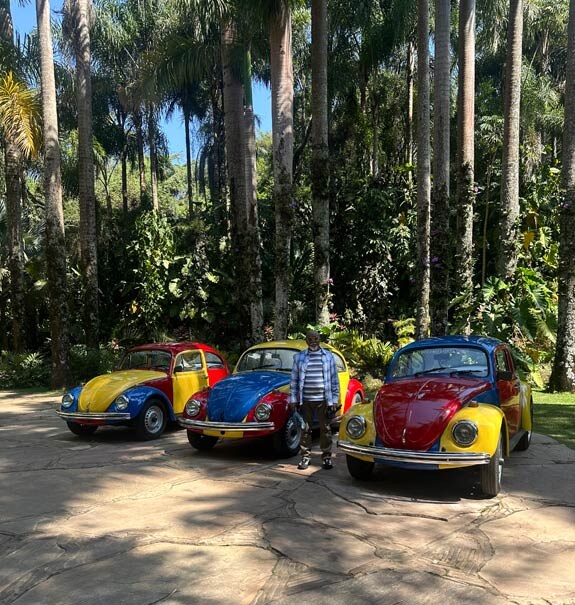
Before leaving Belo Horizonte, I visited Flavia Albuquerque’s gallery, which is a 1,000-square-metre space that she runs with her son, Lucas. Flavia introduced me to three local artists whose practice embodied the city’s creative energy. I learned that Laura Belém, Froiid and Tatiana Blass were to be the next permanent artists at Inhotim; another sign that the institution continues to evolve in dialogue with contemporary practice.
Belo Horizonte and Inhotim taught me that wealth, channelled with vision, can seed cultural futures of extraordinary richness. Their value cannot be measured merely in financial terms. It lies in connecting artists, architects, gardeners, and visitors in the shared act of imagining and creating.
Reflection: Festivals, culture, and the art of living
Travelling through São Paulo, Rio, and Belo Horizonte/Inhotim, one lesson persisted: culture is not only what is displayed or collected; it is what is lived, rehearsed, and celebrated. Each city offered a distinct model of engagement. Yet, they converged on a shared principle that the act of building, sharing, and sustaining cultural memory is inseparable from daily life, community, and the environment.
In São Paulo, the Bienal demonstrated the power of scale and institution; corridors and pavilions staged global conversations in which local histories, such as those informed by Ambedkarite thought, spoke powerfully. In Rio, culture revealed itself as a living organism. Beaches, studios, and spontaneous music formed a parallel curatorial act that celebrated community and continuity. In Belo Horizonte and Inhotim, vision and infrastructure demonstrated how long-term investment can produce a dynamic and ethical cultural ecosystem. Everywhere, the human scale remained vital. Local galleries, guides, gardeners, and curators are the agents who make such visions resonate.
Together, these experiences reaffirm what I have long believed through my work with the Kochi-Muziris Biennale: festivals are cultural lifelines. They connect people, ideas, and practices across geography, history, and social conditions. They remind us that art is participatory, and that community, whether through institutional structures, street-side music, or the collective labour of maintaining a garden-museum, is the backbone of any enduring cultural ecosystem.
Departing Brazil, I carried not only memories of extraordinary works, breathtaking landscapes, and inspiring collectors, but also the conviction that the art of living is celebration, care, and dialogue. When we invest in culture, we invest in life itself.
 Add as a preferred source on Google