
Happy birthday Madras: Celebrating the legacy of the city
Mail This Article


While Chennai is a city, Madras is an emotion that evokes nostalgia. It is the gentle breeze that rises over Marina, covered with long, unending stretches of golden sand with rows and rows of food stalls, the clang of temple bells and church chimes that blend in harmony, the aroma of filter coffee wafting at dawn, and the timeless hum of an ancient metropolis that continues to reinvent itself. On Madras Day, which falls on August 22, we celebrate not just a city marked on maps, but a living, breathing legacy that began centuries ago and continues to shape millions of lives.
Origins and Heritage
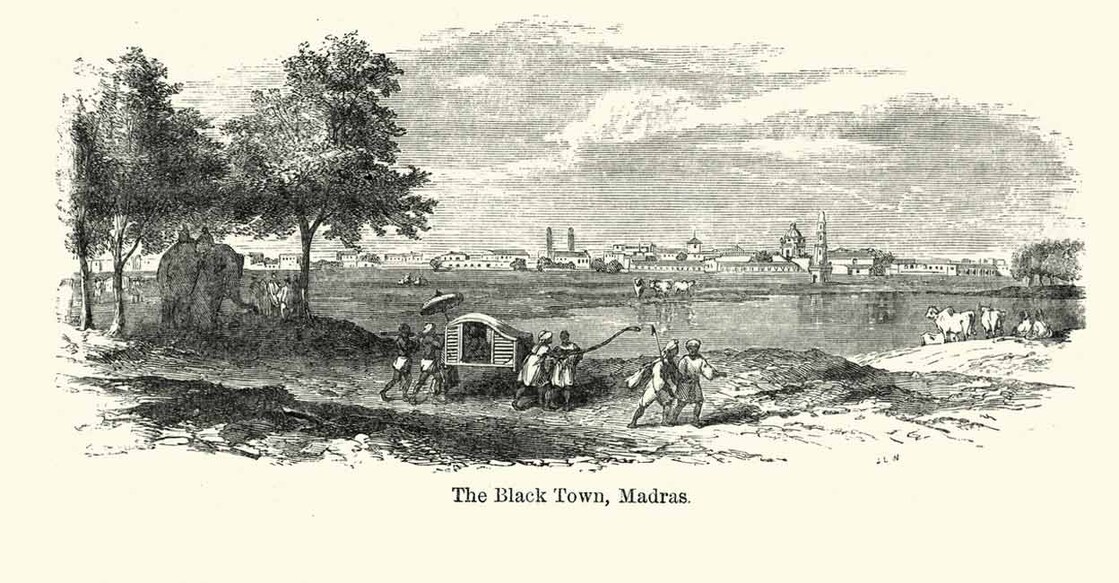
The story of Chennai began on August 22, 1639, when Francis Day of the East India Company secured land to build Fort St. George from Damarla Venkata Nayak, the then viceroy of the Vijayanagar Empire. Around this fort, a small cluster of fishing villages grew into Madraspatnam, which the British called the Black Town. In 1688, the Corporation of Madras was established as the first municipal corporation in India and the oldest in Asia. Here, the seeds of modern urban governance in India were sown.
Madras was not just a colonial outpost; it was a meeting point of cultures, traditions, and aspirations. The Tamil spirit infused every street and settlement in the region. Over time, Madras became the intellectual and cultural heart of South India, nurturing the Dravidian movement, Carnatic music, Bharatanatyam, and a robust publishing industry. It even has its own dialect of Tamil, called by many as the Madras Bashai – a fusion of Tamil, Telugu, English, Hindi, Urdu, and Sanskrit, depicting the cosmopolitan set of people who influenced the city’s landscape.
Chennai now
Chennai has changed over the past few decades from a storied port to one of India’s fastest-moving economic engines. Car manufacturers, both global and domestic, have clustered in newly paved suburban grids, earning the label ‘Detroit of Asia,’ while small machine shops, tooling firms, and logistics players have surged around them. Along the Tech Corridor, rising glass towers and fluorescent-lit assembly labs push out a steady stream of coding, chips, and cloud services, tying the city to global supply chains.
The medical sector has grown just as decisively. World-class cardiac, oncology, and orthopaedic towers occupy both old and newly built hospital campuses, drawing patients from all corners of the subcontinent and beyond. A tidal wave of paraphernalia, from prosthetics to pharmaceuticals, is now manufactured locally. Busy container terminals, a deep waterfront, and buzzing co-working spaces meet every modern investor’s checklist, reshaping the colonial trading post of Madras into a sprawling 24/7 metropolis.
Even as it parades these successes, the city must shoulder a long list of day-to-day woes. Garbage piles, untreated and uncollected, seem to multiply with every high-rise. Landfills at Perungudi and Kodungaiyur flare and leak, while the promised bark, damp, and vapour signatures of scientifically sorted waste remain years overdue. The Corporation of Chennai—our nation’s oldest city council—labours late into each night on audits, routes, and budgets. Yet, its achievements remain a small hedge against the widening gap between thriving businesses and shabby toilets.

Water security in Chennai presents another of the city’s persistent paradoxes. In 2019, global headlines branded the city ‘Day Zero’ when the pipes stopped flowing—a scant four years after the streets had been open channels for monsoon overflow. Heavy reliance on an erratic monsoon, relentless extraction of groundwater, and the steady loss of wetlands have forged a condition in which shortfalls feel like the new normal. Bureaucracy, while a potential safeguard, frequently stalls needed action; schemes that might avert future scarcity are overshadowed by the immediacy of upcoming elections, which shape promises rather than plans.
Madras, the emotion
Yet, beyond statistics and struggles lies the emotion of Madras. It is the resilience of people who form human chains during floods, share water when scarcity strikes, and fill the Marina sands with protests and festivals alike. It is in the unchanged taste of a hot idli at midnight, the pride of speaking Tamil with uncompromising dignity, and the endurance of art, cinema, and literature that continue to thrive here.
While Chennai is a growing, bustling city grappling with the challenges of modernity, Madras is an emotion–timeless and unshaken. It is the part of us that smiles at the drizzle in Mylapore, hums an Ilaiyaraaja tune on an evening walk, and celebrates life in the small things.
On this 386th Madras Day, we honour not only the foundation of a city but also the spirit of its people. From Fort St. George to the IT corridor, from ancient temples to shining malls, from water woes to industrial might, this is a city that never stops moving, never stops feeling.

Chennai will continue to evolve in this regard. Madras will continue to endure flooding. Together, they remind us that while a city is built with stone and steel, emotions are built with memory, culture, and soul.
 Add as a preferred source on Google