
Why is women's safety dwindling in Kerala trains? Solutions
Mail This Article


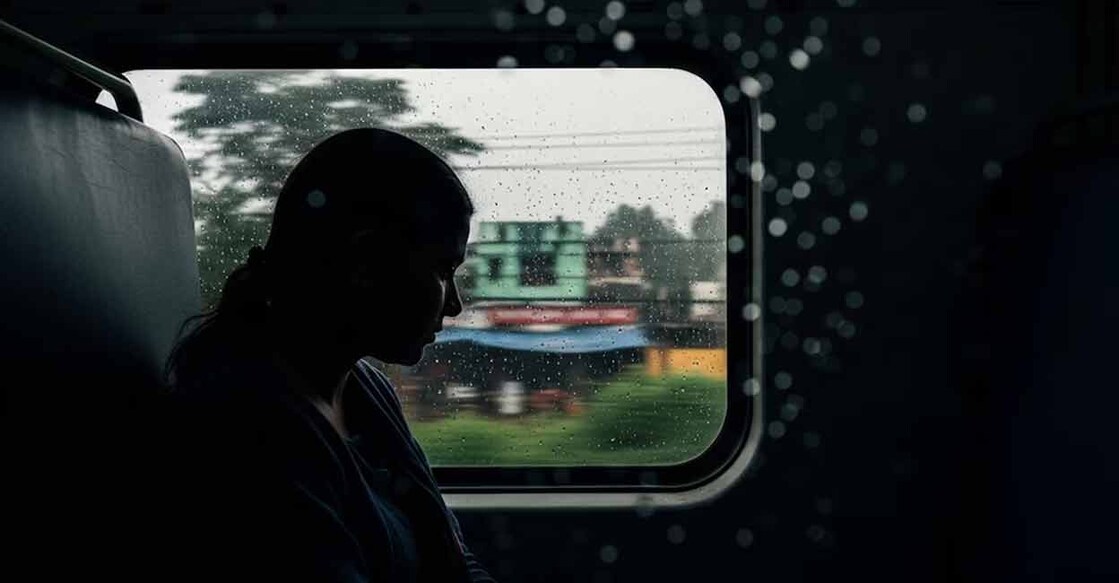
The news of a drunk man attacking a female passenger and pushing her out of a moving train has deeply shocked the public conscience. It raises a pressing question: what level of security do the Indian Railways actually provide to its commuters? Every day, countless passengers travel by train, often silently confronting such dangers. The real concern lies in a growing belief among wrongdoers that trains are places where they can act without fear of consequences.
There is only one way to curb such incidents—to strengthen security. The first step for this must be to increase the presence of Railway Protection Force (RPF) and Government Railway Police (GRP) personnel on trains. In addition, the security apparatus should be reinforced with modern surveillance measures such as CCTV cameras and real-time monitoring systems.

Need more security
It is in the general compartments that the presence of security forces is most required. Incidentally, however, it is these very compartments where they are absent. Only one or two police officers are usually deployed in the reserved coaches of major trains, leaving them unable to reach the general compartments quickly in case of an emergency.
None of these compartments has any CCTV cameras, even though they are often boarded by people under the influence of alcohol or narcotics. There are no systems in place at railway stations to prevent such individuals from boarding, nor are there adequate checks once the train starts its journey. Many passengers even consume alcohol after boarding.
Safety at one’s own risk
Passengers say they are particularly afraid to travel on the Shoranur–Kozhikode passenger train, which starts from Shoranur at 8.40 pm. The train begins and ends its journey almost empty, carrying only a few passengers. Operating at night, it often gets delayed, being halted at several points to give way to Vande Bharat, Jan Shatabdi, or Executive Express trains.
Most of these halts occur at isolated and poorly lit stations, forcing passengers to wait in darkness, anxious and vulnerable. This train once operated on a more convenient schedule that benefited many commuters, but its schedule was abruptly changed without explanation.
With no RPF or GRP personnel on board, passengers are left to look after their own safety. Only a few compartments are occupied, while the rest remain completely empty.
The risky ride in MEMU
The early morning MEMU train to Kozhikode, which departs from Shoranur at 5 am, carries a large number of passengers, including students, employees and other daily commuters. The sun rises only as the train nears Kozhikode, leaving much of the journey in darkness. With no security personnel or CCTV cameras on board, passengers, including many women and children, often travel in fear.
Insecurity in day trains too
Even in day trains such as the Parasuram Express and Eranad Express, passengers travel with a sense of unease. These trains have more general compartments, but police presence is almost nil. They are frequently boarded by groups of beggars who move from one coach to another collecting money. In the blink of an eye, valuables are often stolen from unsuspecting passengers amid the commotion.
Fear rides the interstate trains
Fear is a common element in several inter-state trains coming from Chennai. Until they enter Kerala, even the reserved coaches in these trains are often occupied unauthorisedly by migrant workers, leaving passengers helpless. There are no police officers on board to intervene or clear such encroachments.
Some relief comes only when the train reaches Palakkad, where police usually board and remove these groups. The West Coast Express is a notable example of this recurring situation.
Nobody is spared
Just a few days ago, a group of inter-state migrant workers who had boarded the Shoranur–Kozhikode passenger train at 8.40 pm unleashed a violent attack on a fellow passenger. With no help forthcoming, the man locked himself inside the train’s bathroom and escaped only when the train stopped at Tanur. Several women passengers have also shared similar experiences of harassment and insecurity on this route.
Active pickpocketing
Only recently, Rs 5,000 was stolen from the pocket of a passenger from Paravanna, Tirur, as he boarded the Thrissur passenger train. The thief had cut open his trouser pocket with a blade to steal the money kept under his dhoti. Similar incidents of bag theft and pickpocketing have also been reported along this stretch.
The incident occurred at a spot within the station where no CCTV cameras are installed. Passengers seeking less crowded compartments often choose those at the rear end of the train. Unfortunately, most stations lack surveillance coverage at the locations where these coaches halt.
Doing whatever they can
The Railways, meanwhile, is doing everything possible to ensure passenger safety with the limited manpower available. In all major stations, the presence of Railway Protection Force (RPF) personnel has been ensured.
Under the Palakkad Division, a team of 85 RPF officials and 28 GRP officers currently manage security across various stations, a number that remains far from adequate. In total, RPF personnel are deployed in 14 trains, while 36 GRP officers cover multiple routes.
The RPF has also launched a series of special operations, such as Operation Seva, Operation Nanhe Farishte, Operation Amanat, Operation Narcos, and Operation Yathri Suraksha, under which officials have shown commendable performance. However, passengers demand greater deployment of security staff, especially on general and night trains.
Commenting on the issue, N.Shiji, a teacher who has been commuting between Tirur and Kozhikode for the past 23 years, called for enhanced security measures on trains. “The presence of police personnel is a must, especially in women’s compartments. Security should also be ensured in general compartments,” she said.
K Raghunath, President of the Malabar Train Passengers Welfare Association, also stressed the need for stronger safety arrangements. “We believe this can be achieved by increasing the presence of police officers and installing CCTV cameras inside trains,” he said.
 Add as a preferred source on Google