

When Mohanlal spoke about accessibility, empathy, and his mother
Mail This Article


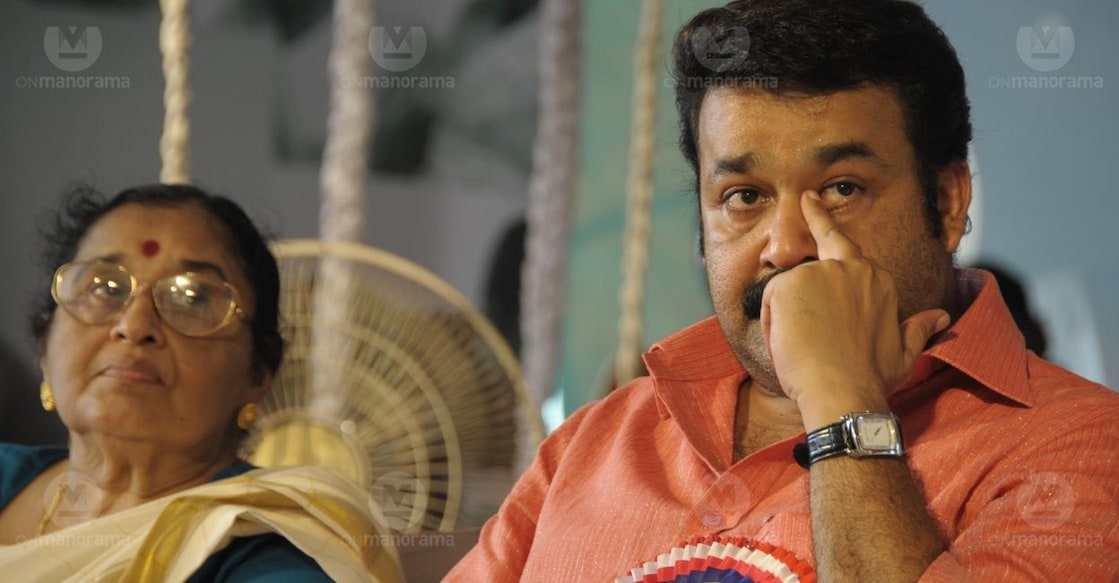
“Does Lal know the struggles of people living in wheelchairs?” — a question posed to Mohanlal by a doctor stayed with the actor, prompting a deeply personal reflection on his blog. In a post titled “Let Them See the Beauty of the World,” Mohanlal spoke candidly about his mother, Shanthakumari, who had been using a wheelchair for several years.
He wrote with warmth and care, “My dear mother has been using a wheelchair for a few years now,” highlighting both the love he felt for her and the challenges she faced in everyday life.
In the blog, Mohanlal explained the difficulty of finding time to express himself amidst a busy schedule. “I only wrote when I truly felt compelled,” he said. “This blog was not meant to teach anyone. It was simply a way to share some of my own joys, anxieties, and sorrows.”
He also reflected on the late scientist Stephen Hawking. “Like everyone else, I was deeply saddened when Stephen Hawking passed away. Reading about him afterward, I realised that a man confined to a wheelchair, whose mind travelled to the furthest corners of the universe, was not only a scientific genius but also a shining example of human willpower. Nothing could break him. I bow to Stephen Hawking, who explored the stars.”
A few days before Hawking’s death, Mohanlal had visited a doctor friend who also lived in a wheelchair. During their conversation, the doctor asked, “Do you know the struggles of people living in wheelchairs, Lal?” Mohanlal replied, “I know a little,” reflecting on his experience portraying a character in a wheelchair in the film ‘Pranayam’ and on his own mother’s challenges.
He wrote about observing his mother’s adjustment to a life constrained by a wheelchair. “She once walked joyfully and freely, and suddenly she had to rely on a wheelchair. I witnessed the unease she felt, and it made me realise how little we consider these challenges in our daily lives.”
The doctor explained how inaccessible public spaces restrict those in wheelchairs. “People in wheelchairs cannot go anywhere freely. Temples often have high steps. Railway stations are difficult to navigate. Auditoriums and theaters are nearly impossible to access without assistance. Society often forgets that people like us exist. Our lives remain confined to this chair, watching the day pass and the birds fly freely,” Mohanlal quoted him.
He reflected on how this conversation exposed a broader truth: those of us who are able-bodied often design the world solely for our convenience, rarely pausing to consider the perspective of others. He emphasised that true progress involved looking beyond ourselves, noticing the small, the helpless, and taking action to improve their lives.
He drew a parallel to India’s long-standing tradition of compassion — caring for birds during hot summers and creating spaces for them to survive. “If we could be conscious and compassionate towards birds, we could certainly extend the same care to fellow humans,” he wrote.
Mohanlal’s message was simple but profound. Society must create inclusive spaces, accessible paths, and public areas that consider the needs of people in wheelchairs, alongside women, children, and the elderly. “Let them move through this world as freely as anyone else,” he urged.
This was more than a note from an actor. It was a son reflecting on his mother’s experiences, reminding us that the people around us, regardless of their abilities, deserve dignity, access, and the chance to experience life fully.
“Let them, too, see the beauty of the world,” Mohanlal concluded, signing the blog with love.
 Add as a preferred source on Google