

Halloween 2026: Why Carrie, Clayface and Resident Evil are worth a scare
Mail This Article


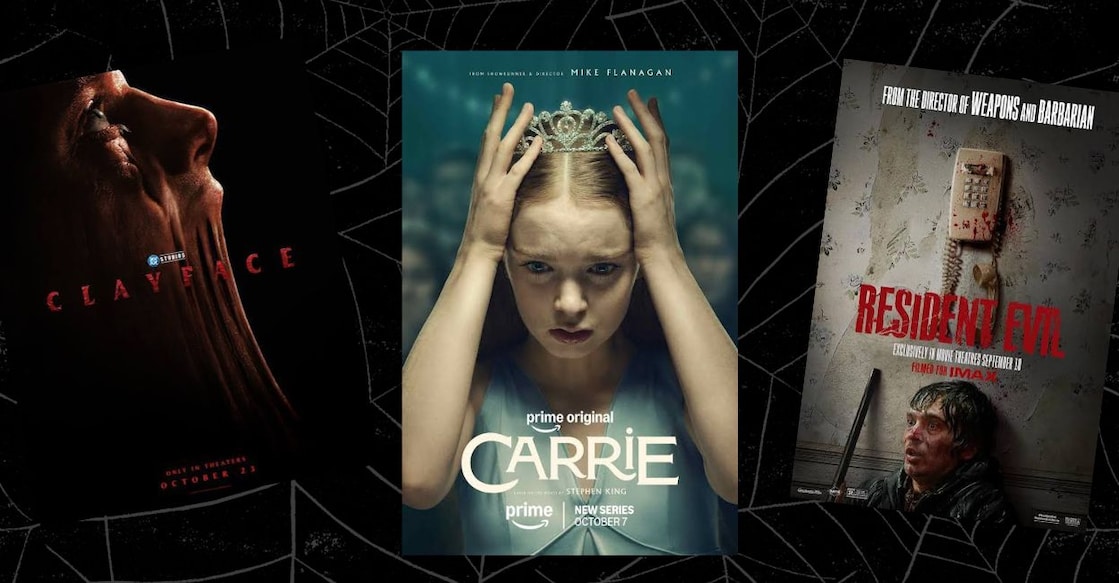
Horror does not have an image problem; it has a repetition problem. It keeps returning to haunted houses, demonic children and familiar franchises. This year's crop of releases offers three very different answers: Mike Flanagan's 'Carrie', James Watkins' 'Clayface' and Zach Cregger's 'Resident Evil'. One turns high-school cruelty into tragedy, another makes a monster out of Hollywood's obsession with the human face, while the third makes every doorway feel like a bad decision.
The most interesting thing about Flanagan's 'Carrie' is that it does not pretend the story needs rescuing. Stephen King's 1974 novel has already had its defining screen version in Brian De Palma's 1976 film; the prom, the pig's blood and the terrible consequences of humiliating a lonely teenager are part of popular culture. Flanagan's eight-part Prime Video adaptation knows suspense cannot depend on whether Carrie White will take revenge. We know where this ends; the question is how much damage comes first.
That shift gives the series room to examine the machinery of humiliation. Summer H Howell's Carrie is not merely an outsider with telekinetic powers. Her body and behaviour are policed at home by her fanatically religious mother, Margaret (Samantha Sloyan), and ridiculed at school by classmates who know where she is vulnerable. Flanagan updates the social cruelty without lazily turning the story into a lecture about phones: online humiliation extends the schoolyard's reach, making cruelty harder to escape. Rather than stringing together shocks, the series shows how a community manufactures the catastrophe it will later claim to be horrified by. It may not be the scariest 'Carrie', but it is an uneasy one.
Flanagan's framing device, which pieces the prom-night disaster together through emergency calls and retrospective accounts, acknowledges that the story is already a cultural memory. It shifts attention from the event itself to the people who helped make it inevitable, and to the convenient explanations they reach for afterwards.
'Clayface' finds its way into the same territory from a more grotesque direction. Matt Hagen (Tom Rhys Harries) is an actor whose face is his livelihood. When an attack leaves him disfigured, an experimental treatment offers the possibility of restoring his looks. The cure, naturally, is worse than the injury. Directed by James Watkins and written by Mike Flanagan and Hossein Amini, the film takes a relatively obscure Batman villain and makes him the centre of a body-horror story.
It is a smart use of comic-book material. Superhero films usually treat transformation as an upgrade. 'Clayface' makes it something to recoil from. Hagen's body becomes unstable, his identity increasingly unreliable; the actor who once made a living by becoming other people is horrified to discover that he may no longer have a self to return to. The Hollywood satire has bite because it comes with physical consequences. Watching a body lose its familiar shape is not decorative gore; it is the argument. Not every dramatic beat lands, and the script occasionally strains, but its grimy, tragic monster-movie approach is a welcome change for DC.
Then there is 'Resident Evil', a franchise that has spent years being adapted, rebooted and reassembled. Cregger's decision to start with a new protagonist rather than lean on the games' best-known characters is its first useful move. Austin Abrams plays Bryan, a medical courier caught in a night of escalating disaster. The setup is lean, and the film's 94-minute running time is a virtue: it has little interest in pausing to explain every corner of its mythology.
Cregger understands survival horror's grammar. A corridor becomes a question: do you go through the door, and what is making that noise behind you? The film borrows that anxious rhythm from the games and turns it into forward momentum, with Abrams' ordinary, slightly hapless presence giving the chaos a human scale. His comic timing matters as much as his panic. Without it, the grotesque set pieces could become a numbing parade of viscera; with it, the scares surprise. This is not a solemn reinvention, nor does it need to be. It understands that horror can be exhilarating, funny and genuinely tense in the same breath.
None proves that horror has suddenly become original. 'Carrie' is familiar, 'Clayface' comes from comic-book history and 'Resident Evil' is a gaming institution. Their value lies in what they do with that inheritance. Flanagan looks at the cruelty that precedes the monster; Watkins asks what happens when the body becomes an enemy; Cregger turns the mechanics of a game into a sustained bout of nerves.
That is a more interesting Halloween proposition than a checklist of things that go bump in the night. The genre does not need a new monster every year. It needs filmmakers who understand why we are afraid of the ones we already know.
