

After Shaji Kumar's death, Anil Radhakrishnan Menon recounts his own brush with the same condition
Mail This Article


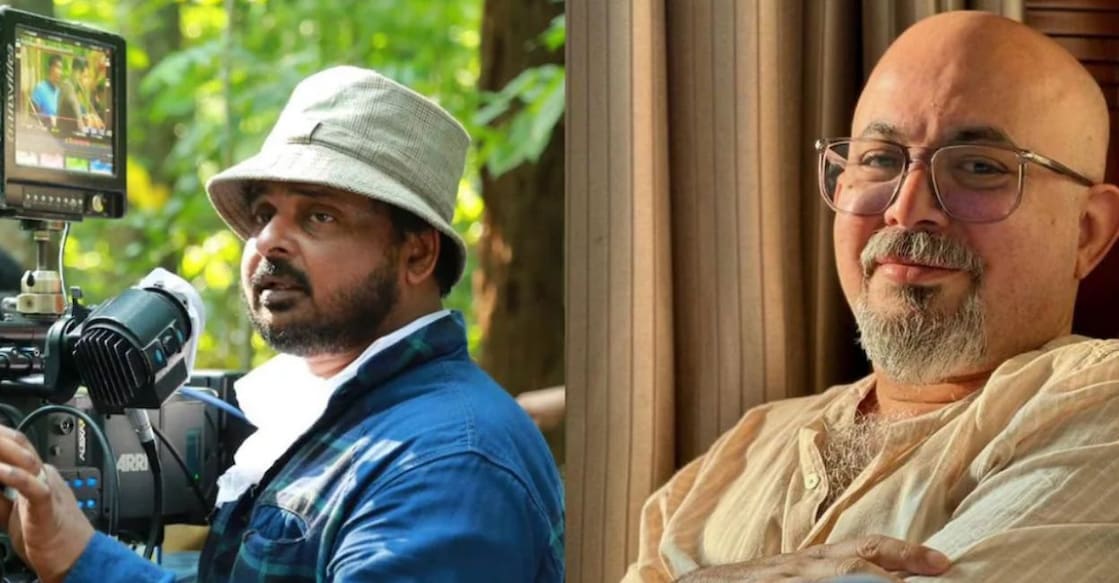
The film industry is yet to come to terms with the sudden demise of cinematographer Shaji Kumar, whose camera captured several blockbusters that drew packed audiences to theatres. The veteran had reportedly died of complications arising from pulmonary edema, a condition in which fluid accumulates in the lungs. Director Anil Radhakrishnan Menon has now revealed that he, too, had suffered from the same condition, which had left him fighting for his life.
Speaking to Manorama Online, Anil recalled the medical emergency that nearly cost him his life, his harrowing experience in the ICU and his road to recovery. "When I went through a similar ordeal. I learnt that Shaji had suffered from pulmonary edema, a condition in which fluid accumulates in the lungs, affecting the heart's pumping capacity and causing oxygen saturation levels to drop. It usually manifests as severe breathlessness. I, too, went through the same ordeal on May 26. My heart's pumping capacity had dropped to below 36%, while my oxygen saturation levels had fallen to between 40% and 50%. The following day was supposed to be my housewarming ceremony," he said.
He added that he was rushed to a nearby hospital when he developed severe breathlessness. "I knew the doctors there. They explained the seriousness of my condition and immediately put me on high-pressure oxygen and other life-support measures. I was admitted to the ICU and remained heavily sedated throughout the day.
When I woke up the following morning, I felt unexpectedly refreshed and believed that I had recovered. I told the doctors that I was feeling fine and wanted to return home. Since my housewarming ceremony was planned for that very day, I was extremely anxious to leave the hospital and make it home in time. However, the doctors approached me one after another and strongly advised me not to leave. They explained that my condition was far more serious than I realised and that I was not as well as I thought.
When I asked what I should do, they firmly instructed me to remain in the ICU. At that point, attending my housewarming ceremony was no longer an option, and they told me not to worry about it. They also recommended an angiogram to determine whether there were any blockages in my arteries.
Following their advice, I stayed in the ICU. During my time there, I witnessed five people lose their lives within just half an hour. It was a deeply distressing and traumatic experience. Despite what I had witnessed, the doctors remained firm that I needed to continue staying in the ICU and receive further treatment," he said.
Strict bed rest, round-the-clock nursing care
An angiogram revealed that Anil had two major blockages in his heart, which were treated with stents. "During my stay in the ICU, nurses attended to me round the clock in three shifts to ensure that I did not get out of bed. I was not even allowed to walk to the washroom and had to do everything while lying down.It was quite difficult for me to accept these restrictions, but the doctors were firm that I should not get up under any circumstances. I eventually had to give in. I had to use diapers, and nurses helped clean me. Though I felt uncomfortable with the arrangements at the time, I now realise that the care and strict monitoring they provided helped me recover. It is because of their attention that I am alive and healthy today," he said.
Why timely treatment matters
According to him, if he had stubbornly insisted on attending his housewarming ceremony that day, it could have proved disastrous for him. "The hospital where I was admitted was not a major healthcare facility, but the doctors clearly understood the gravity of my condition. When I kept insisting on going home, they told me, "You can leave if you want, but don't come back to this hospital."My cardiologist was a young doctor, while doctors who had treated me for an earlier stroke were also available at the hospital. I recently underwent a follow-up check-up and my cardiac condition is now stable. I have been advised to return for another check-up only after three months," he said.
He added that when he suffered the medical emergency, some people, including his manager, wondered whether he should be shifted to a bigger hospital with better facilities. "However, I believe that reaching the nearest hospital equipped to handle the emergency is the best course of action. Travelling a long distance in such a condition could only complicate matters further. My experience has taught me that getting prompt treatment at the nearest suitably equipped hospital is more important than travelling farther in search of a bigger facility," he said.
He added that he was sharing his experience because it could help others who may face a similar medical emergency. "If my account helps them understand the seriousness of the condition and the importance of seeking timely treatment, I would consider it worthwhile," he said.
