Where did Jatayu fall? Filmmaker sees no conflict in India’s diverse Ramayana traditions
Mail This Article


Bringing the ‘Ramayana’ to the big screen on an unprecedented scale came with a challenge that filmmakers Nitesh Tiwari and Namit Malhotra were conscious of from the very beginning: how do you make an epic of such cultural and emotional significance visually grand without losing the heart of its story? In a conversation with Onmanorama, the two spoke about the thought, planning and creative decisions that went into bringing the epic to life, stressing that spectacle was never meant to take priority over emotions.
Namit Malhotra said that this was one of the first things they discussed while taking on the project. While the intention was to present the ‘Ramayana’ in a grand form and introduce its world to audiences across the globe, they were equally clear that its relationships and emotions could not be compromised. “Every shot and every scene was planned to ensure that the spectacle adds to the emotions and does not overshadow them,” he said. According to Namit, spectacle in itself never works. He believes that visual effects are only an added attraction and that audiences ultimately connect with the story and the emotions it leaves them with.“It is the icing on the cake, never the real reason why people applaud at the end. People have heard the story of the Ramayana and experienced its emotions, but they have never really seen it this way before.”
He added that much of the grandeur they have attempted to create is already part of the ‘Ramayana’, including elements such as the Pushpak Viman and Airavata. The idea was to bring these familiar elements to life in a way that audiences had never experienced before, while remaining faithful to the epic.
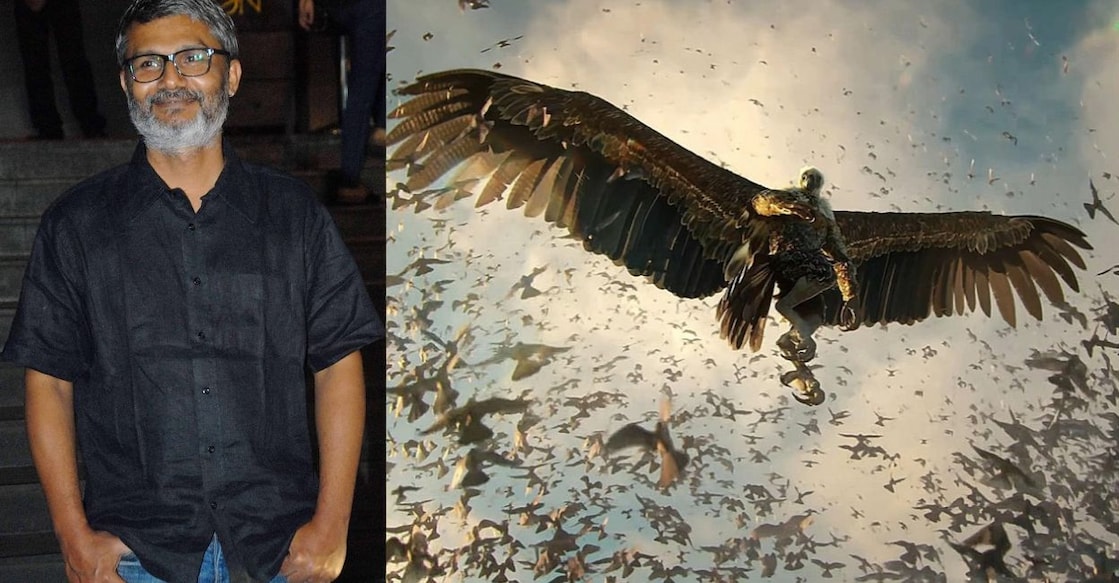
One of the biggest examples of this approach is the sequence featuring Jatayu and the Pushpak Viman. Namit revealed that the team spent years working on the sequence, particularly because they wanted to do justice to Jatayu's bravery and make his battle with Ravana truly memorable. The challenge was not just to make the sequence visually impressive, but also to ensure that Jatayu's courage and sacrifice came through.
He recalled that the planning for the sequence began as early as 2020, during the pandemic, when he wrote a detailed email to the visual effects artists explaining how he imagined the battle. From there, the team went through several rounds of planning, designing and reworking the visuals and fight choreography. Even the design of the Pushpak Viman required considerable thought, as they wanted it to look believable and feel like something that truly belonged in the world of the Ramayana.
Nitesh Tiwari added that the emotional response to the sequence was ultimately what mattered most to him. “You can have all the spectacle in the world, but ultimately, it is how people react emotionally that matters. I have seen children crying in theatres when Jatayu was finally struck down. That is where the emotions come in,” he said. For him, the sequence could be as grand as it needed to be, but its real success lay in making people feel the pain of Jatayu's sacrifice.
Nitesh also spoke about the different versions of the ‘Ramayana’ that exist across India, particularly when asked about the belief that Jatayu fell at Lepakshi in Andhra Pradesh and the Kerala tradition that places the event at Chadayamangalam in Kollam. He said he did not see these differing beliefs as a conflict, noting that there are more than 300 versions of the epic, each with its own interpretations.
Rather than taking a stand on one particular location, the filmmaker said that what mattered was Jatayu's bravery and the renewed interest these discussions have generated. He welcomed the fact that people are now looking deeper into the stories and characters of the Ramayana and exploring the different traditions associated with them.