

Film festivals matter beyond theatres, shape socially aware audiences: Madhupal at IFFK

Mail This Article


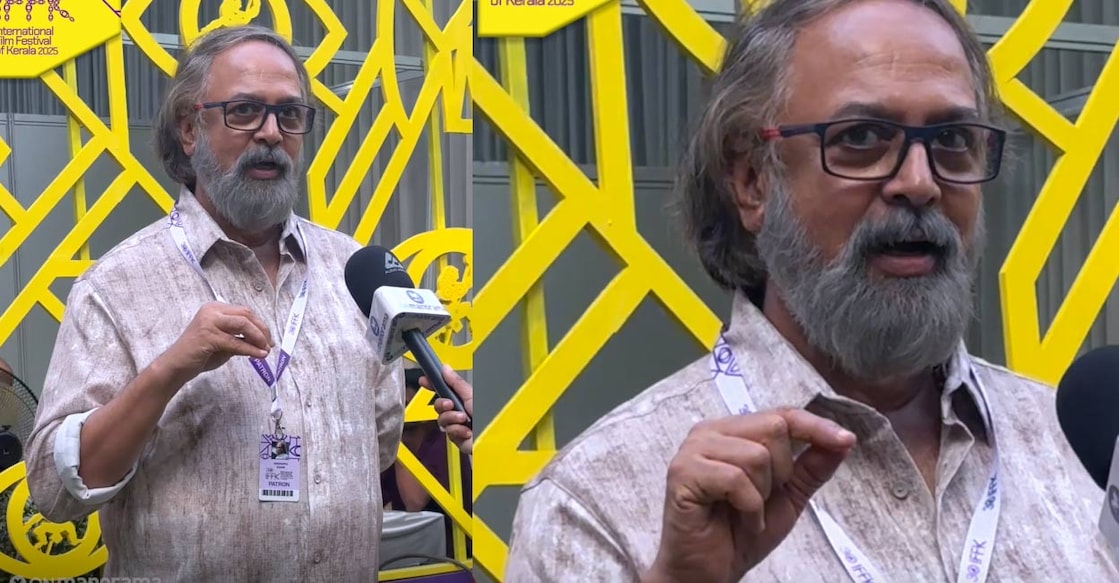
Thiruvananthapuram: Actor, director and screenwriter Madhupal Kannambathu said the International Film Festival of Kerala (IFFK) has played a crucial role in shaping not just filmmakers but also socially aware audiences who learn to see the world through cinema.
Speaking to Onmanorama during the 30th edition of IFFK, Madhupal, who is also the Chairman of the Kerala State Cultural Activists Welfare Fund Board (KCWB), reflected on his long association with film festivals, beginning in 1988.
“I have been part of this journey since 1988, when I started coming to Thiruvananthapuram as part of the IFFI touring circuit. From watching films as a delegate who bought tickets with my own money to standing here today in 2025 as part of the festival ecosystem, cinema itself has been my greatest teacher,” he said.
He recalled how Indian Panorama films were later introduced regionally and how IFFK began in Kozhikode in 1995. “Over the years, this journey of watching films has taught us how to understand cinema. Every year, at least one film helps us understand the world better, what is happening around us and how the world is changing,” Madhupal noted.
Calling cinema a visual language, he said it offers perspectives that go beyond written text. “The language of cinema is the language of images. It gives us new lessons, new ways of seeing and new experiences,” he said.
Madhupal said IFFK’s biggest strength lies in nurturing filmmakers who challenge conventions. “Many filmmakers who emerged from IFFK were not obedient consumers of cinema. They were rule-breakers. Cinema evolves when people think differently and intervene differently,” he said.
He added that a film festival’s true value extends beyond theatres. “For me, a festival becomes meaningful not just inside the theatre, but outside it. Conversations, debates and disagreements about films often teach us more than the screenings themselves,” he said.
Highlighting a shift in audience behaviour, Madhupal pointed to changing viewing habits among younger generations. “My daughter has been attending festivals for years. She once told me, ‘We already have a stock of films. What matters now is watching something different.’ That tells you how access has changed and how film culture is evolving,” he said.
Drawing a contrast with earlier decades, he recalled the film society movement and 16mm screenings. “Today, screens are everywhere, from large televisions to private preview theatres. Films are accessible. What is changing is the attitude of young audiences towards cinema,” he said.
Speaking about debates, protests and politically charged films at IFFK, Madhupal said cinema has always reflected the realities of its time. “Earlier, we had to wait days to know what was happening in the world. Today, one press of a button brings Gaza, Palestine or Vietnam to our screens,” he said.
“No matter how much someone tries to hide the truth, an eye will always remain open somewhere. Cinema keeps that eye open. Every film offers a new way of seeing the world,” he added.
Madhupal acknowledged that artists who speak the truth often face attempts to silence them. “There are many artists with the courage to tell the truth. At the same time, there is a growing tendency to erase such voices,” he said.
He said debates on whether political expression at festivals is positive or negative miss the larger point. “Everything contains both positivity and negativity. What matters is how we respond. Belief alone is not enough. We must recognise the truth ourselves and have the courage to speak it. When that courage disappears, we begin to vanish,” he said.
 Add as a preferred source on Google