

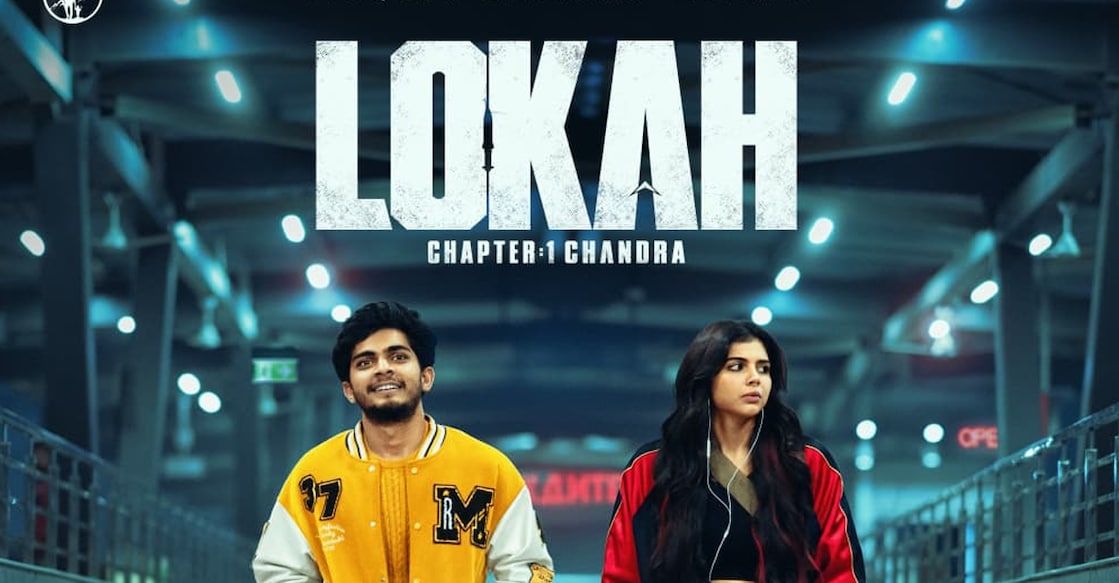
'Lokah – Chapter One: Chandra' review: A bold visual treat with Kalyani Priyadarshan at the helm

Mail This Article


Superhero movies aren’t exactly a staple in Malayalam cinema, and after 'Minnal Murali', the genre went quiet—until now. 'Lokah – Chapter One: Chandra', directed by Dominic Arun, arrives as a fresh attempt at building a Malayalam superhero universe. Starring Kalyani Priyadarshan and Naslen, the film has generated significant buzz as the first chapter in what’s being positioned as a larger franchise. So, does it live up to the hype? Absolutely.
From the start, the film draws you into a world that feels different. The visual palette, with magical hues of vibrant red, deep navy blue, and shimmering starry skies, creates an atmosphere that instantly signals a superhero story. The visual design is striking, and the world-building is immersive. It’s clear that a lot of thought has gone into creating a universe that feels both familiar and fantastical. Set in Bengaluru, the film presents the city with a unique tone. It’s more than just a backdrop—it becomes part of the storytelling, shaping the mood and supporting the film’s larger-than-life aspirations.
Kalyani Priyadarshan plays Chandra, the central character and Malayalam cinema’s first female superhero. She handles the action sequences with impressive ease, delivering a physically convincing performance. Where her portrayal falters slightly is in the emotional range. Her expressions remain fairly consistent throughout, which flattens some of the character’s depth. Still, she holds the film together and makes for a strong, commanding presence on screen. Her character’s look is also worth noting. Styled with a smart Indo-western touch that leans more toward a western aesthetic, her costume design stands out without feeling forced, blending well with the futuristic yet rooted tone of the film.
Balancing the action and mythology is a fair bit of humour, thanks to Naslen, Chandu Salimkumar, and Arun Kurian. All three deliver comic relief without disrupting the narrative flow. Naslen is especially good as the unsuspecting friend who stumbles upon Chandra’s secret, bringing innocence and perfect timing that complement the film’s more serious parts. What makes 'Lokah' stand out is its clever incorporation of Kerala’s folklore into a modern superhero template.
While the origin story follows familiar beats—nothing drastically new in terms of plot twists—the local grounding gives it a fresh flavour. The film doesn’t try too hard to be radically different, but instead focuses on telling a familiar story with its own cultural spin. That said, some tropes do feel borrowed from Hollywood superhero films, making parts of the narrative predictable.
Technically, the film is very well executed. Nimish Ravi’s cinematography captures both action and atmosphere with flair, while Chaman Chakko’s editing keeps the first half crisp and engaging. The second half, however, loses a bit of steam, particularly after the interval block, where the momentum slows down noticeably. Jakes Bejoy’s music adds another layer to the storytelling, and his score gives several scenes an extra punch.
The film also features a few interesting cameos that will undoubtedly delight viewers. One performance that truly stands out is from Tamil choreographer Sandy, who plays the main antagonist. He fits the role well, bringing the right mix of menace and unpredictability.
'Lokah – Chapter One: Chandra' may not rewrite the superhero rulebook, but it earns full marks for effort. It builds a believable world, introduces an intriguing lead character, and sets up a promising cinematic universe. With a bit more polish in emotional depth and pacing, future instalments could soar even higher. This is a film meant for the big screen—and it definitely warrants a watch.
More from the genre: 'Minnal Murali' review: Tovino, Guru Somasundaram shine in Basil's superhero world
 Add as a preferred source on Google