

Analysis | Decoding ‘Kantara: Chapter 1’ – a tribal uprising against power
Mail This Article


When they come hunting for your forest and prey on your fear, rise to guard your home.
When they come hunting you, threatened by your self-reliance and your progress, rise again to guard the generations yet to come.
When power fails to wrest from you what it covets, it will weave deception, luring you into surrendering what has always been yours, and then you must carry the fight to its very doorstep.
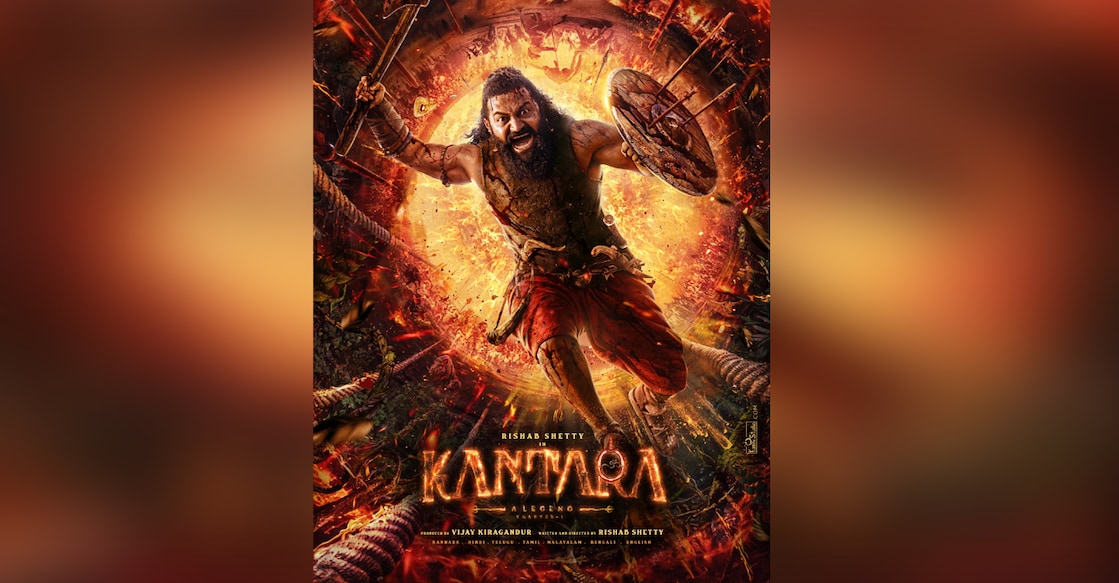
This may sound like the rallying cry of a revolutionary tribal vanguard. But that’s only partly true. This is the pulse that runs through Rishab Shetty’s ‘Kantara: Chapter 1’, the 2025 prequel to his highly acclaimed 2022 film ‘Kantara’.
In the first chapter, the tribals in Kantara, who see their forest as the heavenly garden of the gods, are compelled to take up arms to defend its sovereignty and its deities. When Rishab shows how fear of the unknown or certain ritualistic traditions work as both a hindrance to progress and a safety net for these tribals, it feels like he has ripped a sheet from tribal history across the world and written the script on it. Erase the supernatural elements from his draft, and every bit of it becomes the story of tribals and other marginalised groups even today.

Rishab narrates vividly the insatiable greed of those in power centres. He shows the extent to which the powerful will go to loot tribals and the marginalised. Change the setting to the present day, and the facts would remain the same. Tribals and Dalits are still exploited and sidelined by the rich and powerful.
When he says that the greed to claim the riches of Kantara runs through three generations of the Bangara ruling family, irrespective of gender, he is underlining that this exploitation is systematic, not the behavioural problem of one person. Led by Berme, the chosen one, when the people of Kantara walk out of the safety net provided by their forest to explore the plains, and literally their business, the realisation of the depth of exploitation hits them hard.
The caste politics imagery in the film is unmissable. The goods produced and left for the Brahmarakshas fuel the Bangara kingdom’s economy. Their foreign trade with Arabs and Portuguese thrives solely on the spices offered by the tribals to the demonic ghost of a dead Brahmin. Within the varna system, the upper castes wield power and historically resisted any attempt by the oppressed to gain access to the tools of progress. Here, even the ghost of a dead upper-caste man exploits the Kantara tribals in the same way.
Over its 2-hour 48-minute runtime, Rishab Shetty’s Kantara: Chapter 1 expands this into a broader meditation on class struggle, giving the narrative universal relevance. When war looms between the Bangara rulers and the tribals of Kantara, the Arabs—nomadic desert clans—side with the tribals, while the Portuguese are aligned with the kingdom’s elites.

When the temple priests of King Rajashekara urge him to cut a deal with the Kantara tribals to appease their gods, whom his forefathers had wronged, Rishab also gestures towards the appropriation of tribal and Dravidian deities into the Vedic fold. This allusion sharpens Rishab's critique of how dominant cultures have historically absorbed subaltern faiths, erasing their origins.
When Berme brings the bhoota kola stones to the Shiva temple being built in Bangara, they are placed near the temple, but outside its sanctum. Even today, Theyyam deities of the marginalised are kept outside the main temple compound. Rishab Shetty masterfully visualises the magic that unfolds when a group of tribals set out to free their gods from the grip of the powerful and their temple.
When the belief that their god walks among them is deeply rooted in their souls, the tribals (here Berme) achieve feats thought humanly impossible. And that magic gives birth to myths. From the pain and suffering of his people, a hero rises — a warrior whose saga is no less remarkable than the stories once told about their god: the nomad who dwells in the graveyard, the ruler of the hills, Shiva. In time, the warrior transfigures into the gana, the divine attendant, or even the god himself.
Yet, while the story celebrates tribal heroism, it remains largely male-oriented. Berme embodies the leadership and mythic transformation, while the women of the tribe often remain in the background. The film shows female warriors resisting Kulashekara’s intrusion into their land, and in the final battle, women emerge from the forest to join the fight. This seems like a weak penance for the misogynist criticism that had shadowed the original ‘Kantara’, even if the balance remains incomplete.
Still, in Berme’s gang that ventures into the plains, no women are present. Rishab had the opportunity to challenge societal and cinematic stereotypes by imagining a tribal woman rising as Chamundi to confront Kanakavathi, rather than Berme. Rendering the female gaze into the heart of this mythic struggle. Had this happened, it would have been a cultural revolution.
The final war of ‘Kantara: Chapter 1’ may evoke memories of watching the war between Mahishmati and the Kalakeyas, a nomadic warrior tribe, in S. S. Rajamouli’s ‘Baahubali: The Beginning’. But the contrast in how tribals are represented in each film is striking. In ‘Baahubali’, the tribals are used as props to amplify the might of Baahubali and Bhallaladeva. However, here, triblas, their myths, struggles, and victories shape the narrative. The film reminds the viewers that history, whenever told from the side of the dispossessed, is a weapon in the hands of those who refuse to bow.
 Add as a preferred source on Google