

Did the Portuguese really invent puttu? The truth lies in Tamil literature

Mail This Article


There’s a popular claim that the Portuguese introduced puttu to Kerala – a soft, steamed cylinder of rice flour and coconut. The argument goes that this simple preparation suited their ships: it was easy to make, used local ingredients, and could be steamed with minimal effort.
But how much truth does that story really hold?
Consider this: when James Watt was harnessing steam power in Europe, someone’s grandmother in Kerala was already using the same principle to steam breakfast. That may be a romanticised idea, but the point remains: puttu has long been part of the food culture here.
Yet it’s worth asking: who made it first?
Many historians point to Tamil Nadu as the earliest home of puttu. The dish is common not just in Kerala, but also in Tamil Nadu, Puducherry, parts of Sri Lanka, and even Assam (where a similar preparation is called sunga pitha). The first known reference to puttu appears not in a Malayalam text, but in Thiruppugazh, a devotional Tamil work composed in the 15th century by Arunagirinathar.

Malayalam as a distinct language began to emerge around the 8th century. Yet in the early Malayalam literary tradition, there’s no mention of puttu. That suggests it may have existed as part of a shared culinary landscape between Tamil-speaking and Malayalam-speaking regions, before they were seen as separate food cultures.
One of the most memorable references comes from the 16th-century Thiruvilaiyadal Puranam, where Lord Ganesha, disguised as a boy, helps an old woman selling puttu near a temple in Madurai. The tradition of offering crumbled puttu to Ganesha there continues even today.
So where does all this leave the Portuguese?
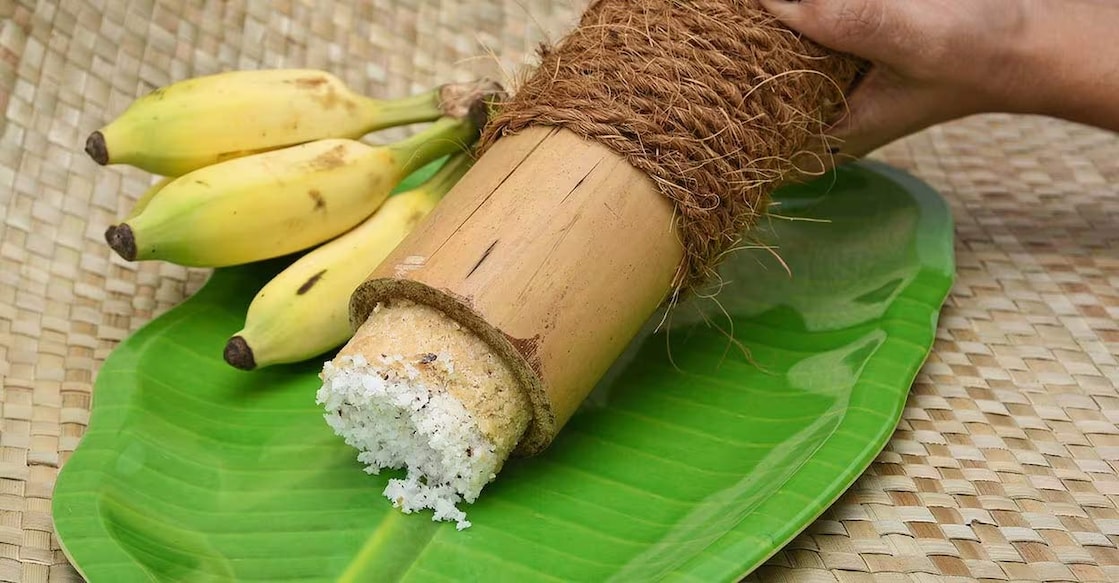
By the time they arrived on the Malabar Coast, puttu had likely already been on stoves - clay, metal, or bamboo - for generations. The Portuguese may have adapted it, or taken note of it, but the idea that they invented it doesn’t hold up to scrutiny.
Puttu belongs to a long, layered history of South Indian food. It didn’t come from a ship. It came from homes, temples, and street corners. And while the Portuguese gave us many things, puttu, most likely, wasn’t one of them.
 Add as a preferred source on Google