

Is soan papdi such a bad gift for Diwali? The sweet with a legacy, and a PR problem
Mail This Article


What do air fryers, luxury cars, and soan papdi have in common this Diwali? Believe it or not - corporate gifting debates. Headlines have floated this year about employees getting suitcases, gadgets, and even cars. And the tone is: if your Diwali gift is still soan papdi, maybe it’s time to rethink. That moment made everyone pause. Did the humble golden cube just lose its charm?
No, soan papdi is not a terrible Diwali gift. It just has an identity crisis. Here is the full, tasty, slightly cheeky story; with history, why it ends up in every mithai box, and how to give it without becoming the office re-gifting legend.
A bite of history
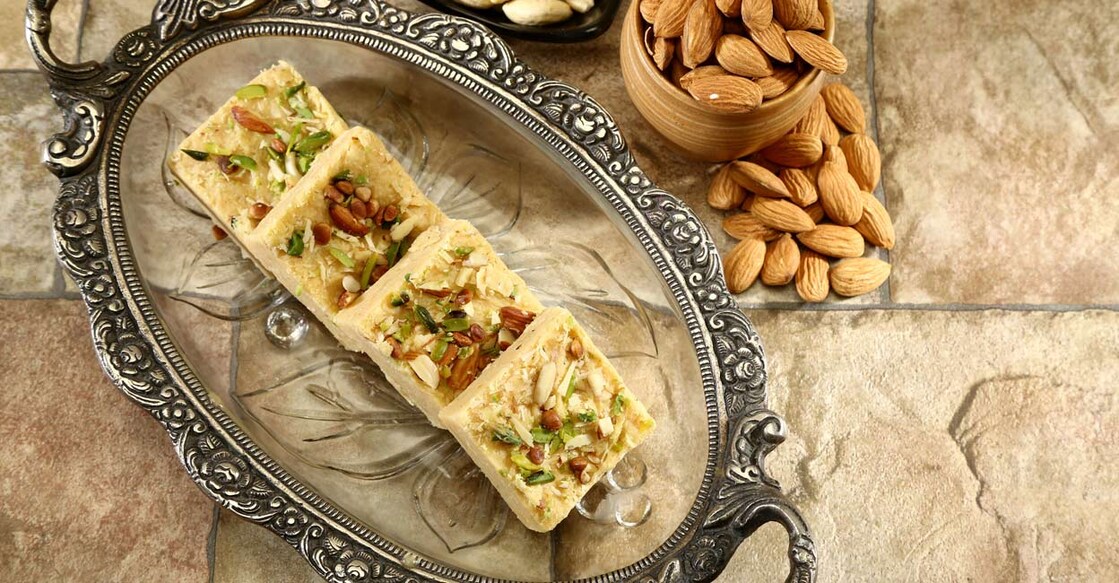
Soan papdi means “golden flaky layer.” Its roots are tangled in regional kitchens and Persian-inspired spun sugar traditions. No single origin claims it outright, but most agree it’s made from besan (gram flour), a bit of all-purpose flour, ghee, sugar, milk, and cardamom. The magic is in the texture: delicate threads compress into cubes but shatter into flake clouds when touched.
Back in the day, such fragility and finesse would have belonged in royal kitchens. Today, it’s everywhere, part of the Diwali default.

Why so many boxes, so many eye rolls?
- Shelf life & portability: It doesn’t melt or spoil easily, so it survives shipping and sitting in gift boxes.
- Cost-friendly bulk: You can order dozens at reasonable prices.
- Cultural inertia: It’s tradition. From neighbour greetings to office hampers, it’s “that sweet everyone gifts.”
- Re-gifting culture: Because it’s already everywhere, soan papdi often becomes the polite fallback gift. That “open one, pass one” cycle has become part of its brand.
Yet, for all that ubiquity, people are tired of it. In recent corporate gifting news, the phrase “if you’re still getting soan papdi, please resign” went viral, mocking the idea that gifting this sweet is some kind of meaningful gesture when companies are launching air fryers, suitcases, and even luxury cars as Diwali presents.
So — is it a bad gift?
No. It only becomes bad under some conditions:
- When it’s stale, dry, or old. (Gross.)
- When it’s packaged in a dull, thoughtless way.
- When you give it without any intention, as a “safe default” with zero personality.
- If it’s fresh, well wrapped, and comes with a small story or twist, it can still win hearts.
How to gift soan papdi right (yes, it’s still possible)
Go local & fresh
Skip mass-brand blocks. Find a sweet shop making fresh batches. The texture should crumble into flaky threads, not force your jaw to work.
Choose packaging that feels special
A pretty tin, a handwritten note, maybe a sprinkle of pistachio...treat it like art, not a filler.
Play up the backstory
Mention that golden “flaky layer,” compare it to spun sugar, or hint at the sweat of pulling strands. It makes the gift feel earned.
Pair it cleverly
Suggest someone enjoy it with filter coffee, chai, or even salted nuts on the side. Elevates the experience.
Limit the circle of re-gifting
If you know someone on the receiving end has already seen it in 10 homes — skip it. Choose something fresh for them instead.
The new gifting landscape
This year, corporate India’s Diwali gift game has changed. Air fryers, luggage sets, luxury cars, tech subscriptions — you name it. And in the commentary on the viral “resign if you're still getting soan papdi” sentence, the message is clear: many employees now expect something more than sweets.
In other coverage, companies are investing more in personalised, meaningful gifts — wellness vouchers, curated experiences, artisan goods — to break past Diwali-box monotony.
Meanwhile, stories appear about employees publicly desiring “anything but soan papdi.”
It’s not that soan papdi is dead — it’s just competing now. You’ll need more than gold wrapping to make it count.
Soan papdi isn’t inherently bad. It’s been overexposed, meme-ified, and recycled. But in the hands of someone thoughtful, it can be charming again. This Diwali, if you gift it, gift it like you care — not like you’re clearing stock.
 Add as a preferred source on Google