

Can you eat the fruit of koovalam? All about bael, Shiva’s favourite tree
Mail This Article


Walk past any old temple in Kerala and you’ll see it — a tree with three shining green leaves, standing quietly near the shrine. Most people know it as koovalam. Few have ever cracked open its fruit.
For centuries, the bael tree (Aegle marmelos) has been part of Shiva worship. Its three-lobed leaf, the bilva patra, is sacred. But the fruit, often seen hanging heavy and green, stays untouched. Maybe because it looks too hard, too strange, or simply too unknown.
A fruit with a shell like stone
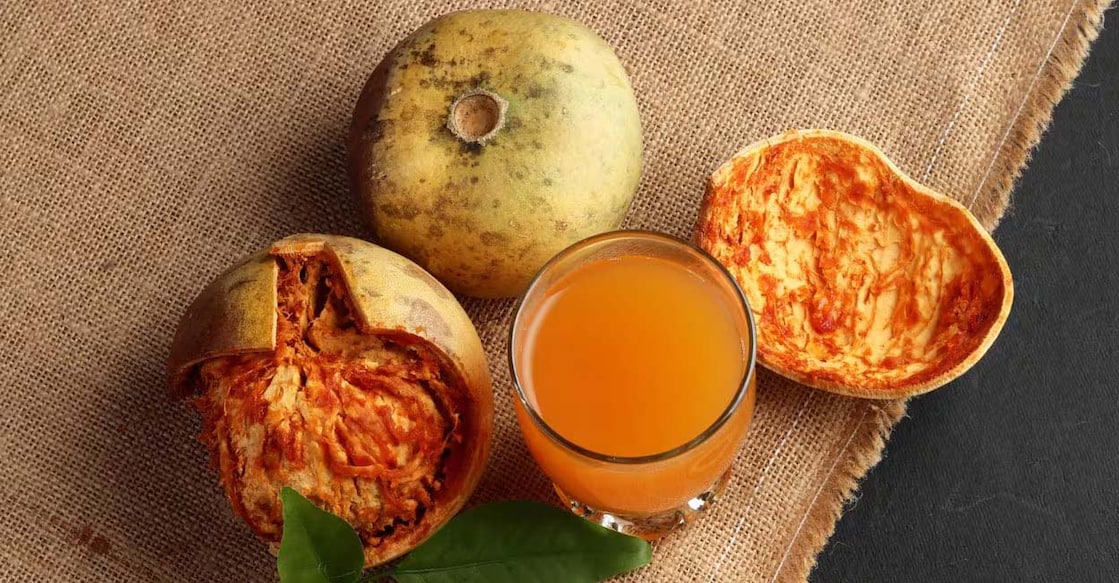
The bael fruit looks more like a weapon than something you’d eat. The outer shell is thick and woody, and you need to tap it with a hammer or pestle to break it. Inside lies a soft, sticky pulp the colour of honey. The scent is earthy and sweet, with a hint of citrus.
In North India, this fruit is summer’s natural cooler. Roadside stalls sell bael sherbet, a drink made from its pulp, water, and jaggery. In Odisha, it turns into bela pana, offered to gods and shared during the New Year. In Kerala, though, koovalam still sits mostly in temple courtyards, its fruit more sacred than seasonal.

Shiva’s sacred tree
The bael tree has been tied to Shiva for as long as anyone can remember. Its three-part leaf represents Shiva’s trident and his three eyes. According to legend, the tree was born from Goddess Parvati’s sweat while she prayed for her husband. That’s why Shiva is said to rest beneath its shade.
But beyond its religious role, every part of the tree has purpose. The wood is used for rituals, the bark and leaves for medicine, and the fruit for nourishment.
Medicine and myth in one tree
Ayurveda calls bael a natural healer. The unripe fruit helps digestion, the ripe one cools the body, and the leaves are used to balance blood sugar. It’s rich in vitamin C, calcium, and fibre, and its pulp has a mild sweetness that needs no refined sugar.
Some studies suggest that aegeline, a compound found in koovalam, can affect the liver if consumed in excess. But in traditional use and moderate amounts, it has been part of Indian diets for centuries — often enjoyed as a cooling summer drink. In many North Indian towns, you’ll find vendors stirring it into a thick, sweet sherbet during the peak of summer. Here’s how you can make it at home.
Bael sherbet recipe
Ingredients
1 large ripe bael fruit
1 litre water (add more if needed)
4 tablespoons sugar (to taste)
1 teaspoon lemon juice (optional)
A small piece of crushed ginger (optional)
¼ teaspoon cardamom powder (optional)
Mint leaves and ice cubes, as needed
Preparation
Crack the hard shell of the bael fruit with a pestle or hammer
Scoop out the soft pulp with a spoon
Remove the seeds and fibres as much as possible
Add one cup of water and soak the pulp for 30 to 60 minutes
Mash gently and strain the liquid
Add the remaining water, sugar, lemon juice, ginger, and cardamom
Stir well
Pour over ice, garnish with mint, and serve cold
The drink turns a soft amber shade and carries a sweet, earthy flavour — a perfect cooler for hot afternoons.
 Add as a preferred source on Google