

No, milk and fish won’t give you white patches and other food myths busted
Mail This Article


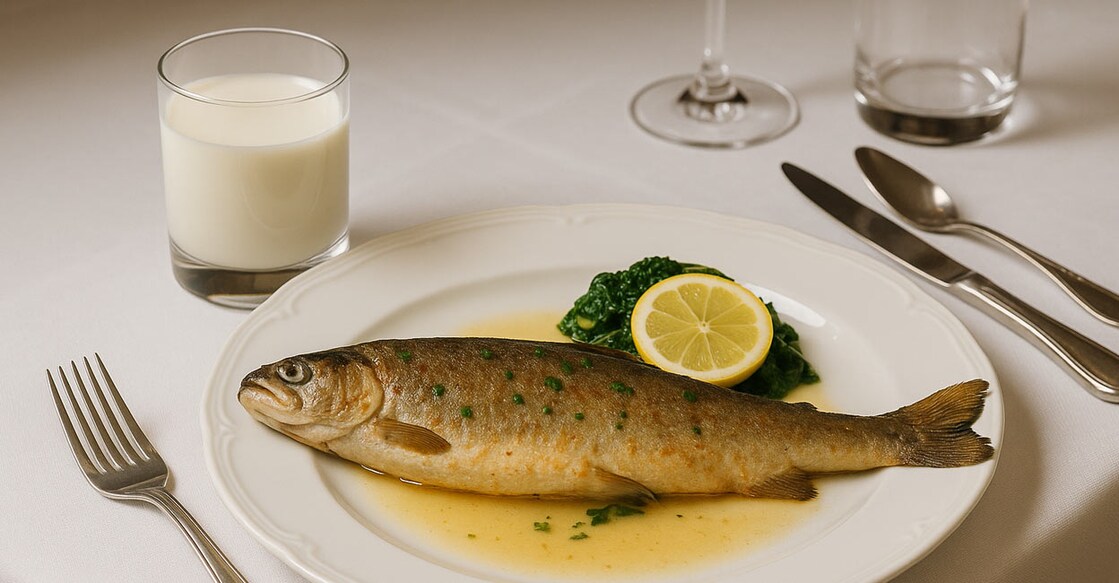
If you grew up in India, chances are someone at home has stopped you mid-meal with a warning: “Don’t drink milk after eating fish - you’ll get white patches on your skin!”
It sounds serious enough to make you put that glass of milk right back on the table. But here’s the thing: there’s no scientific proof that drinking milk after eating fish causes any kind of skin problem. None.
Vitiligo, the condition people usually refer to when they talk about “white patches,” is an autoimmune disorder. It happens when the body stops producing melanin, the pigment that gives skin its colour. Doctors and nutritionists have confirmed over and over again that what you eat has nothing to do with it.
So where did this myth come from?
Most likely from old food wisdom and Ayurvedic thinking. In Ayurveda, foods are sometimes described as “heating” or “cooling.” Fish is considered heating, milk cooling. Mixing the two was believed to create an imbalance in the body. Over time, this symbolic warning turned into a hard household rule, one that refuses to die.
Modern nutritionists and dermatologists find no credible evidence linking the combination of fish and milk to vitiligo or skin depigmentation. A fact-check by The Week noted that vitiligo is primarily an autoimmune condition, and dietary factors like mixing milk and fish do not trigger it.
In fact, many cuisines across the world safely combine the two. Dishes like fish chowder made with milk, creamy seafood soups, or yogurt-based fish curries are common in Western and Mediterranean diets. If the combination were truly harmful, such dishes would not be a staple in global food culture.
So, the next time you're enjoying a delicious fish curry, feel free to sip on that glass of milk without worry. Your skin will thank you.
- Rice makes you fat
Nope. Rice itself doesn’t make you gain weight, overeating and lack of activity do. Steamed rice can be part of a balanced diet. - Bananas cause cold and cough
False. Bananas don’t “cause” colds; they’re actually soothing and full of nutrients. The myth likely came from the idea that they feel “cold” to eat. - Tea helps you digest food
Not really. Having tea right after meals can actually reduce iron absorption from food. Herbal teas are better for digestion. - Wheat rotis are always healthier than rice
Not always. It depends on portion and your metabolism. For some people, rice is easier to digest and less bloating than wheat. - Spicy food causes ulcers
Not exactly. Ulcers are caused by bacteria (H. pylori) or painkillers, not by chillies. Though spicy food can irritate an existing ulcer.
Sources:
Ezzedine, H. M., Silverberg, M. M., et al. Vitiligo: A review of the pathogenesis, diagnosis, and treatment. Journal of the American Academy of Dermatology, 2015. https://www.jaad.org/article/S0190-9622(15)00145-5/fulltext
Alikhan, A. M., Felsten, S., et al. Vitiligo: Causes, diagnosis, and management. Journal of the American Academy of Dermatology, 2011. https://www.jaad.org/article/S0190-9622(11)00994-9/fulltext
Sharma, S. K., & Gupta, R. K. Food myths and misconceptions in Indian culture. Indian Journal of Traditional Knowledge, 2010. https://nopr.niscair.res.in/handle/123456789/1006
 Add as a preferred source on Google