

Has kuzhi mandi dethroned biryani in Kerala’s kitchens?
Mail This Article


Into the vast sea of flavours that defines North Kerala, where countless varieties of biryanis have been sailing for long, has arrived a new yacht from the Arab shores; Kuzhi Mandi.
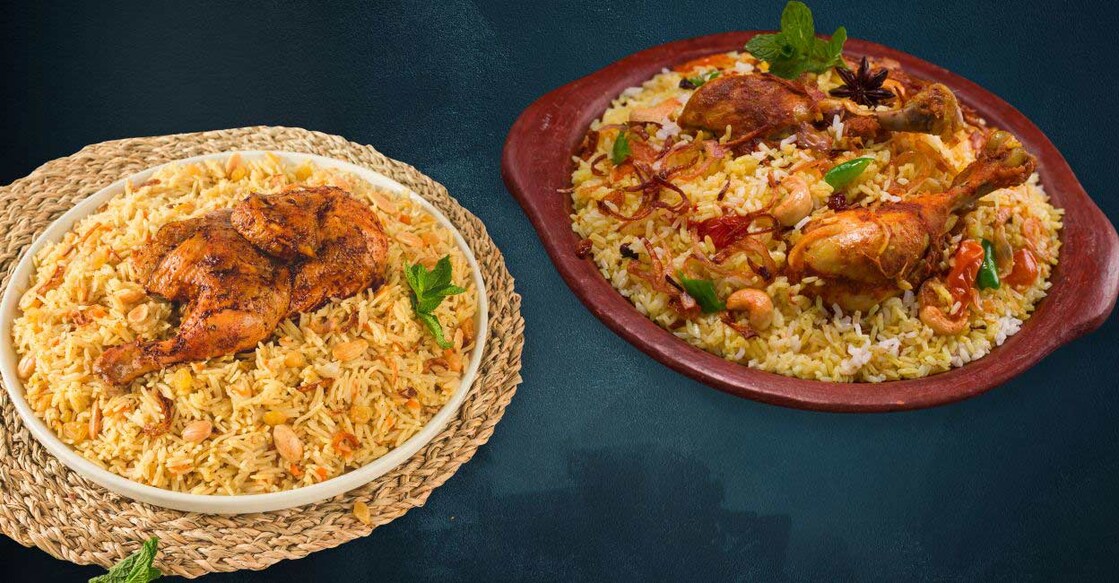
Food aficionados of Malabar, known for embracing every new delicacy with open arms, wasted no time in welcoming this one too. Having hoisted its flag first in Kozhikode and Malappuram, mandi has now become a familiar and beloved dish across Kerala. Amidst the all-out celebration of biryanis that thrill the eyes, nose and tongue, Mandi stands apart as the 'minister' of the lot as its lighter, subtler and distinct in taste.
The name Kuzhi in Kuzhi Mandi comes from the ‘kuzhi’, or pit, in which it is born. Preparation begins with setting up a round pit about one and a half metres deep, lined with bricks. Inside this, cinders are prepared using tamarind wood, which are the most preferred for the purpose. Once the firewood burns down into glowing embers, the rice is half-boiled and set aside. Spices like clove, cinnamon and shallots are added to infuse aroma.

The dish calls for long-grain basmati rice. When the embers are ready, the half-cooked rice is placed in a large copper vessel (chembu) that perfectly fits the pit’s shape. Above this vessel, a grill is placed to hold the marinated chicken.
Around 30 to 40 pieces of full- chicken, marinated in a uniquely flavoured masala mix, are arranged neatly on the grill, almost like flowers in a bed. The setup is ingenious with glowing cinders below, the copper vessel of rice in the middle, and the chicken resting on top.
The pit is then sealed with iron lids to trap the heat within. For nearly two hours, the ingredients cook slowly in this enclosed chamber. As the chicken roasts above, its juices and fat drip down into the rice, flavouring every grain with natural richness.
This is the magic of Kuzhi Mandi. Apart from the fat that melts down from the chicken, no additional oil or ghee is added. The rice absorbs just the chicken's flavour, emerging soft and wholesome.
Once the cooking is done, four people work together to unseal the pit. Using metal hooks, they lift out the grill laden with roasted chicken, followed by the copper vessel filled with the aromatic rice. The rice is then fluffed and mixed well before serving, usually with either a full chicken or half, depending on preference.
Unlike biryani, Mandi does not overwhelm with sharp masala or oiliness. Its taste unfolds slowly, like a mellow rhythm that lingers on the palate.
To complete the experience, a tomato chutney, mayonnaise and a crisp cabbage salad are served alongside. Alongside delighting your senses, Mandi comforts the conscience too. For it is refreshingly light with zero oil.
In Kerala, where biryani has long ruled the festive table, Kuzhi Mandi’s rise marks a shift in taste. Many now reach for its lighter, cleaner flavours over biryani’s rich spice and ghee. Yet, it is not a competition as much as a coexistence. Biryani remains the celebration, Mandi the comfort. Together, they tell the story of how Kerala’s palate keeps welcoming new guests without letting go of the old favourites.
 Add as a preferred source on Google