

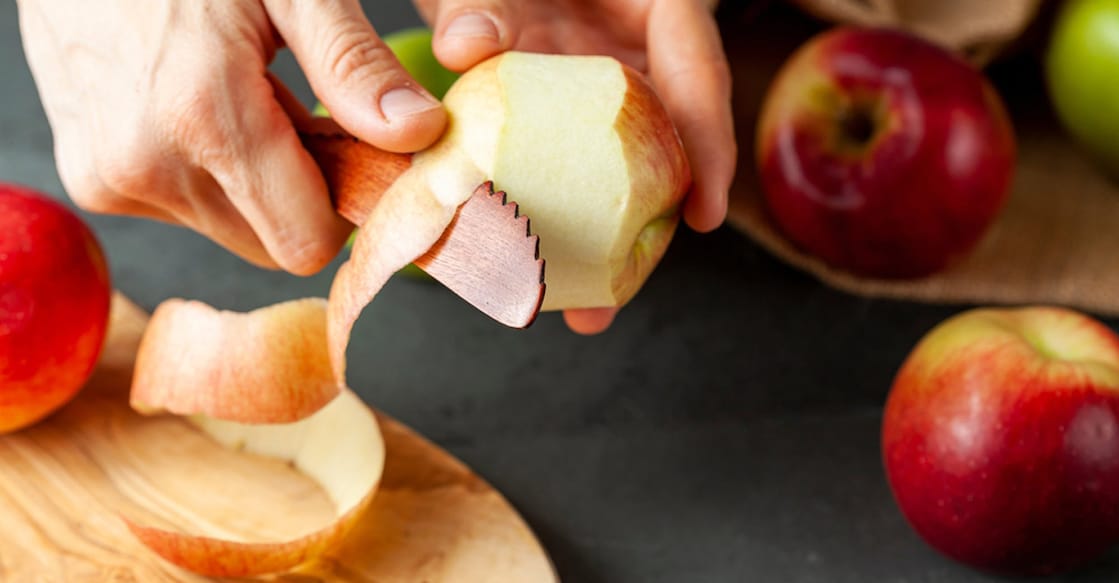
Keep the skin on. The best part of an apple might be the part everyone throws away
Mail This Article


You know that crisp crunch when you bite into a fresh apple. But are you getting the full benefit if you peel it? Spoiler: maybe not. The skin of an apple isn’t just decorative. It packs in some serious nutrition and interesting research backs it up.
Food scientists have looked closely at apple varieties like Idared and Rome Beauty and found that the peel holds far more antioxidants and flavonoids than the juicy inside. In one classic study, the peel delivered several times the antioxidant punch of the flesh. Think of it as the difference between eating plain popcorn and eating popcorn with that perfect buttery seasoning. One is fine. The other is unforgettable.
The peel is packed with quercetin, catechin, epicatechin and chlorogenic acid. These plant compounds are the culinary equivalent of the good stuff your grandmother insists you should never throw away. Nutrition experts also note that fibre and vitamin C sit closest to the skin, which means peeling the fruit strips away a chunk of what makes an apple such a good everyday snack.
A recent scientific review gathered all the peel research in one place and the findings read like a love letter to the outer layer:
- The skin has higher concentrations of antioxidants and fibre than the flesh.
- Animal and cell studies show that apple peel extracts reduced fat accumulation in fat cells, improved lipid profiles and improved blood pressure regulators.
- Only one human study exists so far. It found better blood vessel function when people ate two apples with the skin daily, although their cholesterol, glucose and blood pressure did not change much.
So the peel is promising, but it is not a miracle cure. It is simply a very good idea.

The flip side: What you should watch
A couple of practical notes before you start biting into every apple in sight:
Pesticide residue: The skin is the first thing sprays land on.
Parasites or microbes: Tiny dents or cracks can hide dust or germs.
And the wax question
Supermarket apples usually come with a glossy coat of food grade wax. This keeps them fresh and shiny but can trap whatever is already on the skin. The wax itself is safe, but the trapped bits are not exactly seasoning you want. The fix is simple. Wash well. Rub a little. If you want to go the extra mile, give the apple a quick dip in mild baking soda water before rinsing.
How to get the best out of your apple
- Snack smarter: When possible eat the apple with the skin. You’ll get more fibre, more beneficial compounds and a slight edge nutritionally.
- Switch varieties: Red-skinned apples often pack higher anthocyanins in the peel.
- Wash well: Rinse under clean water; if you’re extra cautious you can soak briefly in a baking-soda solution (some labs show this removes more residues) before rinsing.
- Don’t rely on it alone: While the peel is a hero, the overall diet counts far more. The 2023 review emphasises “potential” rather than proof.
- For processing: If you make applesauce, juice or bake, try to retain some peel rather than discarding all of it. The 2003 study noted that in applesauce manufacture the peel (rich in antioxidants) is often discarded.
If your apple could talk, it would beg you not to peel it. The skin holds the flavour, the colour, the crunch and most of the nutrition. Wash it well, keep the peel and enjoy your apple the way nature meant it. The whole fruit tastes better that way, and your body gets more out of every bite.
 Add as a preferred source on Google