

Golden yolks, healthy eyes: Designer eggs from Kerala all set to hit the market
Mail This Article


What is the difference between the eggs we buy for our homes and those purchased in bulk for hotels, bakeries or catering units? The common answer is that households prefer brown eggs, while the food business opts for white ones.
But this raises another question for those involved in egg sales as a source of income. What truly sets brown eggs apart from the white eggs brought in from Tamil Nadu? Is it the colour of the shell, the shade of the yolk that indicate the nutritional value of an egg?
Nutritious egg
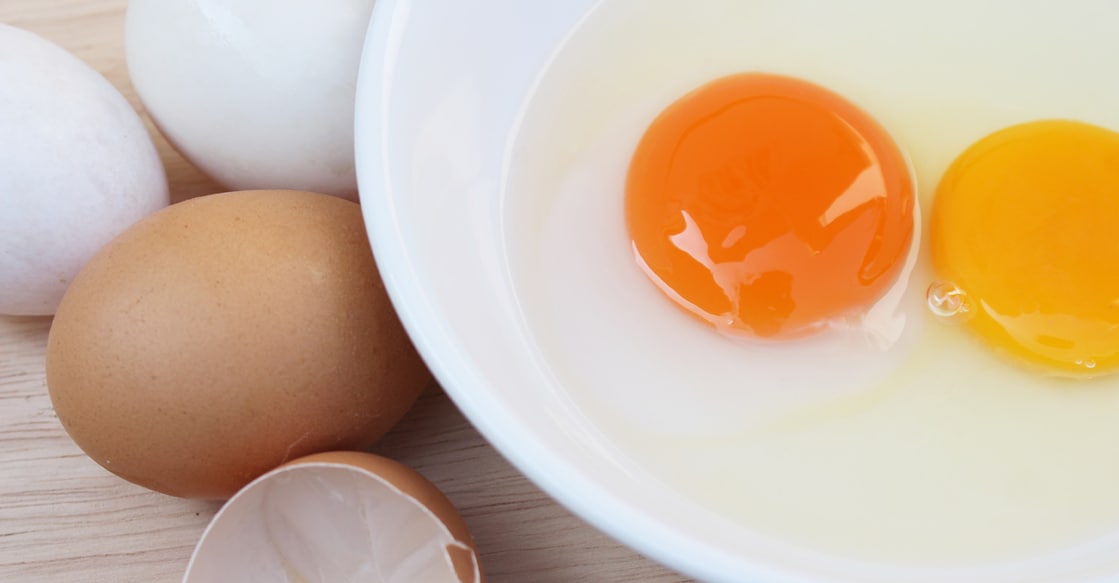
Brown eggs are generally bought at a higher price under the assumption that they are superior, indigenous and more nutritious. But can the brown egg laid by a hen raised in a cage on artificial feed truly match the egg of a country hen that forages freely, pecking at plants including medicinal herbs in the yard? It is not the colour of the shell but the feeding pattern of the hen that determines the quality of an egg. To assess whether an egg is nutritious, one must look not at the shell, but at the yolk.
Eggs laid by hens that feed on leaves, grass and natural forage have a sharp yellow yolk. This colour comes from pigments such as carotenoids and xanthophylls obtained through the diet.
Eggs laid by hens that feed on a diet containing more than 50 percent good quality maize have a bright yellow yolk. In contrast, most poultry feed available locally replaces maize with broken rice and distillery by products. Hens that are confined to cages and forced to consume such feed produce eggs with a very low content of carotenoids. As the proportion of carotenoids increases through quality feed, the yolk becomes sharper in colour, eventually turning a rich orange shade.
These pigments are vital nutrients for maintaining good health, especially lutein, an antioxidant belonging to the carotenoid group. Lutein not only improves vision but also helps prevent age related muscle weakness and fluid retention. It is also known to delay the onset of cataracts. While lutein can be obtained by eating leafy vegetables, carrots and beetroot, lutein in the fat present in eggs is absorbed by the body more efficiently than lutein from vegetables.

Production
So how can lutein enriched eggs be produced? Regularly feeding hens with leaves and grass does increase the lutein content of eggs, but this is rarely practical in large scale commercial farming. The more workable solution is the use of feed additives that contain natural lutein. Eggs produced with such supplements are often called 'designer eggs', as their nutritional composition is enhanced by the producer.
This approach also opens up fresh opportunities for poultry entrepreneurs in Kerala to introduce value added, lutein enriched eggs to the market. Enabling this shift is Synthite, a Kolencherry based company that has launched a lutein based feed additive called Novoxant for use in poultry feed. Adding just a small quantity of this supplement to a hen’s diet produces eggs with a deep yellow yolk tinged with orange.
The colour is not due to harmful artificial dyes but comes from nutrient rich natural lutein. Novoxant is produced using marigold flowers, which are among the richest natural sources of lutein, imported from Rwanda.
Opportunity for entrepreneurs
The company is marketing lutein enriched eggs produced at its own farms under the brand name Xanto Egg. According to company General Business Head P Jithin Chand, the product has received a strong response in the local market, with around 1,500 eggs supplied daily. The eggs are sold in packs of six at a price of Rs.14 per egg.
Jithin says Xanto eggs are witnessing strong demand across Kerala at a time when consumers are becoming increasingly conscious of eye health. IT professionals and others who spend long hours working continuously in front of computer screens, in particular, are showing keen interest in lutein rich eggs.
Taking note of this trend, Synthite is preparing to partner with entrepreneurs who rear BV 380 hens to supply indigenous eggs to local markets. The company will provide Novoxant powder to be added to poultry feed, increasing the cost of producing each egg by only 10 paise.
The eggs produced using this method will have a rich, deep yellow yolk. The company is also willing to buy back these eggs from farmers at a premium price. The aim of the initiative is to market lutein enriched eggs across the state under the Xanto brand, while also giving farmers the flexibility to sell their eggs independently at premium rates.
The broader goal is to encourage more poultry farmers to produce high quality, value added eggs. These eggs would help Kerala-based entrepreneurs gain a competitive advantage over eggs imported from Tamil Nadu. While large-scale farms in Namakkal, which produce eggs in lakhs and lakhs of numbers, may find it difficult to switch to such specialised production, Kerala entrepreneurs who rear 2,000 to 3,000 hens could find this a promising opportunity.
 Add as a preferred source on Google