

Do you use glass cleaner to clean your induction cooktop? Stop
Mail This Article


Running out of gas in the middle of cooking can be a nightmare. Just when you are left staring at a half-cooked curry and dosa batter sitting on the tawa, the induction cooktop often comes to the rescue.
Today, an induction cooktop is a common sight in most kitchens. Its energy efficiency and precise temperature control have made it a popular choice. While cooking on it is convenient, cleaning the cooktop needs a little care. You cannot use just any cleaning product on its glass surface. The wrong method can leave scratches and even damage the cooktop.
Here are some simple ways to keep your induction cooktop clean and shiny.

How does an induction cooktop work?
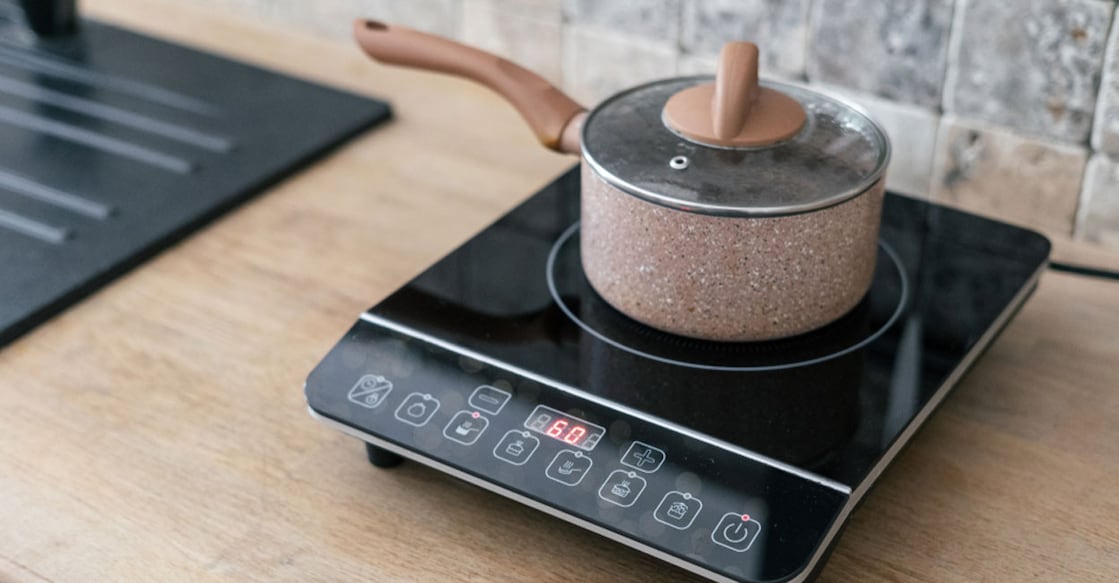
An induction cooktop works differently from a regular gas stove. Copper coils are placed beneath its flat glass panel. Electromagnetic energy generated through these coils heats the cookware placed on top.
Only cookware made from materials such as cast iron, enamelled iron and stainless steel with a magnetic base can be used on an induction cooktop.
The glass surface itself does not heat up directly. So, even if food spills over while cooking, it does not usually burn onto the glass as quickly as it would on a regular stove.
When and how should you clean it?
The best habit is to clean the induction cooktop after every use. However, do not start wiping it immediately after cooking while it is still hot.
Although the cooktop itself does not heat up directly, heat from hot cookware can transfer to the glass surface. Allow it to cool completely before wiping it with a soft, damp cloth.
If sugary drinks or other food spill over, do not leave them sitting on the surface for too long. Once they dry and stick to the glass, they can be harder to remove.
Avoid these cleaning mistakes
Since the cooktop has a glass surface, avoid anything that can scratch it.
Steel wool, rough scrubbers and abrasive scouring powders should not be used. Melamine sponges, commonly known as Magic Erasers, can also scratch the surface.
Cleaning solutions containing bleach, rust removers or ammonia should also be avoided.
Some people use regular glass cleaners meant for windows and other glass surfaces to clean their induction cooktops. This can be a mistake. Such glass cleaners may contain ammonia, which can leave stubborn marks or damage the cooktop surface.
An easy way to remove burnt-on stains
You mainly need a cooktop scraper, a non-abrasive scrubbing pad and a microfibre cloth or dry towel to clean an induction cooktop.
A mild dishwashing solution or a mixture of baking soda and vinegar can also be used. Special cleaners designed for induction cooktops are also available.
Once the cooktop is completely cool and dry, hold the scraper at a shallow angle against the glass and gently work on the burnt-on stains and grease. Keeping the scraper flat against the surface helps reduce the risk of scratches.
Next, apply the cleaning solution and gently wipe the surface with a non-abrasive pad. For stubborn areas, allow the cleaner to sit for a short while before wiping.
Finally, use a microfibre cloth to remove all traces of moisture and leave the surface dry.
If a burnt-on stain still refuses to budge, pour a little white vinegar over the affected area and sprinkle some baking soda on top. The two will react and start to fizz. Leave it for a minute or two, until the fizzing stops, and then wipe the area clean with a cloth.
With the right cleaning products and a little care, your induction cooktop can stay clean and scratch-free for longer.
