

Grab a bunch of Vadamalli from your garden and make this pretty pink tea
Mail This Article


Step into your garden and pluck a handful of tiny, globe-shaped blooms that brim with colour and charm. Vadamalli, also known as globe amaranth, is a tropical treasure that can turn a simple cup of tea into a visual and sensory delight.
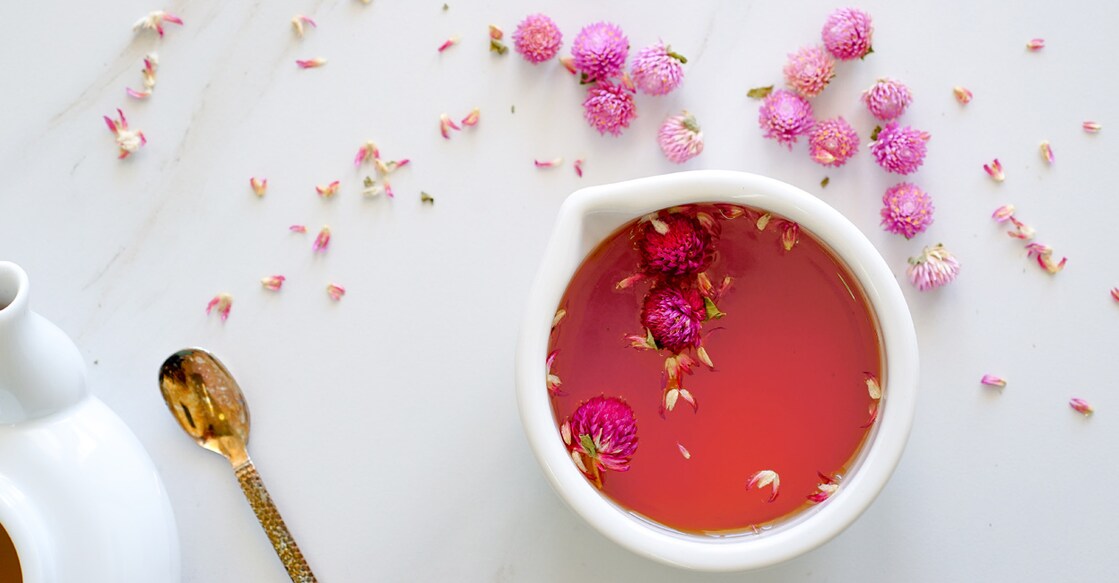
With its vibrant pink, purple, and white flowers, this resilient plant thrives in the sun, blooms generously, and holds on to its cheerful hues even when dried. Celebrated in herbal traditions for its lasting beauty, globe amaranth—aptly nicknamed “thousand days red”—has long been a favourite. As the blossoms steep, the water takes on a striking pink or hot-pink shade, carrying a mild, slightly vegetal flavour reminiscent of chrysanthemum, with gentle spinach-like undertones. Beyond the teacup, these blooms find their way into crafts, floral decorations, and traditional garlands. Brewing a cup of this tea is like bottling a little bit of your garden’s joy, a gentle floral sip that’s as pretty as it is soothing.
What is vadamalli?
Vadamalli, or Gomphrena globosa, is a tropical plant with ornamental and edible flowers. The globe-shaped blooms are commonly seen in shades of pink, purple, and white. Beyond their beauty, these flowers are perfect for herbal teas, lending a mild, floral flavour and a striking pink hue.

How to brew globe amaranth tea
Ingredients
3 to 5 dried globe amaranth flowers
200–250 ml (¾ to 1 cup) hot water
Optional: honey, lemon, or another mild sweetener
Preparation
Rinse the dried flowers briefly under cool water to remove dust
Place them in a teapot or heatproof cup
Pour hot water (around 90–95 °C, just off the boil) over the flowers
Let steep for 5–7 minutes. Gently stir or swirl once or twice to ensure even infusion
Strain or sip directly. The petals are edible
Add honey or lemon if desired.
As the flowers steep, the water transforms into a beautiful pink or hot-pink hue, with a mild, slightly vegetal flavour reminiscent of chrysanthemum, accompanied by subtle green, spinach-like undertones.
For a show-stopping twist, try using globe amaranth in blooming tea balls, where dried flowers bundled with tea leaves unfurl into a visual display when steeped.
Health benefits of vadamalli tea
Vadamalli tea is not just a pretty drink. Its health benefits make it a staple for herbal tea enthusiasts:
- Rich in antioxidants: Compounds like betacyanins help fight oxidative stress.
- Caffeine-free: A soothing alternative for evenings or caffeine-sensitive individuals.
- Supports respiratory health: Traditionally used to soothe sore throats and mild coughs.
- Anti-inflammatory properties: May help alleviate inflammation-related discomfort.
- Skin and wellness benefits: Regular consumption is believed to support healthy skin and general vitality.
- While these benefits are largely based on traditional uses, the tea’s mild flavour and calming properties make it a wellness-friendly addition to any routine.
Other uses of vadamalli
Beyond tea, vadamalli flowers can be incorporated into:
Culinary creations: Garnish desserts, salads, or cold drinks with dried petals.
Crafts and decor: Dried flowers last for months and are perfect for floral arrangements, leis, or art projects.
Traditional medicine: In some cultures, the plant is brewed or infused for minor ailments or used as a visual and aromatic therapy.
Growing your own vadamalli
Cultivating vadamalli at home ensures a fresh supply for tea or decoration:
- Sunlight: Full sun for abundant blooms.
- Soil: Well-drained and fertile.
- Watering: Moderate watering; avoid waterlogging.
- Care: Low-maintenance plant that blooms for months, offering both beauty and function.
With minimal effort, gardeners can enjoy a vibrant patch of vadamalli flowers ready to brighten cups, tables, and spaces.
 Add as a preferred source on Google