
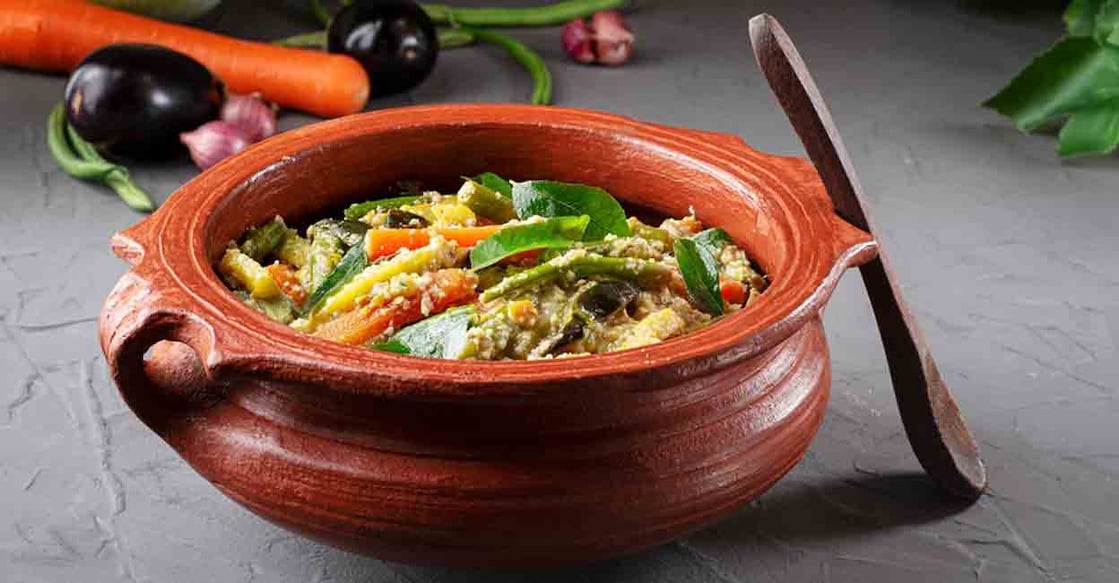
Earthen pot or pressure cooker? What's best to prepare a healthy avial? Dietitian explains

Mail This Article


No sadya in Kerala - be it the one for Onam, Aranmula festival or even the wedding specials - is complete without the legendary nutritious dish, avial. Malayalis love it so much that the curry even inspired the name of a renowned band from the state! A culinary masterpiece of Kerala, avial is much more than a side dish; it is the undisputed king of the traditional feast, the sadya.
Avial's regional variations
From the southern tip of Thiruvananthapuram to the northern shores of Kasaragod, avial evolves as you travel across Kerala. The core recipe relies on a bounty of locally sourced vegetables: raw banana, elephant foot yam (chena), taro root (chembu), drumsticks, long beans, snake gourd, cucumber, and pumpkin. In some northern districts, raw mango or tamarind is preferred over curd to introduce that signature tang. Some regional versions even dare to add bitter gourd or raw papaya, lending the dish an entirely different character. Beyond the vegetarian domain, rustic variations like 'meen avial' (with dried fish) and variations using jackfruit seeds or eggs exist, proving its immense versatility.

A nutritional powerhouse
Beyond its comforting taste, avial is a nutritional goldmine. Since the vegetables are gently steamed rather than deep-fried, they retain their natural nutrients, making this a low-calorie, fibre-rich option that aids digestion and supports gut health. Elephant foot yam is packed with protein, dietary fibre, and calcium, helping to regulate hormones and blood sugar levels. Carrots provide beta-carotene for eye health, while drumsticks bring a powerful dose of Vitamin C and antioxidants. Adding fresh curd introduces beneficial probiotics, and raw coconut oil provides healthy medium-chain triglycerides that boost good cholesterol.
How to make a healthy avial?
Minu Marin Jose, dietitian at the Mar Sleeva Medicity Hospital, explains how to make sure your avial doesn't lose its nutrients or taste:
a) The best way to cook avial, without losing its nutrients, is to prepare it in earthen pots, rather than a cooker. It also packs in the flavour rather than losing it.
b) Don't overcook the vegetables. Keep them medium, half-boiled. This will also retain fibre.
c) Avoid adding oil multiple times during cooking. At the end, just add a small teaspoon of raw coconut oil.
d) These days, if there is one cup of vegetables, two cups of coconut are also added. Instead, make sure the vegetables are the main ingredient.
e) Limit the amount of potatoes, which are high in carbohydrates. Include more carrots and beets.
