

Bigg Boss star Veena Nair gets a ‘Medicine Allergy’ tattoo: How it helps her
Mail This Article


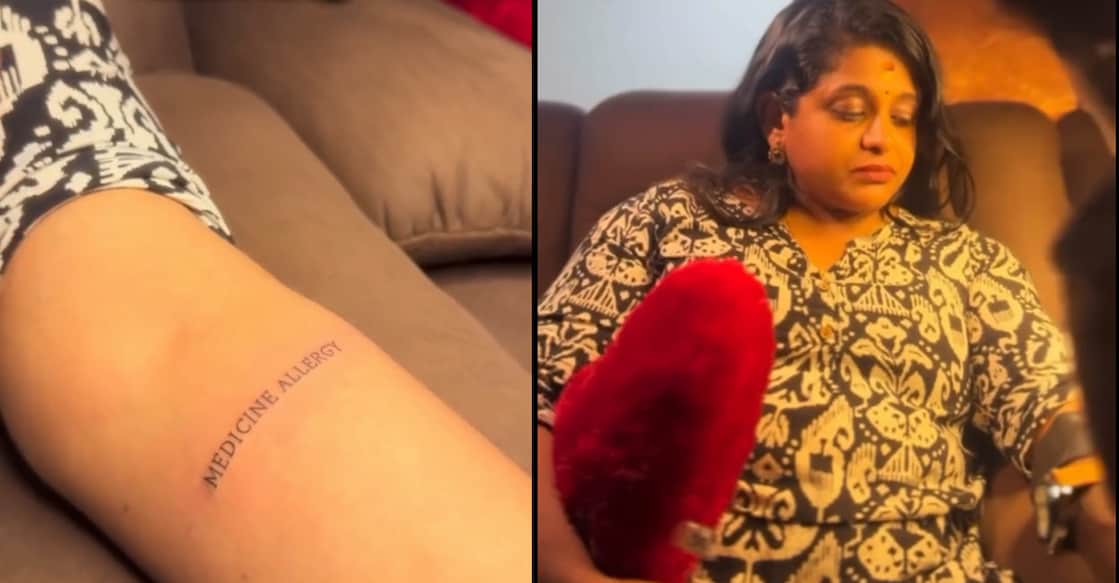
Bigg Boss fame actress Veena Nair, who is also a renowned dancer, recently revealed that she has a severe medication allergy. Apparently, she can consume any medicine only after testing it first. It's something that affects a minority of patients, according to the Indian Medical Association, and health experts usually call it the Drug Hypersensitivity Reaction or DHR. Veena said that she decided to get a special tattoo on her hand to help the situation and has posted a video of her getting 'Medicine Allergy' inscribed on her hand.
"I frequently travel alone. Who knows, accidents can happen at any time. Without testing, I can't use any medicines at all. But whichever country I go to, I will use medicines carefully when they see this on my hand," Veena explains. Others with a medicine allergy should also consider it, she says on her video.
What is a medicine allergy?
It's an unpredictable reaction of a person's body to medications. It can appear as mild to moderate itchiness, a skin rash, anaphylactic reactions such as swelling of the throat, difficulty breathing, a drop in blood pressure, hives, wheezing, a runny nose, watery eyes and dizziness. Those with an allergy can develop an allergy to a variety of medicines, including over-the-counter medicines, prescription medicines, and herbal medicines, according to the Mayo Clinic.
Why does it happen?
In some people, the body tends to mistakenly identify a medicine as an 'invader.' The body begins to overreact, releasing inflammatory chemicals. The exact reasons for some people's bodies to act this way are not known. However, the reason is generally attributed to genetics, quirks of certain immune systems and how some bodies process drugs. In some people, after the first exposure to the drug, the symptoms gradually disappear, depending on the characteristics of the drug.
How to use medicines
Those with medicine allergies should take medications only after drug sensitisation procedures. In some countries, such patients are also asked to carry an allergy alert card or a bracelet that warns others of their condition.
 Add as a preferred source on Google