

Buying 'arali' flowers to make your Onam pookkalam? Safety tips to avoid poisoning

Mail This Article


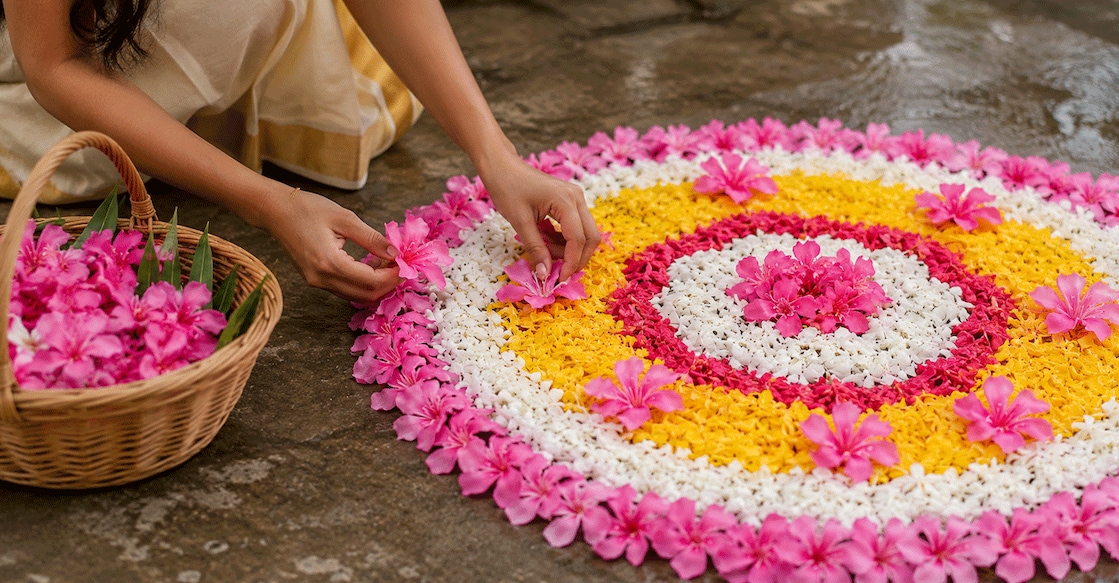
Kerala has had a few incidents in the past in which people lost their lives after accidentally swallowing arali or oleander flowers or their leaves. The pink flower, once common in temple prasadams, was banned after a few such incidents. However, it is still quite popular, especially during the Onam season as people include it in the floral carpet or pookkalam. This year, for instance, arali is one of the most in-demand flowers for making pookkalam, according to reports. Experts say the plant's leaves, flowers, stem, and root contain poisonous substances that are dangerous. How to stay safe if it's part of your pookkalam flower bunch? Experts explain.
Tips to handle the flower safely
The most important thing to be careful of while handling any part of arali is that it shouldn't go inside our mouths, says Dr Siril, head of Kerala University's Botany Department. "The flower has small amounts of toxins. Generally, it is safe to handle it while laying pookkalams. However, just make sure that the extracts of crushed flowers do not stick to our hands," he explains.

Dr Benil PB, Professor and Head of Agardatantra and Vyavahara Ayurveda at the Vaidyaratnam PS Varier Ayurveda College in Kottakkal, says caution should be exercised especially when children handle the flowers. "While all parts of this plant have toxins, the amount is more in the part from which its latex oozes out. Make sure it isn't ingested, especially by children. As their bodies have smaller surface areas, even a small amount of toxins can lead to severe poisoning," he says. The doctor also warns against sprinkling the flower on food after poojas. The plant's toxins are more on its leaves and stems, he says. "Do not bite on its leaves too, even playfully, as it can take the toxins inside our bodies."
Irritation on skin
The flower's milky-white sap, or latex, is found mostly in its stalk and on the green sepals under the petals. "There is a probability that the area around the skin of your nails may have wounds or scaling after handling the flowers. It's called 'contact dermatitis.' Therefore, wash your hands well after using it. It can be washed off properly with water as it is water soluble."
Why is arali more toxic now?
Dr Benil says he sees elderly patients who have been picking flowers for temples for many years but are experiencing skin irritation lately. "They say that unlike in the past, they feel itching on their skin and wounds are formed, and wonder why. "Unlike in the past, many flowers that we come across now are hybrid varieties. Arali, for instance, wasn't commonly grown in households and was mostly a wild flower. Later, many plants, including arali, were crossed with other foreign varieties to improve their look, get different colours and have thicker petals. Just as the colours and petals increase, toxins also can," he says, adding that a study on it hasn't been conducted yet.
