
Gigantic 3.1 kg bladder stone in 55-year-old man: The ‘silent’ danger that can go unnoticed
Mail This Article


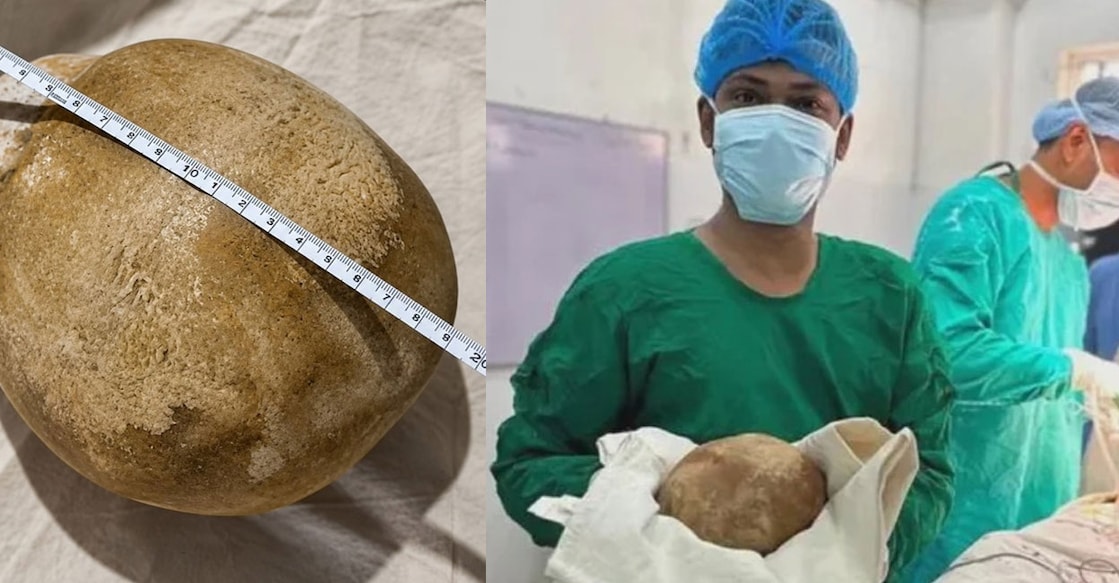
A routine follow-up appointment for a stroke patient in Sri Lanka took an extraordinary turn when surgeons successfully removed a massive bladder stone weighing a whopping 3.1 kg. The 55-year-old man had visited the Trincomalee District General Hospital for post-stroke care when doctors detected a complete urinary blockage.
Upon further clinical investigation, medical experts discovered a giant calculus measuring 17 cm in length lodged inside his bladder. A specialist surgical team, led by Dr Prahladan Balakrishnan, immediately performed major surgery to extract the stone. Speaking to the media, Dr Balakrishnan noted that based on existing medical records, this is believed to be the largest bladder stone ever documented and successfully removed from a living patient.
What are bladder stones?
They are 'hardened mineral clumps,' according to the Cleveland Clinic. When urine remains in a person's bladder for a long time, it can form bladder stones. Why would this happen? Conditions like an enlarged prostate, stones from kidneys that travel to the bladder, dehydration and even nerve damage affecting bladder function can cause bladder stones. They are not contagious and can't spread from person to person.

Understanding the warning signs
Patients usually consult a physician when they experience excruciating pain or when long-standing stones begin to damage kidney function. Key symptoms of urinary tract stones include intense abdominal pain, urinary retention, vomiting, and hematuria (blood in the urine).
Interestingly, some stones remain entirely asymptomatic and are referred to as 'silent stones'. Severe pain—known as renal or ureteric colic—typically begins when a stone migrates from the renal pelvis (where urine accumulates in the kidney) down into the narrow ureter. This movement causes sudden obstruction. Because rough, jagged stones—particularly calcium oxalate stones—scrape against the delicate lining of the ureters, they often cause internal bleeding. If left untreated, this blockage leads to hydroureter (dilation of the ureter) and hydronephrosis (swelling of the kidney due to fluid buildup), ultimately causing permanent kidney failure. Fortunately, smaller stones measuring less than 3 mm often pass naturally through urine.
How urinary stones are diagnosed
Beyond evaluating physical symptoms, doctors rely on urine analysis, X-rays, and advanced imaging scans to confirm a diagnosis. A standard urine test can detect microscopic blood or pus cells, signalling an underlying infection. Blood tests showing elevated white blood cell counts are also strong indicators of a urinary tract infection.
As nearly 80 per cent of urinary calculi are composed of calcium oxalate, they easily show up on conventional X-rays of the kidneys, ureters, and bladder. However, uric acid stones are radiolucent and may remain invisible on standard X-rays. In such cases, an intravenous pyelogram (IVP)—where a special contrast dye is injected into a vein—is highly effective. This dye travels through the urinary system, mapping out the entire tract to identify obstructions and evaluate kidney function. Additionally, modern ultrasound and CT scans are widely used for precise detection.
Simple ways to prevent stone formation
Preventing painful stone formation starts with simple lifestyle changes. Drinking plenty of water is crucial; during hot summer months, one should consume enough fluids to produce at least 2 to 2.5 litres of urine daily.
Reducing dietary protein and sodium intake can significantly lower the risk of stone formation. It is also wise to cut down on carbonated soft drinks and colas. On the positive side, drinking orange juice can actively prevent calcium oxalate stones, while incorporating black plums (jamun) into your diet can inhibit uric acid stones. Finally, never dismiss recurring urinary tract infections—seek prompt medical treatment to prevent them from escalating into serious kidney complications.
